Finance dominates UN climate talks in Bonn as trust erodes over unmet promises. Developing nations demand debt-free, grant-based support, while calls grow for justice-centered climate finance and accountability ahead of COP30.
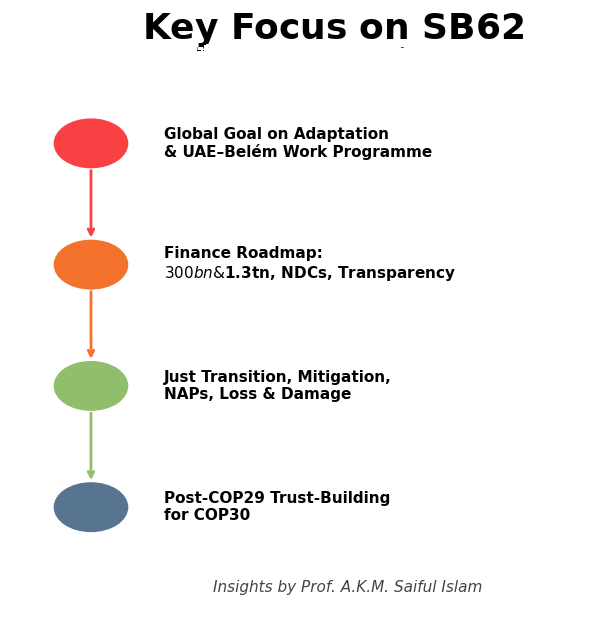
As the UN climate negotiations (SB62) open in Bonn this week, all eyes are on finance — the central battleground that will determine the credibility and success of COP30 in Brazil in November this year.
Following the fractured outcome of COP29 in Baku, where nations failed to agree on most agenda items beyond an unclear finance goal, the Bonn session is being seen as a crucial checkpoint.
The stakes are high: developed nations are expected to lead in mobilizing at least $300 billion annually by 2030 for developing countries’ climate needs, while all actors are tasked with collectively raising $1.3 trillion per year under a roadmap to be finalized by Brazil and Azerbaijan.
Professor A.K.M. Saiful Islam, one of Bangladesh’s official negotiators at SB62 and a climate scientist from the Bangladesh University of Engineering and Technology (BUET) said “We are demanding that 100% of adaptation finance be delivered as non-repayable grants, to avoid further debt for climate-affected nations.”
“We are strongly pushing for grant-based finance for adaptation and loss and damage, while allowing limited space for concessional loans in mitigation if necessary. Bangladesh, alongside partners in the G77, Least Developed Countries (LDCs), and Climate Vulnerable Forum (CVF), is united in this stance,” Professor Saiful Islam.
But optimism is tempered by geopolitical tensions and mounting distrust. Many climate-vulnerable countries, particularly in the Global South, have expressed frustration over broken finance promises, inaccessible funds, and reliance on debt-heavy solutions.
The finance justice agenda
Key demands now dominating the Bonn negotiations include a shift to grant-based, debt-free finance, taxation of polluters under a global framework, and reforms to international finance rules that have long sidelined poorer nations.
“Fix the money or forget the climate goals,” says a statement from the Climate Action Network. Their call: phase out fossil subsidies by 2025, implement meaningful debt relief, and ensure that climate finance is public, transparent, and accountable — not riddled with loopholes or market-based offsets.
A major concern is that despite headline pledges, frontline communities still lack real-time support.
Anna Cárcamo, Climate Politics Specialist, Greenpeace Brazil said: “Bonn will be a key moment to advance important agendas leading to COP30 and Brazil as the incoming COP Presidency has signalled that it will focus on moving forward with adaptation, just transitions and implementation of the COP28 decision, including the goals to eliminate deforestation and to transition away from fossil fuels.” “While all countries must act together to implement these critical agendas and goals, Brazil should lead with coherence, by continuing to address deforestation and reconsidering the expansion of fossil fuel extraction, especially in the Amazon.”
Negotiators are pushing for a justice-centered roadmap that includes: New public finance targets to replace outdated adaptation goals; A fully resourced Loss and Damage Fund and a permanent UNFCCC agenda to monitor delivery.
EU’s role and global expectations
Europe’s positioning is also in the spotlight. The EU is being urged to submit an ambitious 2035 climate target aligned with the 1.5°C goal and use its influence to mobilize green finance through partnerships like the TeraMed renewable energy initiative and the RISE debt-relief framework.
A strong EU Nationally Determined Contribution (NDC), paired with credible financial backing, could help steer the process away from gridlock. European businesses have already called for investable, predictable policies to weather the geopolitical instability dampening green investment.
Beyond finance: Justice as the unifying thread
The climate finance debate is inseparable from broader justice demands — from protecting civic space to ensuring that indigenous peoples and workers are active participants in just transitions. Proposals such as the Belém Action Mechanism (BAM) aim to institutionalize this equity lens.
“Justice is the red thread – from finance to forests, from transition plans to civic space,” said Jacobo Ocharan of Climate Action Network International. “If it is not centered, the climate process will lose what little credibility it still holds.”
As delegates debate adaptation metrics and emissions targets in Bonn, the question remains: will the world finally fix the financial plumbing needed to deliver on its climate promises — or will COP30 become another summit of unmet expectations?