

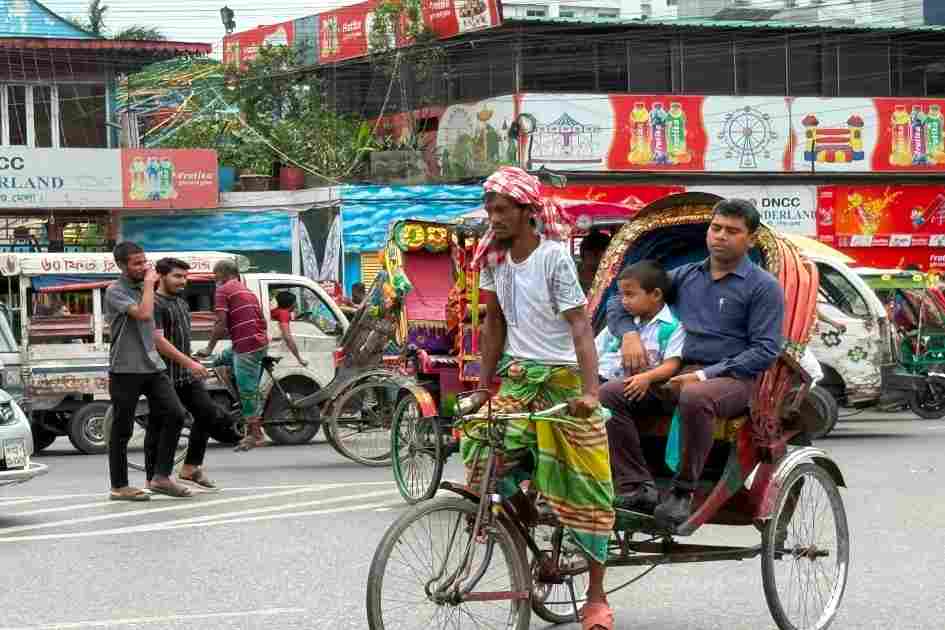



As temperatures rise, workers are losing working hours and income while facing growing risks of heat exhaustion, kidney disease and other health problems. Researchers estimate the wage losses amount to nearly 1.4% of Bangladesh’s GDP.
Amina Begum, 44, spends her working day moving from one home to another in Dhaka, cleaning, cooking and doing other household chores. As a temporary domestic worker, she works in five homes before returning to her small room in Kallyanpur slum.
Five years ago, Amina came to Dhaka from Nilphamari in northern Bangladesh after erosion along the Teesta River destroyed her family’s home. Having escaped one climate-related hardship, she now faces another in the capital: extreme heat.
Amina shares a small tin-roofed room with three other women. There is no fan and no gas connection, so they cook on a traditional stove inside the cramped space. The metal roof absorbs heat throughout the day, while cooking adds more heat inside.
By the time Amina finishes cooking, her clothes are often soaked with sweat. She feels exhausted and sleepy, but there is little opportunity to rest.
At the end of every month, she has rent to pay and elderly, sick parents back home who depend on her financial support. Even when the heat leaves her exhausted, stopping work is not an option.
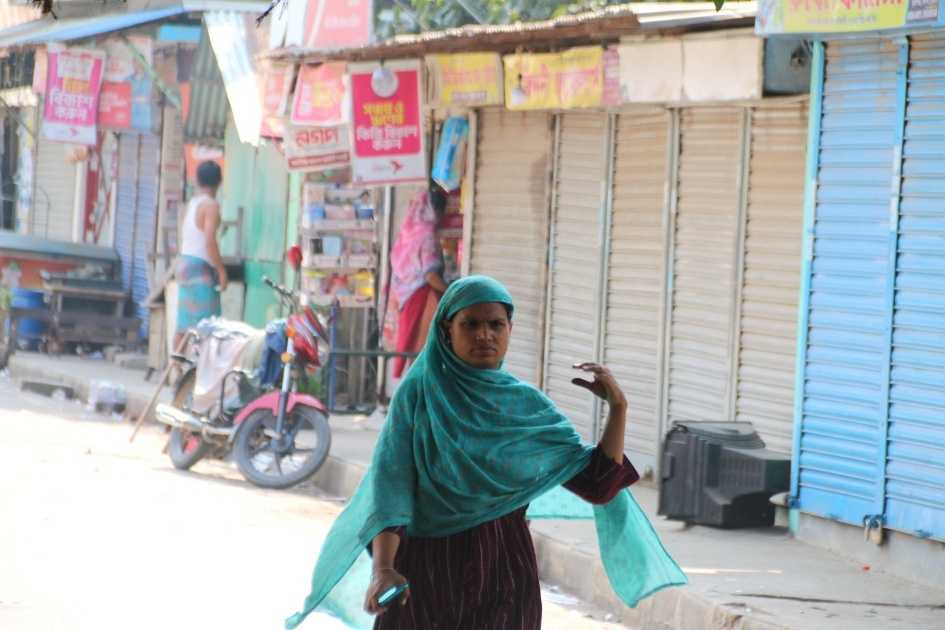
Amina’s experience is far from isolated. For millions of informal workers in Bangladesh, rising temperatures are increasingly becoming both a health and livelihood crisis.
A new study estimates that extreme heat and its long-term health consequences cost Bangladesh’s informal workers about $6.22 billion in lost wages every year, equivalent to 1.38% of the country’s GDP.
The study was jointly conducted by the UK-based International Institute for Environment and Development (IIED) and the Ovibashi Karmi Unnayan Program (OKUP). Titled No escaping the heat: Health and economic impacts of heat
stress on informal workers in urban Bangladesh, the study is scheduled to be published tomorrow, Wednesday.
Researchers surveyed 175 informal-worker households in Dhaka. Of them, 122 were primarily engaged in outdoor occupations, including construction, road work and rickshaw pulling, while 53 were associated with indoor work, primarily garment manufacturing. The research also included observations of work and rest patterns, focus group discussions, interviews, household case studies and medical review of health findings.
The findings carry national significance in a country where informal employment accounts for 84.9% of total employment. For many of these workers, income depends directly on their ability to show up and remain productive each day. When heat forces them to stop or slow down, their earnings fall with their physical capacity.
Twelve Hours in Winter, Five or Six in Summer
Amina mainly works indoors. Across the city, Azizul Islam faces the same heat from an entirely different workplace.
Azizul is a rickshaw puller living in Korail, one of Dhaka’s largest informal settlements. He moved to the capital from the coastal district of Satkhira after climate-related pressures forced him to leave his home.
During the cooler winter months, Azizul can pull his rickshaw for as long as 12 hours a day. In summer, however, extreme heat often limits him to five or six hours, sometimes even less.
Fewer hours on the road mean fewer passengers and less income.
Azizul says he frequently becomes extremely tired during hot weather and has suffered from diarrhea several times. On some days, he becomes too weak to continue working.
There is no paid sick leave for a worker like Azizul. If he cannot work, he does not earn. During the hottest months, the repeated loss of working hours reduces his monthly income and sometimes leaves him unable to contribute as much as usual to his family.
The study found a similar pattern across the workers surveyed. An outdoor worker loses an average of 23.7 working days a year because of heat, compared with 13.5 days for an indoor worker. The corresponding annual wage losses average $148.86 for outdoor workers and $89.10 for indoor workers.
Heat Pushes Workers Further Below a Living Wage
Those losses are being absorbed by households already struggling to earn enough to meet basic needs.
Using a living-wage benchmark for Dhaka of Tk 30,459 per month, researchers found that outdoor-worker households earn 41.4% below a living wage, while indoor-worker households fall 33.8% short.
Once heat-related wage losses are included, the gaps widen to 46.4% for outdoor-worker households and 36.8% for indoor-worker households.
In effect, heat is taking income away from people who already earn substantially less than what researchers estimate they need for a basic but decent standard of living.
An ‘Invisible’ $6.22 Billion Loss
At the national level, researchers estimate that the immediate effects of extreme heat result in around 1.18 billion lost workdays annually, costing workers about $4.10 billion in wages, equivalent to 0.91% of GDP.
The researchers separately estimate that chronic kidney disease associated with long-term heat exposure could result in another roughly 610 million lost workdays and $2.12 billion in annual wage losses.
Together, the immediate and long-term losses amount to approximately 1.79 billion workdays and $6.22 billion in wages, or 1.38% of GDP.
Even that figure is conservative, according to the study. It covers wage losses among informal workers engaged in physically demanding occupations but excludes losses among formal workers, healthcare expenses, supply-chain disruption, production losses and other indirect economic effects.
Ritu Bharadwaj, director of climate resilience, finance and loss and damage at IIED, said one reason such a large economic burden receives limited policy attention is that the damage is largely invisible.
Unlike a destroyed road or ruined crop, income lost because of reduced working capacity leaves no physical trace. A rickshaw puller who stops during the hottest hours or a garment worker who slows down on an overheated production line absorbs the loss through forgone earnings, depleted savings or debt.
“It is real loss and damage, but it does not appear in any official assessment, so policymakers never see the aggregate,” Bharadwaj said.
She said expressing the losses as a share of GDP and connecting them with critical sectors such as construction, transport and manufacturing could shift the discussion from welfare to productivity and economic growth.
The study similarly notes that workers experiencing these losses are concentrated in sectors that underpin wider economic activity, meaning the consequences extend beyond individual households.
Indoor Workers Are Not Safe From Heat
The risks facing someone like Azizul, who works under the sun, may be obvious. But the research challenges the assumption that working indoors provides substantial protection from extreme heat.
During the hot season, 66.4% of outdoor workers and 66% of indoor workers met the clinical threshold for heat exhaustion, Bharadwaj said. The study also found that about one in three outdoor workers and one in seven indoor workers reached the threshold for heatstroke.
Garment workers may receive little direct sunlight, but many spend long shifts in enclosed workplaces where heat accumulates from machinery, ironing and pressing, crowded production floors and inadequate ventilation.
Bharadwaj said workers averaged just 1.6 breaks a day. Some workers also restricted their water intake because toilet breaks were limited, increasing their risk of dehydration.
And exposure does not necessarily end when a shift does.
Among the households surveyed, 66% of indoor-worker households and 54.1% of outdoor-worker households lived under tin or asbestos roofs. The research also found severe overcrowding: 92.9% of indoor-worker households and 57.3% of outdoor-worker households fell below the study’s minimum living-space benchmark.
“The heat does not end at the factory gate either,” Bharadwaj said.
The report says hot and overcrowded homes, poor ventilation, unreliable water and frequent power cuts can leave workers with little opportunity to rest and physically recover before returning to work the next day.
Because Bangladesh’s garment sector produces for global brands, Bharadwaj said international buyers also have a responsibility to address workers’ heat exposure.
She said enforceable temperature thresholds, adequate ventilation, drinking water and protected rest breaks should be incorporated into sourcing and auditing requirements in much the same way fire and building safety have been addressed, with protections extending down the supply chain.
“Buyers benefit from this workforce,” Bharadwaj said, “and they are well placed to help fund and enforce the conditions that keep it safe and productive.”
The Risk of Permanent Kidney Damage
The consequences of extreme heat may extend far beyond temporary exhaustion or a few lost hours of work.
Dr. Nihar Ranjan Das, a medicine specialist at Alliance Hospital Ltd., said workers often sweat heavily in extreme heat but do not drink enough water. Many also do not get adequate breaks at work or sufficient sleep after returning home.
The combination can increase the risk of dehydration, fatigue and other health complications, including kidney problems, he said.
Low incomes compound the problem. Das said many workers do not undergo regular medical checkups even when they become ill because they cannot afford the expense or fear losing income by taking time away from work.
“Poverty and extreme heat are silently harming these workers,” Das said. “Yet they are an important driving force of our economy. We need to pay much greater attention to their health.”
He said the government could expand awareness programs on heat-related health risks, while companies, NGOs and international development organizations could help improve access to safe drinking water, adequate rest, medical checkups and better living conditions.
The study’s findings point to potentially serious long-term consequences.
Researchers found that 23.1% of workers reported symptoms consistent with acute kidney injury. They estimate that around 6% approximately one in every 17 workers could eventually develop chronic kidney disease as a consequence of repeated heat exposure and dehydration.
Scaled to the national informal workforce engaged in high-physical-labour occupations, the researchers estimate that about 3.56 million workers could develop CKD as a long-term consequence of heat exposure.
The resulting reduction in working capacity could account for approximately 609.7 million lost workdays and $2.12 billion in annual wage losses.
Bharadwaj said the damage can be permanent and may emerge years after the initial exposure, making it difficult to trace back to workplace heat.
No Enforceable Safe Heat Limit
The study also identifies major gaps in Bangladesh’s existing worker protections.
The Bangladesh Labour Act 2006 and Labour Rules 2015 require employers to provide drinking water, adequate ventilation, tolerable workplace temperatures, rest rooms and first aid. But there is no specific temperature threshold above which working conditions are legally considered unsafe.
The Bangladesh Meteorological Department issues heat alerts, but those warnings do not create a legal obligation for employers to take specific action.
Coverage is another problem. Many protections depend on the number of workers employed at an establishment, meaning small workplaces, outdoor worksites and much of the informal economy fall outside their reach.
Heatstroke, heat exhaustion and heat-related kidney disease are also not currently included among the occupational diseases covered by the relevant provisions identified in the report.
Researchers recommend introducing enforceable heat thresholds based on wet-bulb globe temperature, or WBGT. Crossing the threshold would trigger mandatory protections such as drinking water, electrolytes, shaded rest areas and adjusted working hours, with outdoor work suspended at higher levels.
They also recommend recognizing heatstroke, heat exhaustion and heat-related kidney disease as occupational diseases and replacing workplace-size thresholds with a hazard-based approach, so protection depends on heat exposure rather than how many people an establishment employs.
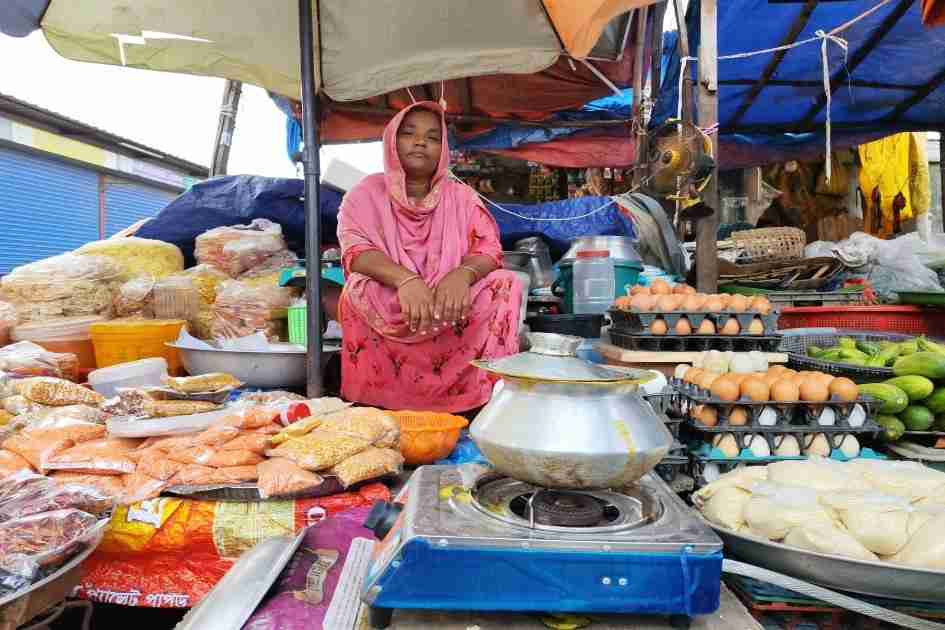
Protection Would Cost a Fraction of the Losses
Protecting such a large workforce would require money. But the researchers argue that failing to act is already costing far more.
They propose heat-triggered cash assistance for workers whose earnings are disrupted by dangerous temperatures.
The cash-transfer component would cost an estimated $31.3 million in a normal year, $62.5 million in a hot year and $93.8 million in a record year.
When interim health support and improved access to food programs are added, the overall package would cost about $69.8 million in a normal year, $101 million in a hot year and $132.3 million in a record year.
Much of the infrastructure needed to deliver the assistance already exists, the researchers argue.
Payments could be distributed through mobile financial services such as bKash and Nagad, recipients targeted through the National ID system and support triggered by Bangladesh Meteorological Department heat alerts. Bangladesh also has experience with forecast-based anticipatory cash transfers.
“The point is that this cost is already being paid,” Bharadwaj said. “It is being paid invisibly, by workers, in lost wages, medical bills and permanent damage to their health, rather than visibly through the budget.”
Evidence reviewed by the researchers from eight countries, including Bangladesh, found that every $1 invested in anticipatory action generated an estimated $2.06 to $5.17 in avoided losses and development gains.
Bharadwaj said international climate finance should ultimately help fund such protection. But workers should not have to continue absorbing the losses while governments negotiate over international funding.
The report proposes a layered approach: direct public funding to cover recurring losses during normal and severe heat seasons, with parametric insurance or similar risk-sharing mechanisms used for exceptional years when costs spike.
Workers Are Already Paying the Price
Amina does not calculate the heat in billions of dollars or fractions of GDP.
Her calculation is simpler: how many homes she can work in that day, how much her body can endure, whether she can pay her rent at the end of the month and how much money will remain to send to her parents.
For Azizul, the calculation is much the same. In winter, his body allows him to pull a rickshaw for as long as 12 hours. In extreme summer heat, it may force him off the road after five or six.
Different jobs, different parts of Dhaka, but the economic equation is the same: when their bodies can no longer tolerate the heat, their income stops.
The researchers argue that protecting workers from heat should therefore be viewed not simply as a welfare expense, but as an investment in livelihoods, public health, productivity and economic growth.




