

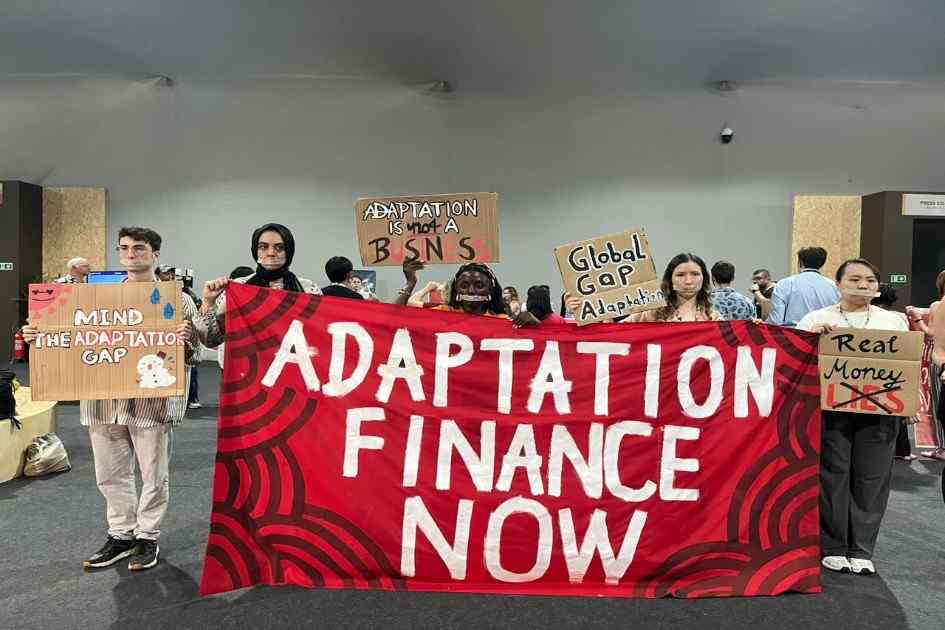

Health experts and officials at COP30 urged countries to place human health at the core of adaptation finance, warning that climate-driven heat, pollution and disease are accelerating faster than health systems can cope.
Speakers said funding gaps are “colossal,” especially in vulnerable nations. Health experts and government officials at COP30 on Thursday urged countries to place human health at the centre of global adaptation finance, warning that life-threatening climate conditions are accelerating faster than health systems can cope. At a press conference hosted by Regions4, the Global Climate & Health Alliance and CarbonCopy on COP30’s Health Day, high-level speakers said the world was entering an era where climate change is becoming “one of the most important threats to human health,” and policy decisions must reflect that urgency.
“Each year, more than half a million lives are lost due to heat, and over 150,000 deaths are linked to wildfire smoke exposure,” said Dr Marina Romanello, Executive Director of the Lancet Countdown.
“Health systems, already stretched and underfunded, are struggling to cope with these growing pressures, and most are still unprepared for what is coming.” Romanello warned that adaptation finance for health remains far below demand. “Only 44% of countries have costed their health adaptation needs, and existing finance falls short by billions,” she said.
“Without urgent investment, we will not be able to protect populations from escalating climate impacts.”
Frontline countries warn of widening risks
Speakers pointed to the widening gap between adaptation needs and available funding. The latest UNEP Adaptation Gap Report estimates that developing countries will require US$310–365 billion annually by 2035, while the international community is still struggling to mobilise the US$40 billion Glasgow Pact Goal.
“With regards to finance, the reality is that we have a deficit that is quite colossal,” said Carlos Lopes, Special Envoy for Africa for the COP30 Presidency. “Most of the efforts being done are from national authorities, so what we need from financing coming from abroad is that it must be complementary.”
Lopes further warned that “each layer of the climate-health relationship is contested, and unless we align them, we risk losing coherence in our global response.” Health remains severely underfunded in adaptation portfolios.
The Adaptation Gap Report found that just 4% of multilateral adaptation funding between 2019 and 2023 went to health.
A related adelphi study estimated that only 0.5% of all multilateral climate finance supports health, despite it being one of the sectors most threatened by rising temperatures.
Representatives from Bangladesh, Chile, Nigeria and India stressed that health systems in vulnerable countries are already overwhelmed.
“Our Health National Adaptation Plan was designed to identify the real problems, build capacity and use our limited resources more effectively,” said Md Ziaul Haque, Additional Director General at Bangladesh’s Department of Environment. “But the truth is, our adaptation financing for health is far below what is needed. The gap between what we require and what we receive is enormous.”
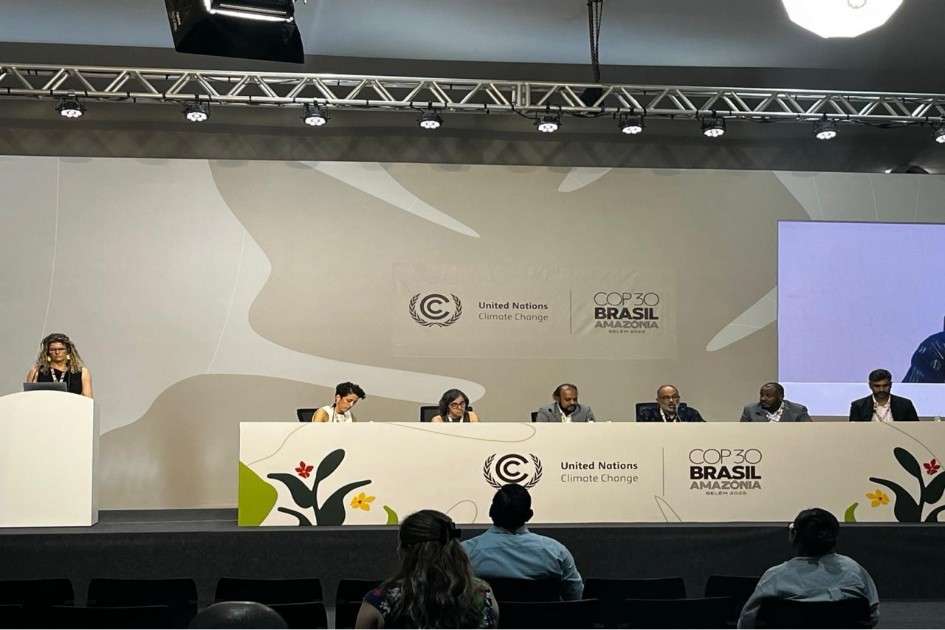
Haque added that health has been on the COP agenda for more than a decade, but progress has lagged. “We need multilateral funding entities to bring forward concrete, holistic proposals that match the scale of the challenge.”
Chile also urged deeper investment in research and integrated policymaking. “Air pollution remains the single biggest environmental health challenge in Chile,” said Dr Sandra Cortes, President of the country’s Climate Change Scientific Committee. “Recent data suggests that more than 14,000 people lost their lives due to its effects, yet we are still working to fully understand how these deaths relate to broader climate hazards.”
“To confront the climate crisis effectively, we cannot work in silos,” she added. “We must combine efforts across health, transport, energy and food systems to generate co-benefits and create fairer, more sustainable development opportunities.”
Nigeria highlighted the growing disease burden driven by climate extremes. “Africa still receives only a small fraction of adaptation finance for health,” said Oden Ewa, Commissioner for Special Duties and Green Economy Lead. “In Nigeria, we are facing an additional 21% disease burden due to climate change, yet the adaptation finance we received in 2021–22 met only 6% of our needs.”
“Adaptation finance is a lifeline: it saves lives, strengthens communities and protects economies,” Ewa said, calling for “a just finance plan for Africa” and the creation of a Sustainable Finance Desk at the UNFCCC.
India’s rising costs
India stressed that its climate-related health needs are rising rapidly. “According to India’s 2023 national communication to the UNFCCC, the country will require US$643 billion between now and 2030 to adapt to climate change,” said Dr Vishwas Chitale of the Council on Energy, Environment and Water.
“India spent US$146 billion in 2021–22 alone 5.6% of GDP, a remarkable rise from 3.7% in 2015–16.”
New philanthropic coalition announced
Speakers welcomed the new Climate and Health Funders Coalition, which has committed US$300 million annually to integrated climate–health solutions.
“The launch of the Climate and Health Funders Coalition is an encouraging signal,” said Jeni Miller, Executive Director of the Global Climate and Health Alliance and moderator of the event. “We know that much more than that is needed, but it shows growing recognition that protecting health must be at the centre of climate adaptation.”
A critical year for global health
The panel noted that COP30, dubbed the “Adaptation COP” and “Implementation COP” comes as climate-related deaths rise into the millions, according to the latest Lancet Countdown report.
Extreme heat, floods, storms and desertification are already reshaping global health risks. Speakers said strengthening health systems must be a core focus of the Belém Health Action Plan, currently under discussion, and the Global Goal on Adaptation, which includes key indicators for health resilience and finance. “As negotiators push to advance adaptation and implementation in Belém, the message from the health community is clear: without robust adaptation finance, especially for vulnerable countries, the world cannot protect lives from worsening climate impacts,” the speakers said




