

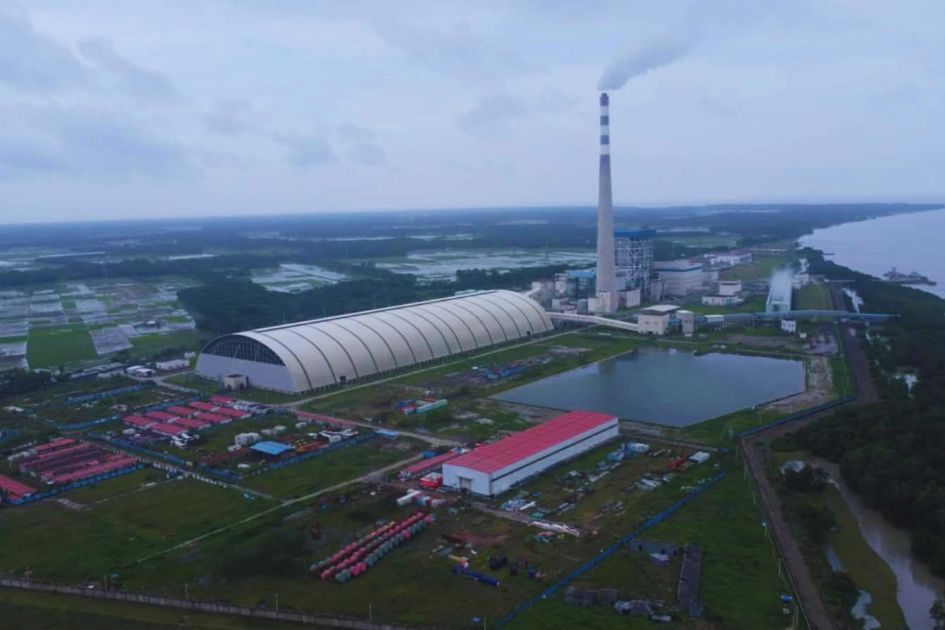



A coal plant sends electricity to Bangladesh’s grid, but communities beside the Payra River report skin disease, falling catches and pollution. The allegations remain unproven because regulators have not released the independent data needed to test them.
The electricity comes from here. Yet beside the coal-fired power plant on the Payra River, residents say clean water, healthy skin and a dependable catch of fish are becoming harder to find.
Women in Nishanbaria union of Barguna district describe itching and burning after bathing. Fishermen say catches have fallen. Residents point to coal dust, suspected industrial waste and wastewater, while families living near the coast blame sand extraction during the plant’s construction for worsening erosion.
Their accounts raise an urgent environmental-health question, but the publicly available evidence does not yet answer it. No independent study cited for this article has established that the plant caused the reported illnesses, contaminated the Payra or drove the decline in fish. That absence of proof should prevent overstatement, not prevent investigation.
One plant, two capacity figures
The facility is operated through Barisal Electric Power Company Limited and is widely known as the Barisal 350 MW Power Plant. POWERCHINA says the plant has an installed capacity of 350 megawatts, while Bangladesh Power Development Board’s July 2026 generation report lists it as ‘Barisal Electric 307 MW Coal (IPP)’. The clearest formulation is that it has a 350 MW nameplate capacity but is recorded by BPDB as a 307 MW grid plant.
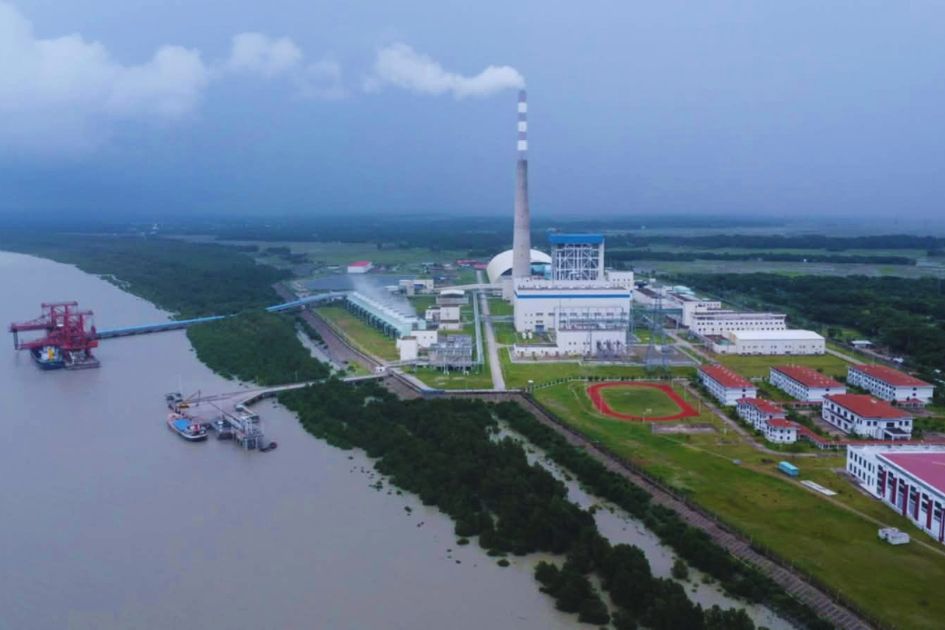
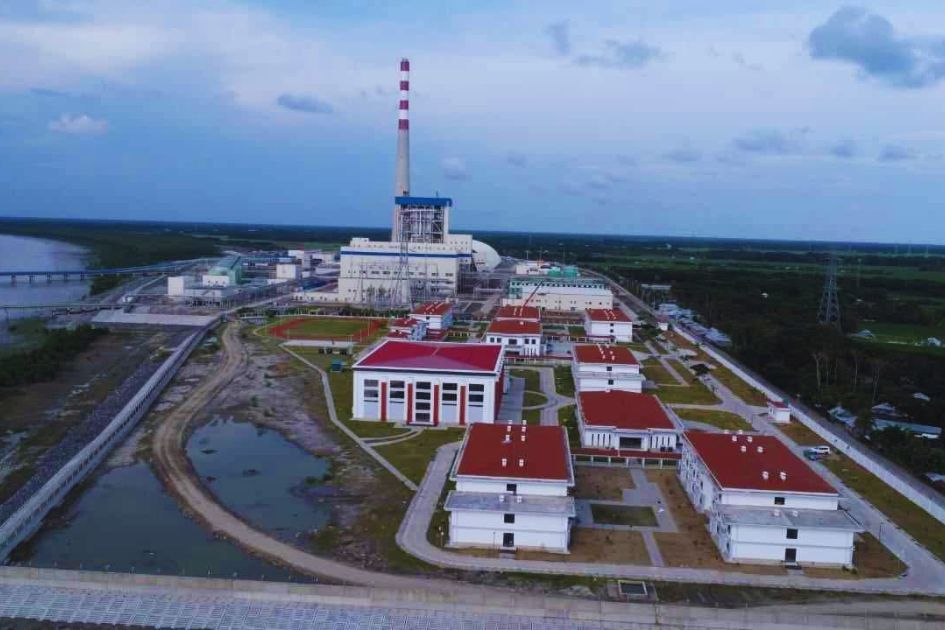
The company says commercial operation began on 1 January 2023. AidData’s project record says the plant connected to the grid in October 2022, completed its reliability test at the end of that year and was financed as a $557.89 million independent power project. It records a $427.5 million syndicated loan involving China Eximbank and Bank of China branches, supported by a sovereign guarantee from Bangladesh.
AidData identifies BEPCL as a special-purpose company in which Barisal Energy (DFC) Holding Limited held 92 per cent and Sinohydro (Hong Kong) Holdings Limited and ISO Tech Electrification Company Limited each held four per cent. POWERCHINA says it invested in, built and operates the facility.
The power contribution is significant. POWERCHINA reported generation of 1.06 billion kilowatt-hours in the plant’s first year and more than 1.6 billion kWh by the end of October 2024. Those company figures explain why the plant matters to the national system. Bangladesh’s official generation-mix portal listed 6,273 MW of coal capacity, 19.32 per cent of installed capacity, on 19 August 2026.
‘We are afraid to enter the water’
For families around Nishanbaria, the argument begins with the river. Residents have long used the Payra for cooking, bathing, household chores and fishing.
“We use this water for cooking and bathing,” one local woman interviewed for this story said. “When the dirty water touches our bodies, we develop itching and allergies. Many people are suffering from skin problems.”
Another resident said people once entered the river normally but were now afraid to do so. Families said visible skin conditions also carried a social cost, including stigma affecting some young women’s marriage prospects.
The most cited local number came from a community courtyard meeting held on 20 June 2026 by Dhora, Mission Green Bangladesh and the Payra River Hilsa Protection Committee. Organisers said 17 of 21 participating women had skin disease or allergy-related conditions.
The figure is alarming but must not be presented as a scientific prevalence rate. The participants were not a random sample, the gathering was not a population health survey and the online report did not describe clinical examinations, diagnostic criteria or a control group. It can generate a research question, but it cannot answer one.
A BanglaVision investigation reported that Taltali Upazila Health Complex statistics showed more than a 3.5-fold increase in skin-infection patients in 2025 compared with 2023. It also reported almost 2.5 times as many diarrhoea patients and almost three times as many patients recorded with unidentified poisoning.
The report did not publish the raw counts, catchment population or diagnostic definitions, so the scale and comparability of the increase cannot be independently checked. Changes in record-keeping, access to care or patient attendance could also affect the totals.
Dr Sabyasachi Das, residential medical officer at Taltali’s 50-bed hospital, told BanglaVision that around 30 per cent of daily outpatients had skin infections. That clinical observation deserves follow-up through anonymised patient records showing diagnoses, places of residence, occupations and when symptoms began.
Timing alone cannot establish cause. Skin disease may arise from chemical irritation, microbes, parasites, salinity, occupational contact, scabies, heat, humidity or household products. Researchers would need to compare people with different exposure patterns and include a similar community outside the plant’s likely air and water pathways.
Yellow waste and a claim that needs correction
BanglaVision reported finding yellow, foam-like material beside a road and on the riverbank. An environmental scientist who viewed photographs identified it as glass wool used for insulation. Residents said contact with the material produced burning and itching.
If laboratory analysis confirms it is glass wool, the irritation concern is credible. The US Agency for Toxic Substances and Disease Registry says short-term exposure to synthetic vitreous fibres can cause reversible irritation of the skin, eyes and lungs.
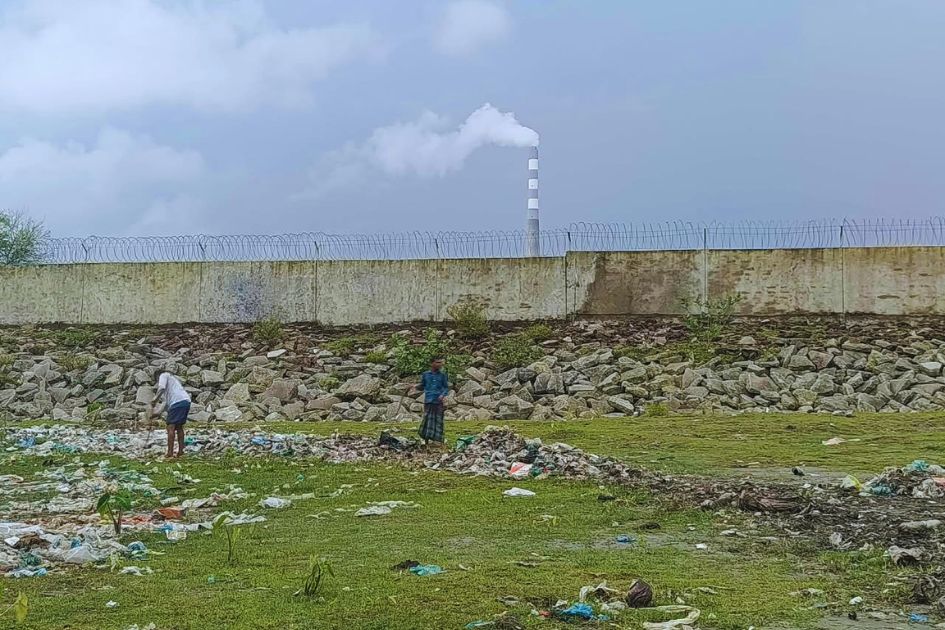
But ordinary insulation glass wool should not be described simply as a proven carcinogen. ATSDR’s public-health assessment says the International Agency for Research on Cancer found insulation glass wool, stone wool, slag wool and continuous filament glass were not classifiable as carcinogenic to humans because evidence was inadequate. Refractory ceramic fibres are a separate category. A photograph cannot determine which material was present or prove where it came from.
Ash, wastewater and the missing measurements
Residents blame coal transport, ash and wastewater for the change they perceive in the river. Their suspicions are plausible enough to test. The US Environmental Protection Agency describes coal-combustion residuals as fly ash, bottom ash, boiler slag and material left by pollution-control systems. How those wastes are stored, reused or discharged determines whether they reach the environment.
The EPA says coal-plant wastewater can contain selenium, mercury, arsenic, nickel, bromide, chloride, iodide, nutrients and dissolved solids that can harm water sources and aquatic life. That does not establish that any of those pollutants are present beside the Taltali plant. It establishes which risks competent testing should consider.
Air pollution requires measurements too. According to the EPA’s power-plant overview, fossil-fuel plants can emit sulphur dioxide, nitrogen oxides, particulate matter, carbon dioxide and mercury. Fine particles and ground-level ozone can aggravate heart and lung disease, but exposure around a particular plant depends on controls, fuel quality, weather and distance.
POWERCHINA says the Barisal plant uses supercritical technology and its pollutant concentrations are below Bangladeshi and World Bank standards. Its public statement did not include numerical emission results or monitoring dates. The company could resolve much of the dispute by publishing continuous stack data, wastewater test results, coal and ash handling records and the locations of approved disposal sites.
A productive river under many pressures
Fishermen say the Payra no longer yields the catches it once did. “We used to catch fish here regularly,” one fisherman said. “Now we catch much less than before.”
Residents allege that heated discharge water and other waste are affecting aquatic life. Temperature changes can alter oxygen conditions, metabolism, breeding and the distribution of fish and plankton. But catch also changes with fishing effort, gear, season, rainfall, salinity, siltation and upstream conditions. A credible study must examine all of them.
A 2022 peer-reviewed study of the Payra River recorded 61 finfish and shellfish species, including four endangered, six vulnerable and four near-threatened species under Bangladesh assessments. It described the Payra as productive but identified extensive fishing pressure and other human disturbance as threats.
That study was conducted elsewhere in the river system and was not designed to evaluate the Nishanbaria power plant. It cannot validate or dismiss the fishermen’s claims. It does provide a warning against a one-cause story and a baseline for designing a proper fisheries investigation.
The plant also operates near a sensitive coastal landscape. A Bangladesh Forest Department vulnerability assessment says the Tengragiri site office in Taltali is responsible for protecting and building the resilience of Tengragiri Wildlife Sanctuary and natural-resource-dependent communities along the forest edge. Any industrial impact on water, air or hydrology therefore reaches beyond a single village.
Sand extraction and erosion
Residents say sand was removed from nearby coastal areas while the plant was being developed. They believe the extraction helped bring the waterline closer and accelerated the loss of trees and land.
A 2022 Transparency International Bangladesh study reported that sand had been extracted from Shuvo Sondha beach despite a restriction on withdrawal within one kilometre of the coast. TIB also alleged that a sluice gate had been blocked, canals filled and conditions attached to the project’s environmental approval violated.
Those findings warrant examination of dredging permits, contractors’ logs, satellite images and shoreline records. They still do not prove the project alone caused present erosion. A 2025 study of the Payra and two other deltaic rivers documented substantial riverbank change and emphasised sediment transport, flow and human activities. Storms, tides, river migration and long-term sediment dynamics must be separated from any project-related effect.
Questions over clearance and compliance
The project’s environmental history has been contested from the beginning. EQMS Consulting says BEPCL engaged it to conduct the initial environmental examination and environmental impact assessment. TIB reported that work began before an EIA and environmental clearance certificate were in place, although the EIA was later approved.
The public now needs the full documentary trail: the approved EIA, environmental management plan, environmental clearance and renewals, monitoring reports, inspection findings, effluent-treatment records, stack-emission data, ash-management documents and any notices or penalties.
The Environment Conservation Rules 2023 set assessment and monitoring duties for high-risk projects. The Department of Environment’s enforcement guidelines explain that inspectors can check whether effluent-treatment and air-pollution-control systems are operating, collect samples and pursue action when standards are breached. The Environment Conservation Act empowers the department to control pollution and respond to environmental damage.
BanglaVision reported that POWERCHINA did not answer multiple emails about the allegations. BPDB Chairman Rezaul Karim told the broadcaster he did not know whether compliance rules were being followed and asked for evidence. The Climate Watch has not independently obtained a current response from the operator for this version. A response must be sought before final publication, together with comments from the Department of Environment and local health authorities.
What an independent investigation should test
River water and sediment should be sampled upstream, at any discharge point and downstream during different tides and in wet and dry seasons. The plan should measure temperature, pH, salinity, dissolved oxygen, conductivity, suspended solids, oil and grease and contaminants selected by an accredited laboratory, including relevant metals associated with coal ash. Results should include detection limits, coordinates and chain-of-custody records.
Air monitoring should cover particulate matter and gaseous pollutants in nearby settlements and at a background location. Stack records should be checked against ambient measurements. Suspected glass wool or other dumped material should be mapped, sampled and chemically identified. Soil and crop tests must be designed to separate industrial deposition from salinity, fertiliser, pesticides and other sources.
A health study should be led by dermatologists, public-health specialists and epidemiologists. It would need confirmed diagnoses, the date symptoms began, household water sources, occupation, contact with suspected waste and residential distance from the plant. A comparison community and records from before commercial operation are essential. Residents also need immediate access to safe water and treatment while research is conducted.
The evidence available today does not justify declaring the plant the proven cause of every rash, lost fish or stretch of eroded coast. It does justify an independent inspection with public results. The company’s claims of compliance should be tested with the same rigour as residents’ claims of harm.
The Barisal plant delivers large quantities of electricity to Bangladesh. That benefit is real. So is the duty to prevent pollution and protect the people living at the project’s edge.
Megawatts show how much electricity a plant can produce. They do not show whether the river beside it is safe to touch, whether the air is safe to breathe or whether fishing families can still earn a living. In Taltali, those measures of development remain unresolved.




