

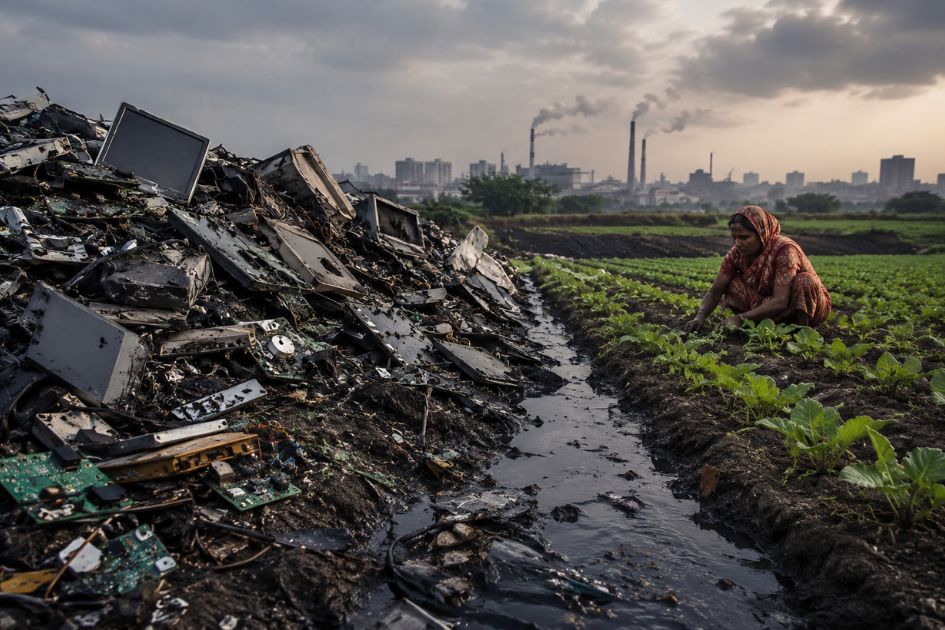



Rising electronic waste in Bangladesh is contaminating soil, water and crops, threatening agriculture, ecosystems and public health while exposing gaps in recycling systems, environmental regulation and public awareness nationwide.
The rapid rise of electronic waste is emerging as a silent but serious threat to the environment, agriculture and human health in Bangladesh and across the world as discarded digital devices release toxic substances into soil, water and the food chain.
Driven by fast-changing technology and growing consumer demand for new gadgets, millions of tonnes of electronic waste, or e-waste, are being generated every year. Experts warn that developing and agriculture-dependent countries such as Bangladesh are particularly vulnerable because hazardous materials from discarded electronics are increasingly contaminating farmland, water sources and ecosystems.
E-waste refers to electrical and electronic products that are no longer usable or have been thrown away, including old mobile phones, damaged computers, broken televisions, refrigerators, washing machines, batteries, chargers, electronic circuit boards and various digital devices. As technology evolves rapidly, consumers are replacing devices more frequently, causing a continuous rise in electronic waste.
A significant share of e-waste from developed nations is also entering developing countries under the label of recycling. However, much of this waste is not processed safely, leading to severe environmental pollution through the release of toxic chemicals.
Environmental experts say one of the most dangerous aspects of e-waste is the presence of hazardous heavy metals and chemical compounds such as lead, mercury, cadmium, arsenic, chromium and brominated substances. These toxic elements accumulate in soil over time, reducing fertility and disrupting normal crop growth. Contaminated crops can then carry harmful substances into the human body through the food chain.
The impact on agriculture and the environment is extensive. Open burning of e-waste releases poisonous smoke into the atmosphere, worsening air pollution. Rainwater can also carry toxic chemicals deep into the soil and contaminate groundwater. In many cases, discarded electronics are dumped into rivers and canals, threatening aquatic life and fish resources.
For Bangladesh, where a large portion of the population depends directly or indirectly on agriculture, the consequences could be severe. Pollution of farmland may undermine food security as toxic metals accumulate in vegetables, rice, fruits and other crops. Long-term exposure to such contaminants can contribute to cancer, kidney disease, neurological disorders, respiratory illnesses and developmental complications in children.
Specialists say the e-waste crisis is not only environmental but also economic and social. Valuable materials such as gold, silver, copper and aluminium found in electronic products are being wasted because of poor recycling systems. Improper disposal practices are simultaneously polluting the environment and destroying potentially reusable resources.
Bangladesh still lacks an adequate e-waste management system. In urban areas, discarded electronic devices are often dumped in open spaces, burned or dismantled in unsafe conditions. Child labourers are also frequently involved in separating electronic waste, exposing them to severe health risks.
Lack of public awareness remains another major challenge. Many people are unaware that used batteries, mobile phones and chargers should not be disposed of with regular household waste. As a result, such materials end up in garbage dumps and contribute to growing environmental pollution.
Experts recommend adopting the “reduce, reuse and recycle” principle as one of the most effective ways to manage e-waste. Consumers are encouraged to limit unnecessary electronic purchases, reuse old devices and ensure safe recycling of unusable products. A mobile phone with minor faults, for example, can often be repaired and used longer instead of being discarded. Old computers and laptops can also be donated to educational institutions or underprivileged students.
Recycling is considered the most important step in e-waste management. Modern technology can recover valuable metals from discarded electronics for reuse, reducing environmental pollution and easing pressure on raw materials. Experts say this requires government-approved recycling facilities and advanced processing technology.
They also stress that governments, industries and the public must work together to tackle the crisis. Authorities should introduce and enforce stricter regulations on e-waste management while encouraging industries to adopt environmentally friendly technologies. Awareness campaigns through schools, colleges and the media are also seen as essential.
Many countries are already shifting toward green technology and producing longer-lasting and repairable electronic products to reduce waste generation. Greater use of solar power and renewable energy technologies could also help protect the environment.
The spread of smart technologies in agriculture is creating another source of e-waste through outdated farming equipment, sensors, batteries and digital devices. Experts say safe disposal systems must accompany the growing use of IoT-based agricultural technologies and electronic tools in farming.
Environmentalists warn that failure to address the e-waste crisis today could have devastating consequences for future generations. They say responsible disposal, proper segregation and active participation in recycling programmes are critical to protecting agriculture, food safety and public health.
“E-waste is not ordinary garbage. It is a silent poison,” experts said, urging people to become more conscious of the environmental costs of modern technology and to support sustainable waste management practices for a safer future.




