

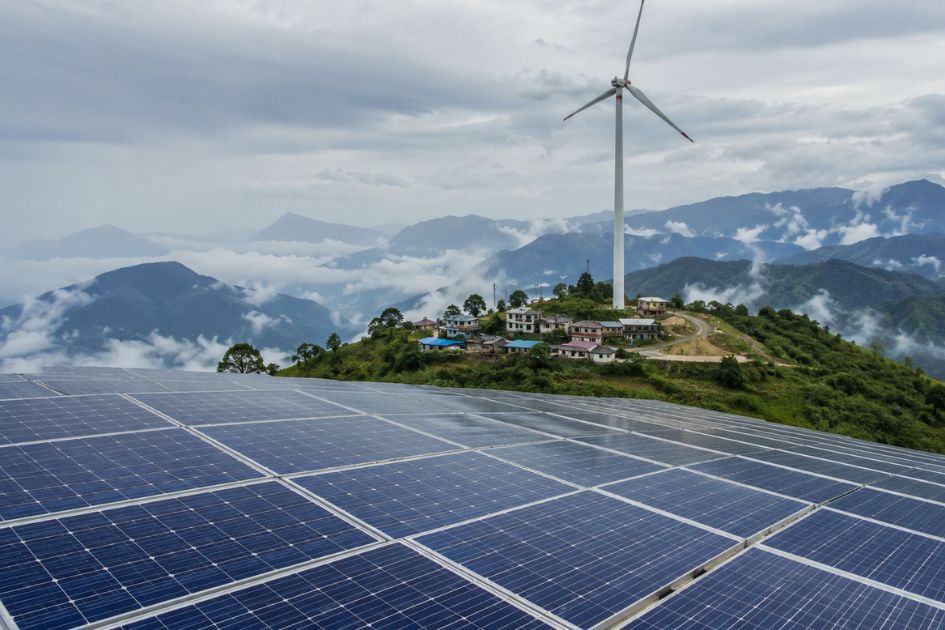



Experts urged Nepal to embed climate action across economic planning while expanding renewable energy, sustainable transport and green enterprises to strengthen resilience and unlock long-term development opportunities.
As one of the world’s most climate-vulnerable mountainous countries, Nepal is facing growing risks from glacier melting, extreme weather events, ecosystem disruption and changing climate patterns. However, experts have stressed that climate change is not only a challenge for the country but also an opportunity to accelerate a green transformation through renewable energy, sustainable transport, green enterprises and climate-resilient development.
Climate change is directly linked to Nepal’s economy, agriculture, energy, tourism, health and overall development, experts said, calling for long-term policies, effective implementation and greater support for green businesses to reduce climate impacts and create new economic opportunities.
Climate policy experts, energy analysts, mountaineers and green entrepreneurs shared their views on climate challenges, impacts and solutions at “The Green Table”, organised by the Nepali Congress on Wednesday to mark the 44th BP Memorial Day.
Climate policy expert Manjeet Dhakal said climate change should not be treated as a separate environmental issue or limited to a single policy area, as its effects are already visible across sectors that are central to Nepal’s economy.
“Climate change is not just a sector or an issue. Its impact is visible in agriculture, hydropower, tourism and other sectors that contribute significantly to Nepal’s economy. We also need to study its indirect impacts on areas such as remittances and employment,” Dhakal said.
He stressed that climate considerations must be integrated into national policies, programmes and budgets.
“It is not enough to limit climate change to one point in our policies and programmes. We need policies that consider the impact on all sectors of the economy, the challenges facing future generations and the opportunities that can be created,” he said.
Dhakal said Nepal’s climate narrative should move beyond only highlighting vulnerability and focus on solutions and opportunities.
“Nepal has been affected by climate change, but this crisis also creates opportunities. Through improvements in transport, energy and waste management, we can create benefits for the country and reduce our dependence on imports,” he said.
Nepal contributes only a very small share of global greenhouse gas emissions but faces disproportionate impacts from climate change. Dhakal said the country should continue demanding climate justice, finance and technological support from high-emitting nations while also taking responsibility for actions it can implement domestically.
Highlighting the importance of sustainable transport, Dhakal said Nepal needs to redesign urban mobility systems by prioritising pedestrians, cycling and public transportation.
“Looking at Kathmandu’s Ring Road, only a small portion is allocated for pedestrians, even though a large part of the population depends on walking. Roads should also be designed for people who walk,” he said.
He said cycling could play an important role in reducing emissions and improving public health, but current road conditions make it difficult and unsafe, particularly for children travelling to school.
“We need bicycle-friendly roads and must give priority to public transport instead of private vehicles,” he added.
Dhakal also highlighted waste management as a key area where Nepal can take immediate action.
“We should improve our own waste management systems rather than only blaming developed countries for pollution. Many municipalities in Nepal have already shown successful examples,” he said.
He cautioned that Nepal cannot ignore domestic environmental challenges by focusing only on external factors such as cross-border pollution and forest fires.
Energy and policy analyst Abhishek Yadav said Nepal has made significant progress in climate action, particularly in renewable energy, hydropower, solar power, electric mobility and forest conservation.
“Nepal has made good achievements under its climate action plans. Renewable energy is expanding, electric vehicle use is increasing and forest conservation is receiving greater attention,” Yadav said.
He said Nepal’s renewable energy potential, especially hydropower and solar energy, provides an opportunity to build a low-carbon economy while strengthening energy security.
The expansion of electric transport can also help Nepal reduce fossil fuel imports, improve urban air quality and increase economic resilience, he added.
However, Yadav highlighted the need for proper systems to manage electric vehicle battery recycling.
“Battery technology is continuously evolving, and in the future it will be possible to produce more efficient batteries using fewer resources. But battery recycling must become an important part of Nepal’s clean transport transition,” he said.
Mountaineer and photojournalist Purnima Shrestha shared her first-hand experience of witnessing climate impacts in the Himalayas, saying changes once predicted for the future are now visible during mountain expeditions.
“Earlier, we used to read and hear that the impacts of climate change would be visible after 10 or 15 years. But now, when you climb mountains, you can see glaciers and landscapes changing with your own eyes,” she said.
She said unpredictable weather, sudden strong winds and unusual snowfall patterns have increased risks for climbers.
“Problems caused by changing weather conditions and the lack of reliable forecasting are making mountain climbing more dangerous,” she said.
Green entrepreneur, dentist and environmental protection engineer Dr Manu Karki highlighted the difficulties faced by climate-focused businesses in accessing finance, information and policy support.
Karki, who has worked in green entrepreneurship for seven years, said many entrepreneurs are missing opportunities because climate finance mechanisms remain unclear and difficult to access.
“There is still no clear information about where to get climate finance or how to apply. Such information should be easily available through government websites and public platforms,” she said.
She stressed the importance of ensuring that women entrepreneurs and small green businesses have access to climate finance and support.
Karki also called for supportive tax policies on importing raw materials that are not produced in Nepal, saying such measures would help make green industries more competitive and encourage sustainable innovation.
Experts at the discussion agreed that Nepal’s climate response must combine domestic action with international cooperation. They said the country’s future should not be defined only by climate vulnerability but also by its ability to demonstrate solutions through renewable energy, sustainable development and inclusive green growth.
With the right policies, investment, climate finance and innovation, experts said Nepal can show how climate-affected countries can transform environmental challenges into opportunities for a resilient and sustainable future.




