

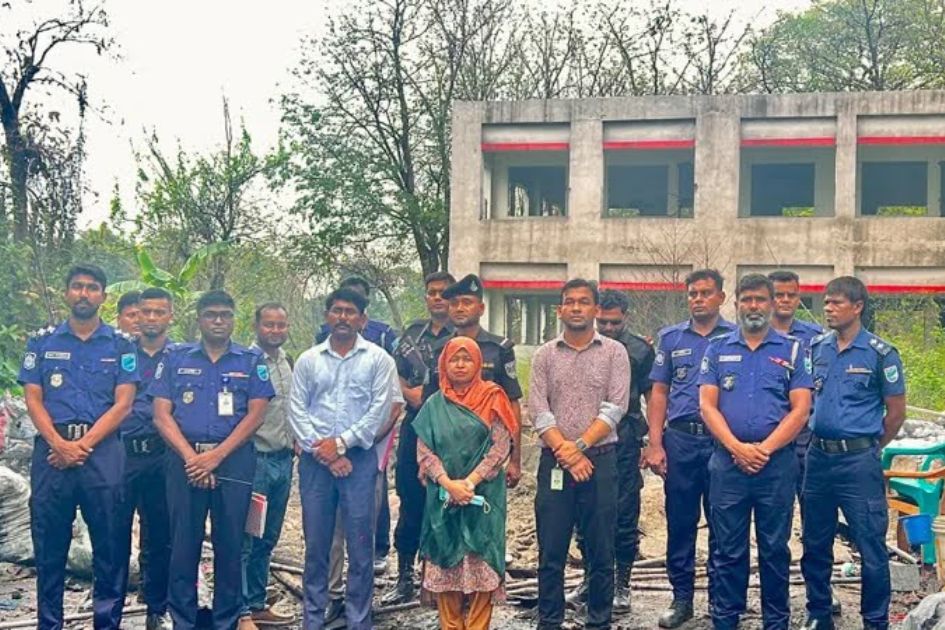

Separate cases in Dhaka and Panchagarh have renewed concerns over hazardous lead-acid battery recycling, with authorities stepping up enforcement as communities report pollution, environmental damage and risks to public health.
Bangladesh has intensified enforcement against unregulated battery recycling operations after separate incidents in Dhaka and Panchagarh raised concerns over toxic waste, lead pollution and threats to public health and local ecosystems.
The actions come amid increasing scrutiny of informal lead-acid battery recycling facilities, which often operate without proper waste treatment and pollution control systems. Environmental experts warn that such activities can release toxic emissions and lead contamination, threatening air, soil, water sources and nearby communities.
Dhaka’s Dhamrai facility dismantled after environmental raid
The Department of Environment (DoE), Bangladesh’s environmental regulator, has fined a battery recycling facility Tk 200,000 and demolished its structures during a raid in Dhamrai upazila of Dhaka for allegedly producing lead by breaking old batteries and melting lead in violation of environmental regulations.
The joint enforcement drive was carried out by the Dhaka District Office of the Department of Environment and the Monitoring and Enforcement Branch at the DoE headquarters at an unauthorised battery recycling factory in the Barakoir area of Kulla Union in Dhamrai. The facility, which was not named by authorities, was reportedly involved in breaking used batteries and melting lead, causing air pollution and environmental hazards.
During the operation, authorities destroyed three furnaces and the unauthorised infrastructure of the factory, completely shutting down its activities. The operator of the facility was fined Tk 200,000, which was recovered during the enforcement action.
The raid was conducted under the leadership of DoE Executive Magistrate Kishore Kumar Das. Assistant Director of the DoE Dhaka District Office Md Nazmul Hossain served as the prosecution officer, while Assistant Director Jesmin Akter was also present during the operation.
A team from the Bangladesh Police and the Rapid Action Battalion (RAB)-4 provided necessary law enforcement support during the enforcement drive.
The Department of Environment said the operation was part of ongoing efforts to control air pollution and prevent hazardous industrial activities that threaten public health and the environment.
Panchagarh villagers raise alarm over toxic battery waste
Meanwhile, residents of Debanup Para village in Tetulia upazila of Panchagarh district have raised concerns over alleged pollution from the Bhai Bhai Battery Factory, claiming that waste discharged from the facility is damaging the surrounding environment and affecting local livelihoods.
According to local residents, the factory allegedly releases acid-contaminated wastewater and toxic fumes, causing damage to nearby ecosystems. They claim polluted water from the facility has affected ponds, farmland, trees and livestock, with reports of cattle deaths and fish dying after coming into contact with contaminated water.
Villagers said the factory’s activities often begin late at night, usually after 10:00 pm, and alleged that hazardous waste is being discharged without proper treatment. They said the situation has created fear and uncertainty among people living in the surrounding areas.
“This pollution is putting our health, livelihoods and environment at risk,” local residents said, demanding immediate intervention from authorities to address the alleged environmental violations.
Some residents have also raised allegations of political influence behind the establishment of the factory. A local Bangladesh Jatiyatabadi Chhatra Dal (JCD) leader, Suman Reza, was accused by some residents of supporting the operation, a claim he has denied.
The factory owners have reportedly agreed to compensate affected residents. Meanwhile, officials from the Department of Environment visited the site following complaints and said legal action against the suspected non-compliant operation is under process.
Growing challenge of lead pollution
Environmental experts warn that poorly managed lead-acid battery recycling can expose communities to serious health risks, particularly through contamination of air, soil and water. Lead can accumulate in the human body and the environment, creating long-term health impacts even after exposure has ended.
Children and vulnerable communities are particularly at risk from lead exposure, which has been linked to developmental, neurological and other health problems.
Highlighting the broader environmental justice implications, Sohanur Rahman, Executive Coordinator of YouthNet Global, a youth-led organisation working on climate justice, environmental protection and sustainable development, said, “Illegal battery recycling is not only an environmental issue; it is a public health and social justice challenge.” He added, “Communities living near these facilities are often the first to suffer from pollution while having the least ability to prevent it. Bangladesh needs stronger enforcement, responsible industrial practices and safer recycling systems to protect both people and nature.”
The two incidents underline a wider challenge in Bangladesh, where rising demand for batteries, combined with weak waste management practices and unregulated recycling activities, continues to threaten ecosystems and public health.
The incidents highlight the urgent need for Bangladesh to modernise its battery recycling sector, strengthen hazardous waste regulations and ensure that economic activities do not come at the cost of environmental protection and community health.




