

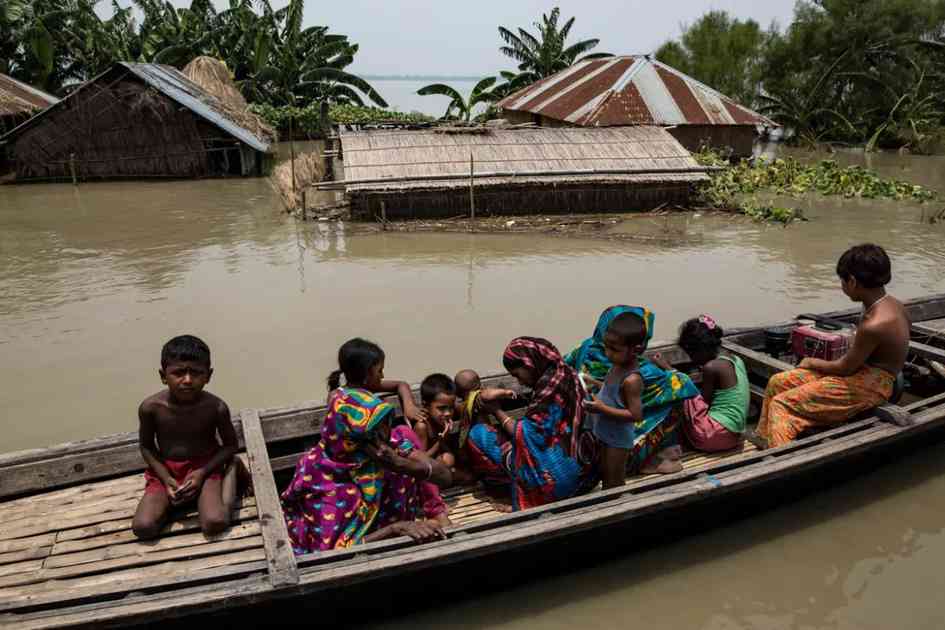



Climate pressure is narrowing livelihood choices in coastal Bangladesh. For families financing overseas work through debt, an unfair migration system can transform movement from adaptation into a second crisis.
In the villages beside the Sundarbans, migration does not begin at an airport. It begins when salt enters a field, fish catches fall, a cyclone damages a boat, or another season passes without enough work. A family tries to adjust. Someone takes a job in a nearby town. Another relative goes to Dhaka. Loans accumulate. Eventually, a broker’s promise of work abroad can appear to be the only door still open.
For a growing number of households in coastal Bangladesh, that door leads to a second set of risks. Some workers reach Gulf countries but discover that the promised job or work permit does not exist. Some return from Malaysia before earning enough to repay their loans. Others try to reach Europe through Libya and become vulnerable to detention, extortion or trafficking. Their experiences show how climate pressure can combine with an expensive and weakly regulated migration system to turn movement from a possible adaptation strategy into another crisis.
No single label captures every journey. People migrate because of wages, family networks, aspiration and demand for labour as well as environmental stress. A district’s exposure to cyclones does not prove that every overseas worker from that district is a climate migrant. Yet when salinity, storms and erosion destroy the income and assets that allow people to plan, they also change the conditions under which migration decisions are made.
The forest livelihood that no longer pays
Shah Alam of Kaikhali union in Satkhira’s Shyamnagar upazila began entering the Sundarbans with his father, Azgar Ali, at 15. He learned to collect golpata, the nipa palm used for traditional roofing, and to fish the forest’s waterways. For much of his life, the Sundarbans was not simply a protected ecosystem; it was his workplace, food source, and family safety net.
That safety net has weakened. ‘There is no agricultural work in the area because of salinity,’ Shah Alam said. ‘Fish have declined, and there are many restrictions on collecting golpata. In this way, the paths to earning an income are becoming narrower.’ For the five years before this reporting, forest work alone could no longer support him. He began considering employment overseas.
The pressures he describes fit a much larger national risk. The World Bank’s Bangladesh Country Climate and Development Report warns that climate impacts on agriculture, water scarcity and sea-level rise could produce 13.3 million internal climate migrants over three decades. It also says one-third of agricultural GDP could be lost by 2050 because of climate variability and extreme events. The IPCC’s assessment of Asia estimates that direct inundation associated with sea-level rise could displace about 0.9 million to 2.1 million people in southern Bangladesh by 2050, depending on future warming, development and adaptation.
Projections do not determine one family’s future, and they should not be used as a shortcut for explaining individual migration. They reveal the scale of the pressure surrounding individual choices. Saline water can reduce yields and irrigation options, storms can destroy boats and nets, and recurring floods can damage homes before a household has repaid the previous recovery loan. When several sources of income fail together, migration becomes harder to finance safely even as it becomes more necessary.
When moving becomes a survival strategy
The clearest local evidence comes from OKUP’s 2023 study of climate-affected communities in Shyamnagar. Researchers surveyed 1,050 households in 64 villages across Gabura, Padmapukur and Kaikhali unions. They found that 59 percent of households had at least one member who had migrated in search of a better livelihood. Among those migrant households, 86 percent had moved within Bangladesh, and 14 percent had gone abroad.
The same study found that 92 percent of surveyed households had been severely affected by cyclones, 88 percent by floods, 72 percent by salinity and 70 percent by riverbank erosion. Eighty-one percent had taken loans between 2007 and 2023 to cope with climate-related distress, and 58 percent of borrowing households had taken repeated loans. International migration from the research area rose 65 percent between October 2022 and September 2023.
Those numbers describe three highly exposed unions, not Bangladesh as a whole. Their importance lies in the sequence they reveal. A disaster damages assets. A household borrows to recover. Income does not fully return. Another shock arrives before the loan is repaid. Migration then becomes a way to service debt as well as a search for work – and financing that journey requires another loan.
Internal movement is usually the first step because it costs less and can be organised through family networks. But life in a city may bring high rent, informal work and limited social protection. A person who cannot build savings in Dhaka or a district town may then look overseas. Shakirul Islam, chair of OKUP, said that this pattern is increasingly visible among climate-affected families: local adaptation fails, internal migration proves insecure and international labour migration becomes the next attempt.
Borrowing for Italy, stranded in Libya
Shahid Gazi’s family followed that logic. He had worked in agriculture in Shyamnagar, but his brother said farming and fishing no longer generated enough income to run the household. Relatives took instalment credit, borrowed from family members and sold land to finance his journey toward Italy.
At the time of the original reporting, his brother Rabiul Islam said Shahid was being held by traffickers in Libya and hoped to return to Bangladesh. ‘My brother worked in agriculture, but that income could not support the family,’ Rabiul said. ‘There are not as many fish in the river as before, and cultivation was not enough. We borrowed from relatives, took instalment loans and sold land to send him abroad.’ The family filed a police case against a local broker but said it had been unable to bring him home.
Several families in Satkhira described relatives attempting to reach Italy or Greece through Libya. Climate pressure does not give them a special visa or recognised international status. They enter systems governed by immigration, asylum, labour and anti-trafficking laws, none of which automatically protects someone simply because environmental decline contributed to the decision to leave.
The legal distinctions must remain clear. Irregular migration, smuggling and trafficking are not interchangeable, and not every broker is a trafficker. But migrants who begin with heavy debt, incomplete information and no verified work contract have little bargaining power. Their need to earn quickly can be used against them at every stage of the journey.
A permit that never arrives
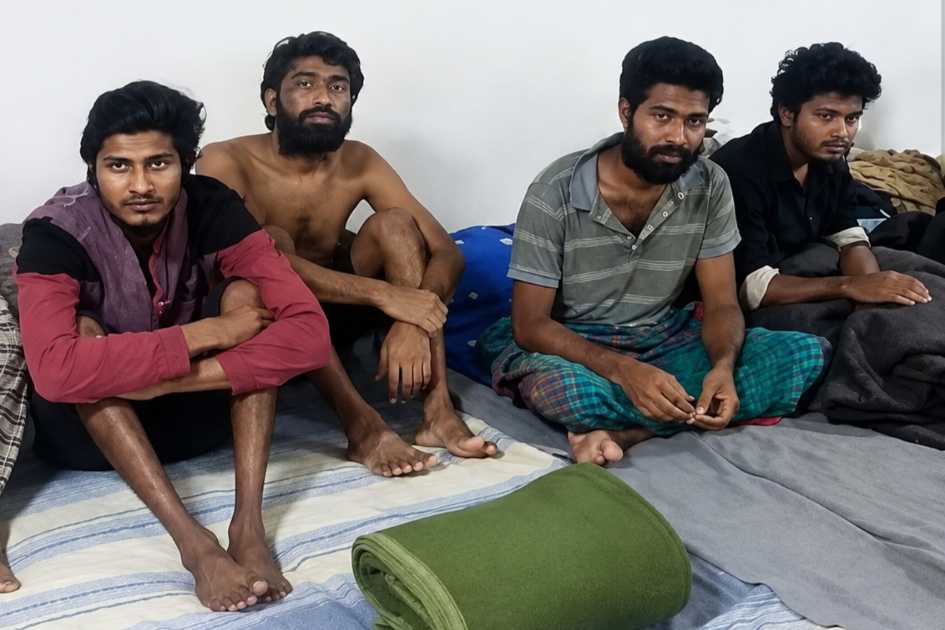
In the Shyamnagar sample, 81 percent of returnee migrants said they had not received a work permit after reaching their destination. The OKUP report also recorded withheld wages among 78 percent, forced labour among 72 percent, restrictions on movement among 69 percent and detention before deportation among 80 percent. These are rates among returnees interviewed in the study area, not all Bangladeshi workers abroad.
A larger study published in 2025 by OKUP, Anti-Slavery International and IIED found a less uniform but still troubling picture in Pirojpur and Sylhet. Half of the international migrants surveyed were working legally with permits, 32 percent were working without permits and 18 percent had returned. About 21 percent of undocumented migrants were actively looking for help to come home.
That study found that 51 percent of international migrants went to Saudi Arabia, 15 percent to the United Arab Emirates and 14 percent to Oman. Malaysia accounted for 6 percent, while Qatar and Kuwait each accounted for 4 percent. Construction was the largest employment sector. The figures underline how heavily households depend on a handful of destination countries and the recruitment channels serving them.
Shahin Alam of Gabura took a loan at interest to travel to Malaysia. He returned in less than six months. ‘There had been no work in the area for a long time,’ he told The Climate Watch. ‘Some people who went abroad were doing well, and others were not. I went despite the risk. The broker made many promises, but after arriving I found they were false. Now I have lost on both sides.’
His failed journey left the original problem untouched and added repayment pressure. This is why recruitment costs matter so much for climate-affected households. The International Labour Organization reported in 2025 that Bangladeshi workers still faced unusually high costs and persistent recruitment malpractice, despite reforms that extended accountability to subagents and intermediaries. The ILO also highlighted a Bangladesh-Qatar fair-recruitment pilot that cut average costs by 92 percent and left 93 percent of participating workers debt-free.

The national numbers reveal movement, not motive
More than one million Bangladeshis obtained overseas jobs in 2025, according to BMET-based official reporting, and Saudi Arabia remained the leading destination. BMET’s district employment tables reviewed for this article recorded, over the two years used by the reporter, 10,883 departures from Kurigram, 30,194 from Bhola, 14,876 from Barguna, 15,240 from Pirojpur and 14,067 from Satkhira.
All five districts face major climate or disaster risks, but the figures cannot show whether a worker left because of river erosion, salinity, wages, a family decision or another cause. BMET counts documented overseas employment; it does not record the environmental history behind each clearance and cannot fully capture irregular movement.
This limitation should change how climate-migration stories use official data. District totals can identify places that deserve closer study, but household interviews and environmental evidence are needed before causation is claimed. Otherwise, climate becomes an all-purpose label that hides the economic and governance failures shaping migration.
There is still evidence of overlap. In a working paper on climate migration, RMMRU examined reports on Bangladeshis caught in the 2014 maritime trafficking crisis toward Malaysia. It found that 66 percent of the identified victims came from Bangladesh’s 19 climate-affected coastal districts. The finding did not prove that climate change caused every journey, but it showed that people from environmentally stressed areas were heavily represented among those exposed to trafficking and irregular migration.
More than 21 million movements
The scale of displacement has also grown beyond the figures in the original Bengali draft. A 2026 IDMC risk assessment for Bangladesh records around 21.2 million disaster-related movements between 2008 and 2024. The number reached 2.4 million in 2024, the fourth consecutive annual increase and the country’s third-highest total in the monitoring period. Cyclone Remal triggered about 1.1 million movements and monsoon floods about 1.3 million.
The word ‘movements’ is important. These are not necessarily 21.2 million different individuals. A person can be displaced repeatedly, and many cyclone movements are preventive evacuations. IDMC estimates that 11.3 million cyclone-related movements since 2008 were pre-emptive evacuations supported by early warnings and shelters. Bangladesh’s disaster-preparedness system has saved lives, but a successful evacuation does not mean a household has a safe home or viable livelihood to return to.
In July 2026, IDMC added a new measure of the damage. Its policy brief on the human cost of disaster displacement estimates more than 21 million movements between 2008 and 2025, around 89,000 life-years lost and cumulative human costs of about $1.7 billion. Cyclones and storm surges produced nearly 60 percent of those costs, while floods contributed another 32 percent.
This helps explain why emergency relief alone cannot prevent migration under pressure. Food, shelter and evacuation are essential, but they do not replace farmland, boats, tools, livestock or lost working time. When productive assets are not restored, a family may survive the disaster yet remain trapped in a decline that eventually forces someone to move.
Bangladesh has a plan but not yet a functioning system
Bangladesh adopted a rights-based National Strategy on Internal Displacement Management in 2021. It covers prevention, protection during displacement and durable solutions through return, local integration or planned resettlement. The government then produced a National Action Plan for 2022-2042 that assigns activities, responsibilities, indicators and timelines.
A 2025 policy review says the framework contains 112 targets and 479 proposed actions. It calls for a national task force on displacement, a technical advisory committee, integration of displacement into district and upazila coordination, and a dedicated fund to support implementation. In principle, this is the architecture needed to connect disaster response, adaptation, urban planning, livelihoods and durable solutions.
Tasneem Siddiqui, chair of RMMRU, helped develop the strategy after years of research on climate mobility. She said the policy had received international attention but had not been implemented with the institutions and budget required. ‘The plan explains how climate-affected people can be supported through economic activities and sustainable solutions, but there is no budget allocation,’ she said. ‘If the government implemented the policy, increased the budget and built the institutions, we would see results.’
Siddiqui said people displaced from climate-affected areas experience multiple stresses. They may be mistreated after moving inside the country, then enter irregular migration abroad because safer routes appear unaffordable. Those who return with unpaid wages or greater debt can be poorer than when they left.
Keeping the right to stay and making movement safer
A serious response begins with the right to remain. Coastal adaptation must restore earning capacity, not only rebuild structures. Communities need protected freshwater, locally suitable salt-tolerant agriculture, sustainable fisheries, safer forest livelihoods, vocational training and jobs outside the sectors most exposed to climate hazards. Grants and predictable social protection can stop repeated recovery loans from consuming the assets a family needs to remain at home.
Internal migration also needs planning. Towns and cities receiving displaced or migrating households require affordable housing, decent work, health care, schools and portable social benefits. Skills gained in fishing, farming, construction or informal work should be recognised and connected to employment. Without those measures, a move to Dhaka may reduce exposure to a cyclone while increasing exposure to unsafe housing and insecure labour.
For those who choose or need to go abroad, pathways must be affordable and regular. The UNFCCC Task Force on Displacement has called for integrated approaches that avert, minimise and address climate-related displacement, including labour schemes and regular migration options. IOM’s work on regular pathways and the World Migration Report 2026 similarly identify labour mobility, family reunification, humanitarian admission and regularisation as tools for people in vulnerable situations.
A pathway is not safe merely because it is legal. Recruitment costs should be affordable and preferably paid by employers; contracts should be verified before departure; subagents should be licensed and accountable; and workers should be able to report deception or unpaid wages without losing their status. Bangladesh’s embassies and consulates need resources to respond quickly, while destination countries must enforce labour standards against employers and recruiters.
Return and reintegration are equally important. A worker who comes home with debt needs legal assistance, skills recognition, financial counselling and access to employment. If the household’s original livelihood was destroyed by salinity, erosion or a cyclone, reintegration must include climate-resilient livelihood support. Otherwise, return becomes only a pause before another migration attempt.
From one vulnerability to another
Shakirul Islam describes climate-affected workers who are exploited abroad as ‘double victims’. They first lose income and assets because of climate and environmental pressures. They then lose wages, freedom or legal status in a migration system that they entered to recover from the first loss.
Migration itself is not the failure. It can be a powerful adaptation strategy when people have documents, reliable information, useful skills, affordable costs and enforceable rights. It can spread risk across places and create income that helps a family invest in resilience. The failure occurs when people are deprived of the option to stay but are offered no safe way to move.
The journey from the Sundarbans to a foreign labour market therefore begins with a policy choice. Bangladesh can continue treating displacement, adaptation and overseas employment as separate sectors, or it can connect them around the lives of affected households. The country already has a national strategy and long experience in disaster preparedness. Funding local livelihoods, governing recruitment and building regular pathways would turn those plans into protection.
Until that happens, the central question in Shah Alam’s village will remain unanswered: when work disappears at home and migration creates another trap abroad, where can climate-affected people go?
This story is published as part of the CPRD–TCW Reporting Fellowship 2025




