

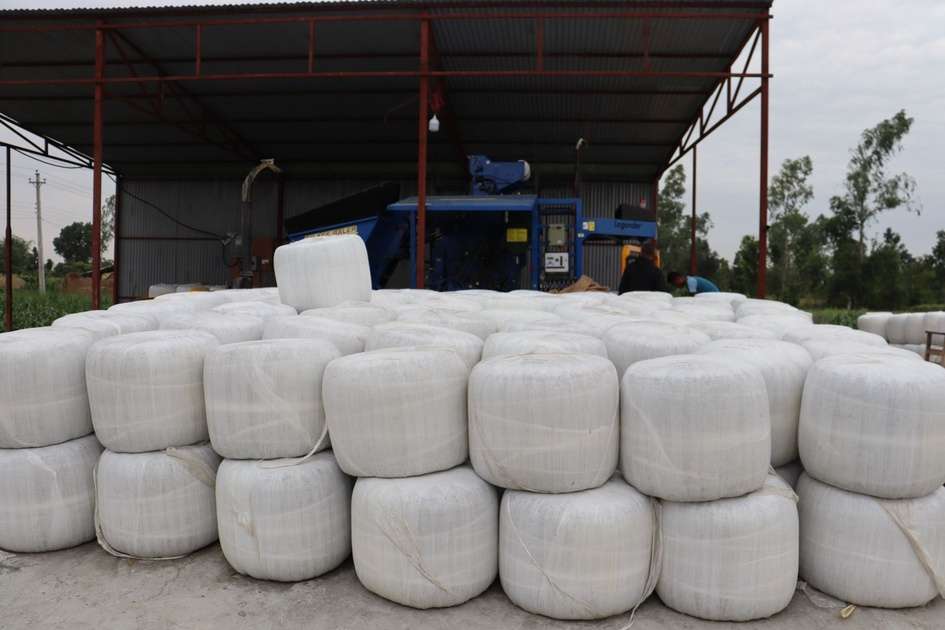



Farmers say maize-based silage has boosted milk yields, while a Sarlahi cooperative backed by FAO-supported funding faces unexpected first-year demand from local buyers, Kathmandu and Pokhara.
The Small Farmers’ Cooperative in Haripur, Sarlahi, has found it difficult to meet the growing demand for silage after starting silage production this year. The demand is high because silage is considered nutritious and beneficial for livestock health. According to farmers’ experience, feeding silage instead of other types of fodder can increase milk production by 20 to 25 percent.
Man Bahadur Khadka of Lalbandi, Sarlahi, is a farmer by profession. A former mayor, Khadka has 15 cows in his cowshed. After completing his term as mayor, he has been spending his daily life in livestock farming.
For years, he had been feeding his cows freshly cut green grass and dry straw. This year, however, he tried something new: feeding his cows silage. Silage is livestock feed made by cutting green grass, compressing it and storing it in an airtight environment so that it can ferment and be preserved.
Khadka fed his cows silage made from green maize stalks. He says that milk production increased by 20 to 25 percent after he started feeding the cows silage.
“There is a difference between feeding regular grass and feeding silage. The cows produced more milk when I fed them silage,” he says.
He had purchased the silage produced by the Small Farmers’ Cooperative located in Haripur Municipality–2.
“I have bought and stored silage. I will feed it when there is a shortage of other fodder. If I feed silage all the time, the green grass will go to waste,” he says.
The Small Farmers’ Cooperative Ltd. started producing silage this year with the objective of improving livestock milk production. The industry was established with financial support of Rs. 6.5 million from the Forest and Agriculture Facilitation Programme, which is being implemented with support from the Food and Agriculture Organization of the United Nations (FAO).
According to Narendra Kumar Chaudhary, the cooperative’s manager, silage production began after the cooperative started purchasing maize stalks from farmers at Rs. 4 per kilogram.
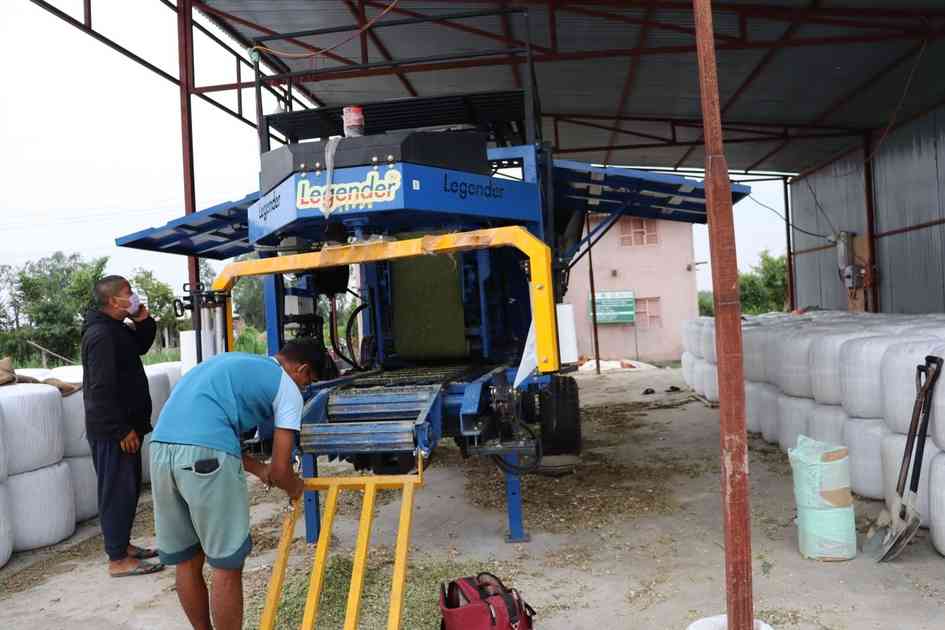
“We collect maize stalks directly from farmers’ fields and the cooperative bears all the transportation costs. We then process them and sell the silage back to farmers at Rs. 13 per kilogram,” he says. “There has been a good response and strong demand from farmers in the very first year.”
The cooperative produced 90 tonnes of silage this year. Of that amount, two tonnes were sold in the local market while demand has also been coming from places including Kathmandu and Pokhara, Chaudhary says.
“We have been receiving requests from different places to enter into long-term supply agreements. However, we do not have enough production capacity to supply silage continuously throughout the year. It is difficult for us to meet the demand,” he says. “Since this is our first year, we could not properly assess the market. Next year, we will prepare better and also encourage farmers to grow more maize.”
Ramesh Chaudhary, a food technology adviser at the cooperative, says silage is healthy for livestock because it is easy to digest and rich in nutrients.
“Various studies have shown that feeding silage can increase milk production. But this feed is also good for livestock health,” he says.
The cooperative has 1,271 members, including 1,194 women and 77 men. It has 226 groups. The cooperative has been focusing its investments and activities primarily on agriculture and livestock farming.
Its activities include providing training related to agriculture and livestock farming and supporting the operation of livestock businesses. The cooperative has invested Rs. 221.3 million in agricultural loans and Rs. 59.7 million in livestock farming loans.




