


From traditional agricultural tools and fishing equipment to more than 100 indigenous vegetable seed varieties, the museum documents a coastal heritage increasingly threatened by environmental change and shifting livelihoods.
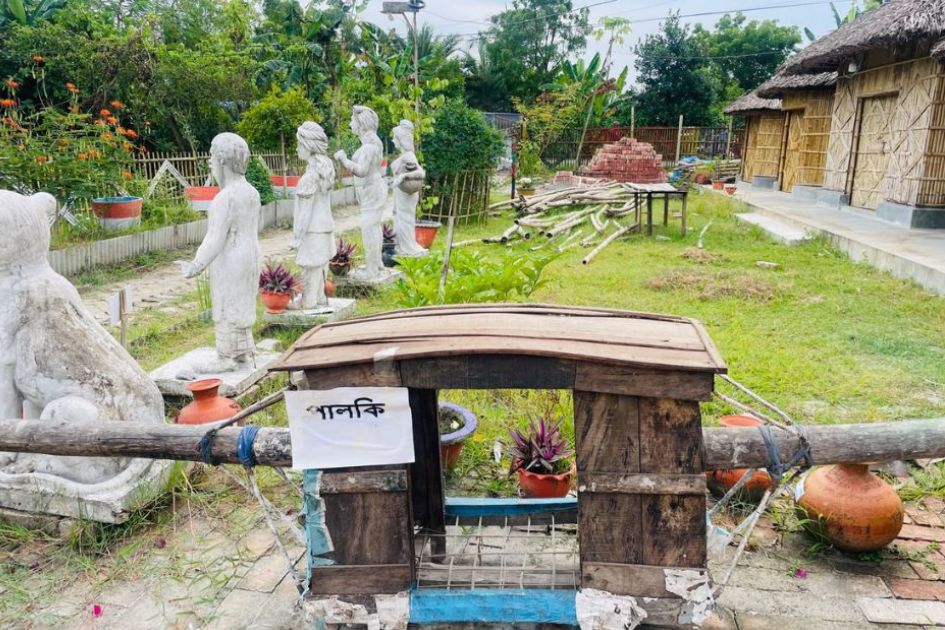
A wooden palanquin now stands in the courtyard of a museum in Shyamnagar, Satkhira. It was once used to carry brides to their new homes. Inside the museum, shelves filled with old kerosene lanterns, agricultural tools, fishing equipment and indigenous seeds tell the story of a coastal way of life that is gradually changing. Climate change, environmental pressures and changing livelihoods are transforming the region. At this very moment, the Sundarban Museum is preserving these objects as records of the traditions, occupations and cultural heritage of people living along the southwestern coast of Bangladesh.
One quiet afternoon, I was travelling towards the Sundarbans through Munshiganj Union in Shyamnagar upazila of Satkhira. Along the way, a large roadside signboard in East Dhanikhali village suddenly caught my eye: ‘Sundarban Museum’. In a region widely known as one of Bangladesh’s most climate-vulnerable coastal areas, where people’s lives are constantly being reshaped by nature’s fury, the presence of a museum dedicated to local history and heritage seemed both unexpected and deeply significant. Unable to contain my curiosity, I stepped inside. I soon realised that this was not merely a building, but a living time capsule of Bangladesh’s southwestern coast.
Inside the museum, shelves are arranged with artefacts from different generations: agricultural tools, fishing equipment, household utensils, traditional jewellery, old photographs, documents and containers of indigenous seeds. Each object offers a glimpse into the lifestyles, occupations and cultural practices of the people of this region, whose relationship with nature is constantly changing.
For coastal communities, these changes are not limited to the loss of traditional objects. Increasing salinity, cyclones, tidal surges and an acute shortage of safe drinking water are affecting settlements, livelihoods, food habits and social customs in the region. Women are particularly vulnerable, facing various health risks due to prolonged exposure to saline water and a lack of safe drinking water.
Against this backdrop, preserving objects from the past is essentially an effort to document a way of life that future generations may never have the opportunity to experience.
A Palanquin from a Disappearing Tradition
A wooden palanquin stands separately in the museum courtyard. With bamboo handles attached to both sides, it was once used to carry brides to their in-laws’ homes and for personal transportation.
In rural weddings, the sight of a bride wearing a red sari being carried in a palanquin by bearers holding its bamboo handles was once very familiar. This tradition was closely associated with family celebrations, social customs and the livelihoods of palanquin bearers.
Today, this artefact reminds visitors of a different reality along the coast. People in this region, who once celebrated weddings and other social occasions through familiar rural traditions, are now constantly struggling with salinity and shortages of safe drinking water.
The impact on women is particularly pronounced. Prolonged use of saline water in daily activities exposes them to various health risks, including skin diseases and reproductive health complications. Water shortages, illness and livelihood insecurity have made the daily lives of many families increasingly difficult.
Artefacts That Tell Stories of Everyday Life
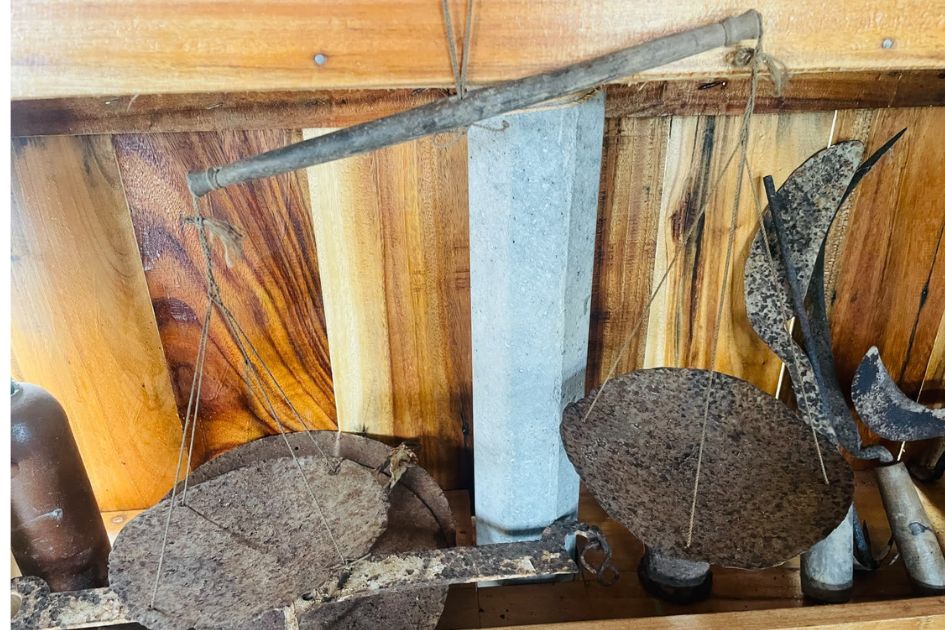
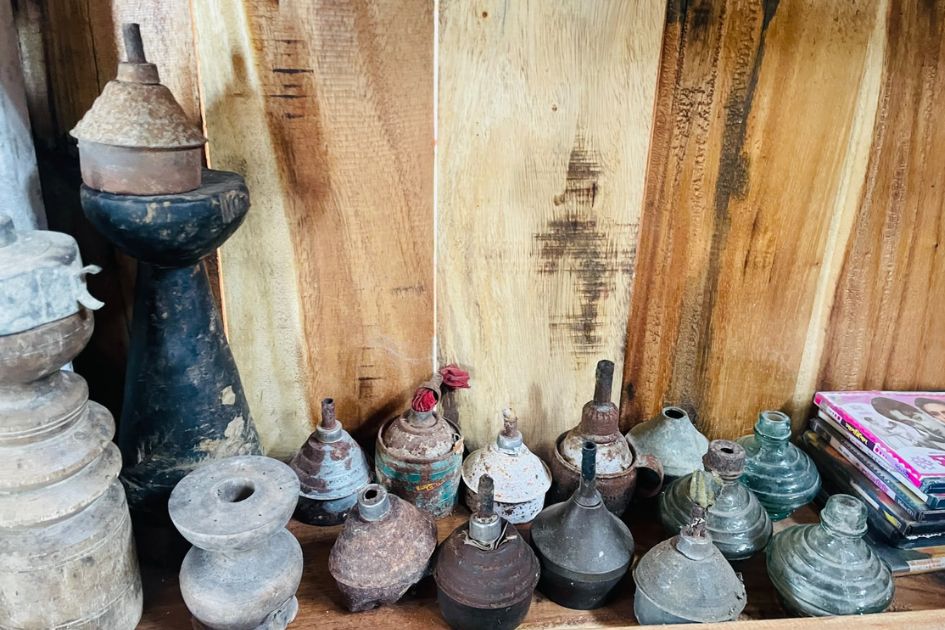
The museum’s collection includes kerosene lanterns, small oil lamps, old torches, rusty weighing scales, bamboo fishing traps and clay pots. Indigenous seeds are preserved in transparent containers, while samples of dried medicinal plants are displayed beside them.
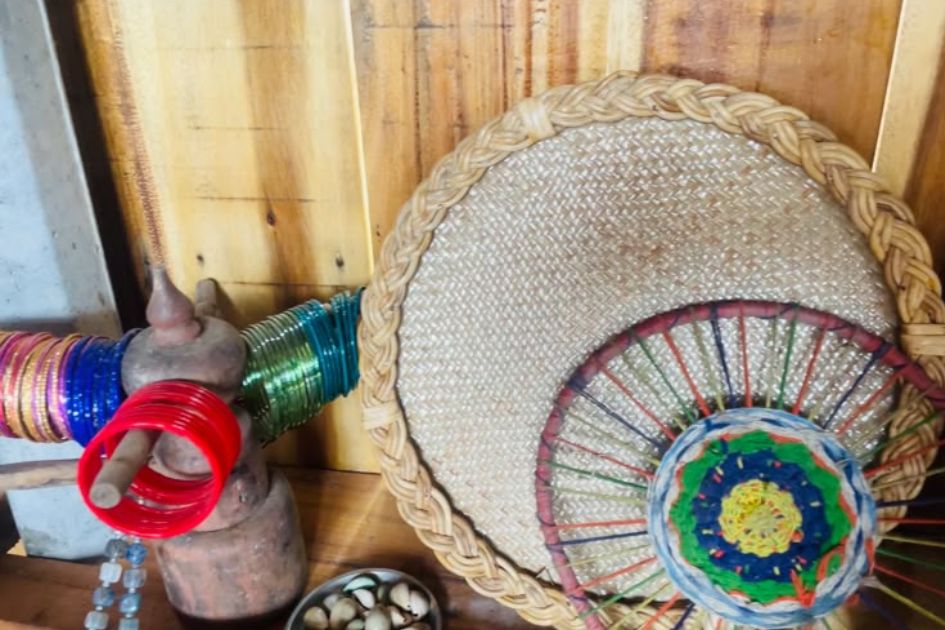
Other shelves contain traditional bridal jewellery, red fabrics, bangles and household decorative items. Old cameras, radios, cassette players, black-and-white televisions, iron trunks, wooden sandals and household utensils reflect how people once lived.
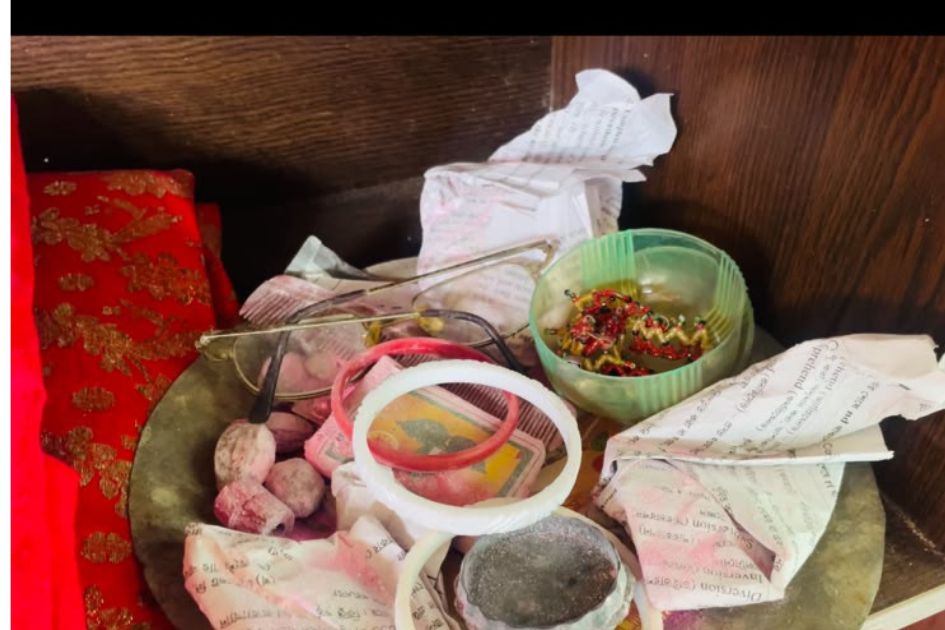
The collection brings together objects associated with agriculture, fishing, trade and commerce, lighting, music and family celebrations. Together, they present a comprehensive picture of rural life that continued across generations.
For example, the lanterns, oil lamps and torches recall a time when many rural households did not have electricity. They were used to light homes and shops, illuminate roads at night and for security purposes. Some of the small lamps, made of metal and glass, still retain their wick holders.
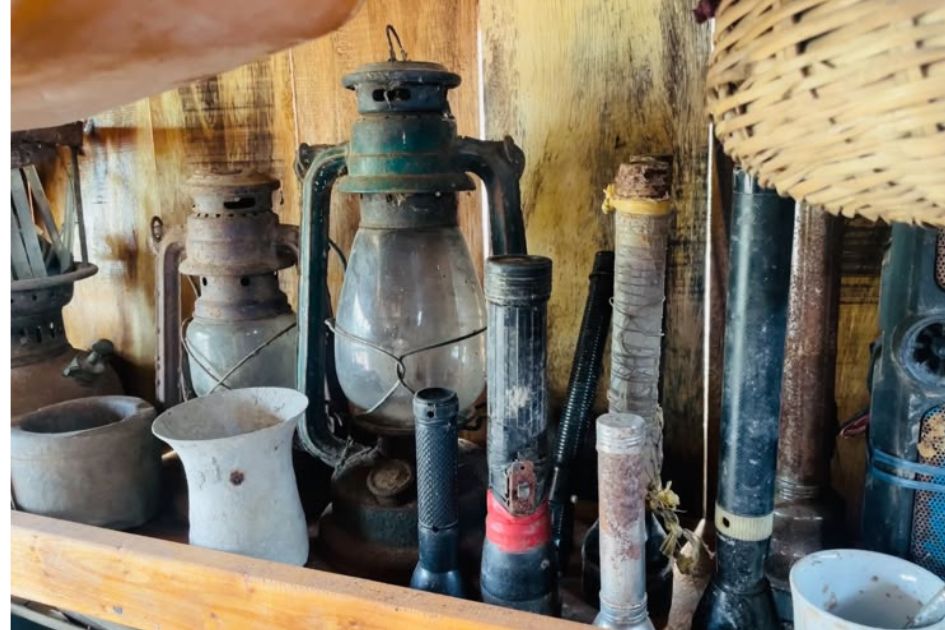
Nearby, a weighing scale with two circular pans, weights and various tools with curved blades have been arranged for display. These tools were once commonly used in small shops and agricultural trading, reflecting traditional systems of measurement and exchange.
Bamboo cages and traps, fishing nets, woven baskets and wooden tools represent the work of farmers, fishermen and local artisans. Their designs reveal how local people used naturally available materials to make essential everyday items.
Artisans in the villages of Satkhira once made household items from clay and bamboo. Besides serving everyday needs, these products were also a source of livelihood for many families. However, the spread of modern products, changes in market systems and climate-related livelihood pressures have forced many artisans to move into other occupations. As a result, their traditional crafts and skills are now at risk of disappearing.
The museum’s collection also includes shells of different sizes, colours and shapes, clay cups, bowls, handled containers and a mask, highlighting the region’s pottery traditions.
Another section contains musical instruments, chessboards, hand fans, dolls and various examples of folk art. Old televisions, wall clocks, handbags, irons and footwear are displayed alongside books, photographs and documents. Traditional bridal jewellery, bangles and other decorative items preserve memories of family and social customs.
Indigenous Seeds Preserve a Changing Food Culture
One of the museum’s most important collections consists of seeds of indigenous vegetable varieties preserved in transparent containers.
This collection represents more than just agricultural history. It is also a record of the food culture and nature-dependent livelihoods of coastal communities.
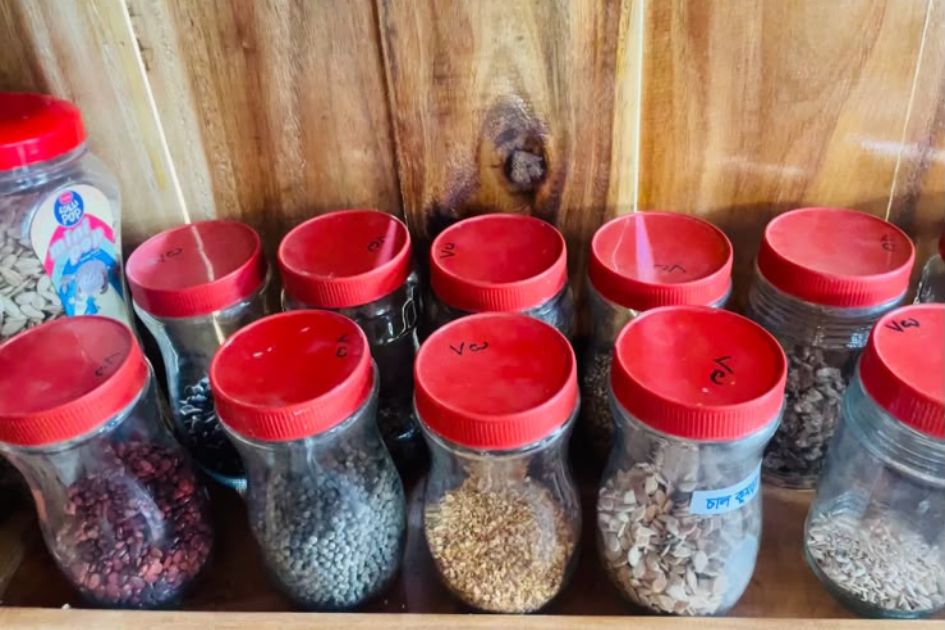
Increasing soil salinity due to climate change is disrupting agricultural production across coastal areas. In many places, farmers can no longer grow or harvest indigenous vegetables as they once did. Some farmers and families are trying to preserve traditional seeds to prevent local varieties from disappearing completely.
These seeds may become particularly important for future generations. Vegetables that are now part of everyday meals in villages may no longer grow there in the coming decades. Without preservation, younger generations may never know which indigenous vegetables their ancestors cultivated and ate.
The diversity of indigenous fish is also declining in many areas due to environmental changes and the deterioration of water bodies.
By preserving indigenous seeds, the museum is documenting an agricultural heritage that might otherwise have been lost. At the same time, it is giving future generations an opportunity to learn about their ancestors’ food habits and cultivation practices.
Cultural Heritage at Risk from Climate Change
The risks are not limited to the loss of physical objects. When artisan families are displaced by natural disasters, traditional skills such as bamboo trap-making, pottery and handicrafts may no longer be passed on to younger generations.
Increasing soil salinity can threaten local seed varieties and traditional agricultural knowledge. Changes in natural resources are also making it difficult for people to collect the materials needed for local music, festivals and social rituals.
However, climate change is not the only reason behind the disappearance of traditional objects and practices. The expansion of electricity, modern transportation, new technologies and changing market systems have also replaced many old customs. But climate-related disasters and environmental changes are placing additional pressure on traditional livelihoods, skills and cultural memories.
Sundarban Museum: A Record of a Disappearing Way of Life
Among the artefacts preserved at the museum is a traditional item called ‘Thushi’. Resembling a round basket, it was placed over the mouth of cattle during paddy threshing to prevent them from eating the rice grains.
The non-governmental development organisation Prerona established the Sundarban Museum in 2025. Its objective is to preserve the lifestyles, culture, traditions and, in particular, artefacts of coastal communities that are gradually disappearing.
The museum’s main building is made of wood, with ‘Sundarban Museum’ written at its entrance. Inside, household items are displayed alongside samples of the Sundarbans’ biodiversity and natural resources.
Samples and fruits of various tree species, including Sundari, Gewa, Keora and Goran, are preserved at the museum. Water samples collected from tidal rivers adjoining the Sundarbans are also kept in glass bottles.
The museum courtyard contains traditional grinding stones, rice-pounding tools, clay stoves and earthen pots. Inside, there are seeds of more than 100 indigenous vegetable varieties, old cameras, radios, cassette players, black-and-white televisions, lanterns, iron trunks, wooden sandals, fishing equipment and agricultural tools.
Prerona staff member Brishti Mondal points to a black-and-white television and explains that a man from the Harinagar area made its wooden frame and rear structure entirely by hand.
The museum also preserves architectural designs and some broken remnants of old structures from the historic Nakipur Zamindar House in Shyamnagar.
Its collection includes coins from different periods and historical documents, among them a 1958 application, letters, postage stamps, posters, life insurance papers, almanacs and ‘Bonbibi Pujar Panchali’. These materials offer insights into the personal and family histories of local communities, as well as their economic, cultural and religious lives.
Preserving the Past for Future Generations
Prerona staff members said that when they began the museum project, they prepared a list of the items they wanted to collect. So far, they have collected nearly 80 per cent of the items on that list, and the process is still ongoing. They continue to collect old and traditional objects from local residents to expand the collection.
Shampa Goswami, executive director of Prerona, said the loss of people’s culture, traditions and memories could never be measured in monetary terms. The museum was established in 2025 with the aim of helping younger generations learn about their ancestors’ lifestyles and traditions that are gradually disappearing.
She said the museum currently houses more than 1,000 artefacts. As the collection grows, the organisation plans to construct another three to four rooms. Its long-term goal is to transform the initiative into a larger heritage museum.
A palanquin, a lantern, an earthen pot or a handful of indigenous seeds may appear ordinary at first glance. But each carries the memories of an individual, a family or a community. As lifestyles change, people may eventually forget how these objects were used. However, if they are preserved, future generations will be able to learn how their ancestors lived, decorated their homes, grew crops, prepared food and celebrated festivals.
For a coast being transformed by climate change, the Sundarban Museum is more than just a collection of old objects. It is a documented record of the close relationship between people, nature and culture, bearing witness to a way of life that is increasingly at risk of disappearing.
As I walked out of the museum in the afternoon light of Shyamnagar, I took one last look at the wooden palanquin and the containers of indigenous seeds. I felt no despair; instead, a quiet but unwavering hope emerged within me. Tidal waters may rise further, and the soil may become increasingly saline, testing the resilience of coastal communities to its limits. But the indomitable spirit of the people here cannot be swept away so easily. As long as initiatives like the Sundarban Museum stand as vigilant guardians of these memories, the children of the coast will not forget their roots. Instead, carrying the identity, wisdom and strength of their ancestors, they will build a future of resilience.