

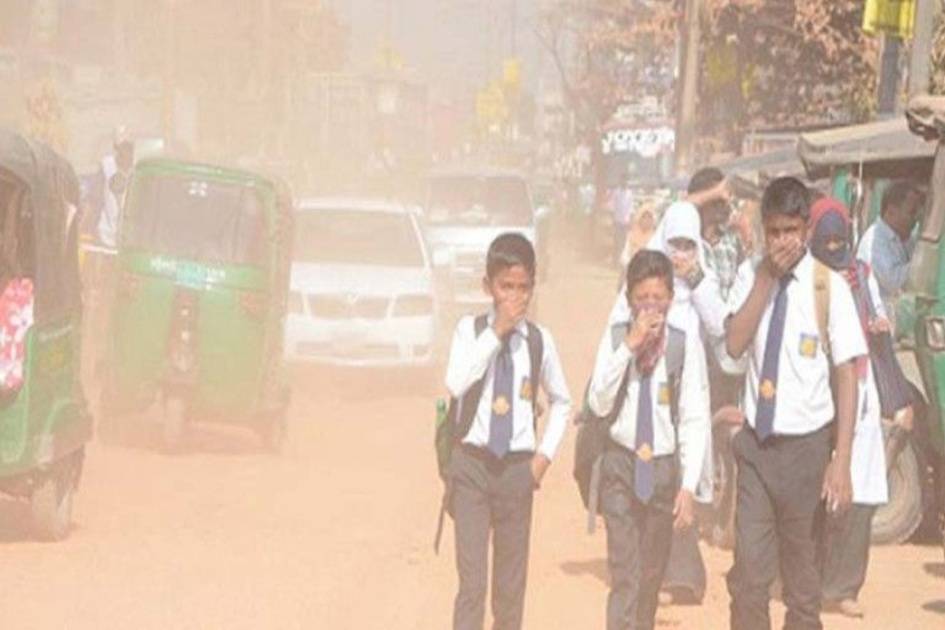



Dhaka led 125 cities for air pollution on Sunday morning as AQI reached 235. Nearby Khulna neared hazardous levels, prompting mask and indoor-safety advice amid worsening smog for residents nationwide.
Bangladesh’s capital Dhaka ranked as the most polluted city in the world on Sunday morning, the first working day of the week, topping a list of 125 global cities as hazardous air conditions continued to grip the country.
At around 8.30am, Dhaka’s Air Quality Index stood at 235, a level classified as “very unhealthy”, according to data from Switzerland-based air quality monitoring organisation IQAir.
The capital’s air quality remained “unhealthy” throughout Friday and Saturday, despite the weekly public holidays, highlighting the persistence of pollution even during reduced economic activity.
Dhaka has been appearing almost daily among the world’s most polluted cities since December, with the trend continuing through January, particularly during the dry winter season when emissions from construction dust, brick kilns and vehicle exhaust intensify.
IQAir, which provides real-time global air quality data, said AQI readings above 200 are considered “very unhealthy”, while levels exceeding 300 are classified as “hazardous”, posing serious health risks to the general population.
On Sunday morning, India’s capital New Delhi ranked second globally with an AQI score of 230.
Air pollution is not confined to Dhaka alone. Several cities outside the capital have at times recorded higher pollution levels. On Sunday, the air quality in Khulna was significantly worse than in Dhaka, with an AQI of 283, nearing the hazardous threshold.
Most air pollution control measures remain concentrated in Dhaka, but experts say these efforts have yielded limited results. Environmentalists warn that pollution levels are rising nationwide, indicating the need for broader and more coordinated interventions beyond the capital.
Within Dhaka, several areas recorded dangerously high AQI readings on Sunday morning. South Pallabi topped the list with a score of 304, followed by Eastern Housing in Mirpur at 302, Kalyanpur at 283, Bay’s Edgewater at 272, Grace International School at 259, Shanta Forum at 231 and Goran at 224.
Authorities have launched multiple projects and announced policy measures over the years to curb air pollution. However, the overall situation has continued to worsen, especially during winter, raising concerns about long-term public health impacts.
The Department of Environment has previously identified vehicle emissions, brick kilns, construction activities and industrial pollution as major contributors to deteriorating air quality, particularly in urban and peri-urban areas.
IQAir advised residents of Dhaka to take precautionary measures, including wearing masks outdoors, avoiding physical exercise in open spaces and keeping windows closed as much as possible to reduce exposure.
Environmentalists say without urgent enforcement of pollution control laws, improved monitoring across the country and a transition to cleaner technologies, air pollution could become a permanent public health emergency in Bangladesh.
Health experts warn that prolonged exposure to very unhealthy air can aggravate respiratory and cardiovascular diseases, with children, the elderly and people with pre-existing health conditions facing the greatest risks.




