




CPD warns Bangladesh’s proposed 2026-27 energy budget heavily favours fossil fuels, with only 2 percent allocated to renewables, potentially undermining national clean energy targets and slowing the transition.
Bangladesh’s proposed energy budget for the 2026-27 fiscal year allocates nearly 98 percent of funding to fossil fuel-related activities while only 2 percent is earmarked for renewable energy, raising concerns about the country’s ability to meet its clean energy targets, the Centre for Policy Dialogue (CPD) said on Thursday.
The policy research organisation warned that the current budget structure could make it difficult for Bangladesh to achieve its national goal of generating 20 percent of electricity from renewable sources by 2030. Continued dependence on fossil fuels, high subsidy burdens and limited green investment could also hinder the country’s energy transition, it said.
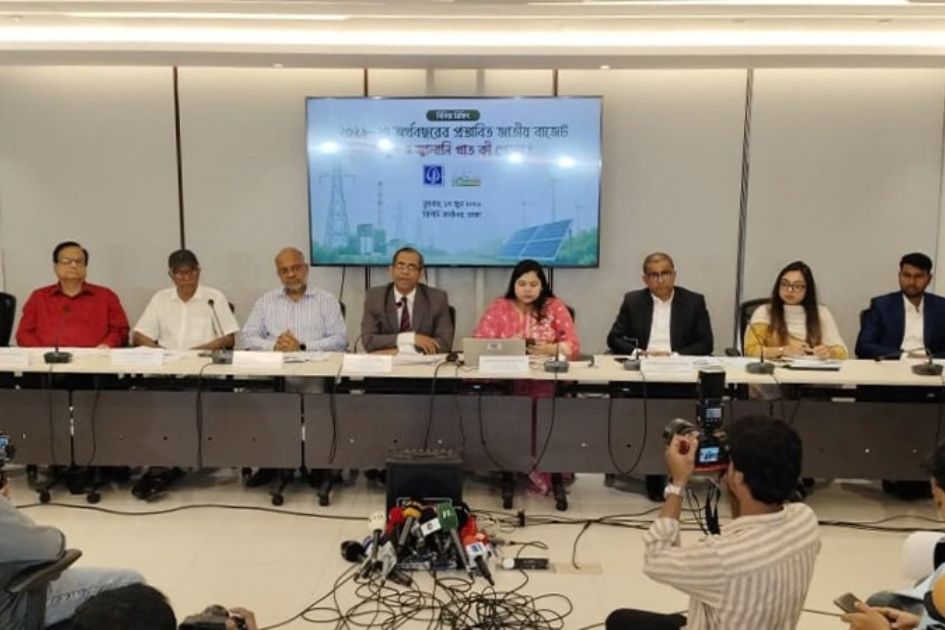
The findings were presented at a discussion titled “Proposed National Budget 2026-27: What Did the Energy Sector Receive?” held at the CPD office in Dhanmondi, Dhaka. CPD Senior Research Associate Helen Mashiat Priyoti presented the keynote paper.
According to the paper, the proposed budget allocates Tk 17,345 crore to the Ministry of Power, Energy and Mineral Resources, representing a 2.3 percent increase from the previous fiscal year. However, the sector’s share of the national budget has declined from 2.15 percent to 1.85 percent, indicating a long-term downward trend.
The analysis showed that allocations for the Power Division have fallen by 3.9 percent to Tk 14,996 crore. The reduction was attributed to a shift away from launching large new power projects and towards completing ongoing projects that are nearing completion.
In contrast, funding for the Energy and Mineral Resources Division has increased significantly to Tk 2,349 crore, up 72 percent from the previous year. The increase was linked to initiatives aimed at expanding domestic gas exploration, drilling new wells and boosting production.
CPD acknowledged several positive measures included in the proposed budget. These include maintaining a zero percent tax rate on solar power generation until 2035 and reducing duties on solar inverters and certain related equipment from 28 percent to 22 percent. The organisation also welcomed proposals to lower registration fees for electric vehicles and reduce the tax rate on charging stations from 38 percent to 16 percent.
Despite these initiatives, CPD highlighted a number of shortcomings. The number of renewable energy projects under the Annual Development Programme has fallen from six to five in the current fiscal year. The organisation also expressed disappointment that a solar irrigation project, which is nearly 90 percent complete, has yet to receive approval.
According to the research body, strict conditions attached to duty exemptions for renewable energy equipment may make it difficult for ordinary consumers to benefit from the incentives.
The paper further noted that continued tax and duty concessions for liquefied natural gas (LNG) imports and plans to increase coal extraction could prolong dependence on fossil fuels and slow the pace of energy transition.
CPD also voiced concern over the scale of subsidies proposed for the sector. The budget includes Tk 37,000 crore in subsidies for the power sector and Tk 11,000 crore for LNG. In addition, a separate subsidy allocation of Tk 10,000 crore has been proposed for the oil sector for the first time, a move the organisation believes could place additional pressure on government finances.
To support a sustainable energy transition, CPD recommended allocating at least 20 to 30 percent of the development budget to renewable energy projects. Other recommendations include modernising the electricity transmission system, increasing investment in smart grid infrastructure, introducing special subsidies for solar irrigation projects and establishing a dedicated Green Subsidy Fund.
The organisation also called for simplifying the conditions attached to duty exemptions on renewable energy equipment to make clean energy technologies more accessible to the public.
CPD said that ensuring long-term energy security will require more than isolated tax incentives and policy support. It argued that a comprehensive green fiscal policy aimed at increasing renewable energy investment and reducing reliance on fossil fuels remains the most effective path toward a sustainable energy future.
Among those attending the discussion were CPD Research Director Khandaker Golam Moazzem, President of the Bangladesh Sustainable and Renewable Energy Association (BSREA) Mostafa Al Mahmud, Infrastructure Development Company Limited (IDCOL) Chief Risk Officer Mohammad Javed Imran and former Director General of the Bangladesh Livestock Research Institute (BLRI) Jahangir Alam Khan, along with other stakeholders from the sector.
This post is republished from Daily Bonik Barta.




