

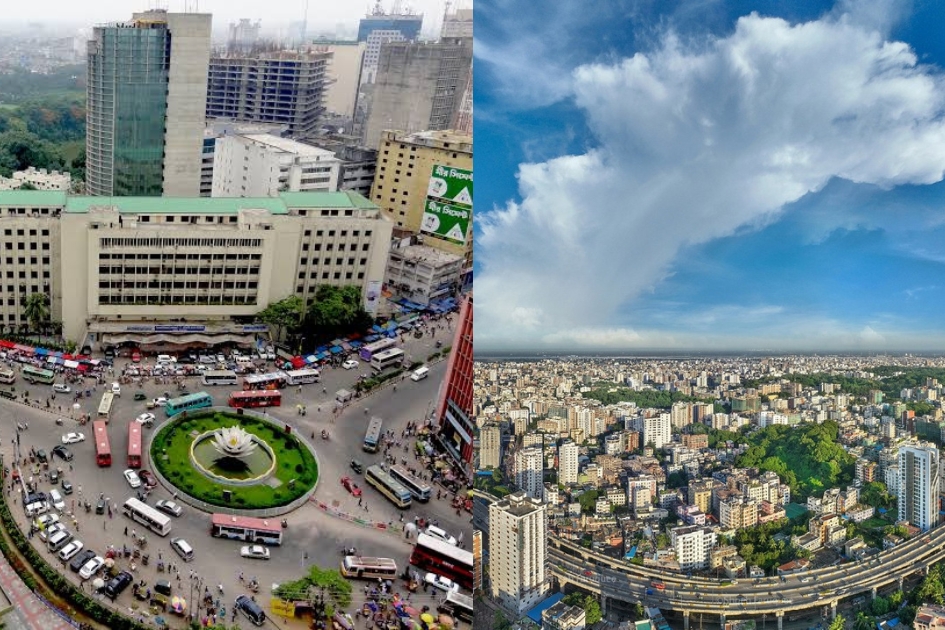



AlphaGeo’s assessment highlights stark differences in how major cities face climate hazards and prepare through infrastructure, governance and early warning systems.
Dhaka and Chattogram, two major cities in Bangladesh, have ranked among the world’s least capable cities at coping with climate change, according to an assessment by AlphaGeo, a geospatial artificial intelligence company.
Dhaka ranked fourth and Chattogram ninth on AlphaGeo’s list of 72 major cities assessed for their ability to withstand and adapt to climate-related disasters, according to a recent report published by The New York Times.
The assessment considered exposure to climate-related hazards including floods, coastal flooding, extreme heat, drought, wildfires and hurricanes, as well as each city’s capacity to respond through adaptation, infrastructure, early warning systems, governance and policy preparedness.
Dhaka placed fourth among the cities with the lowest levels of climate resilience, putting the capital of Bangladesh among the major urban centres considered particularly vulnerable when their climate risks are weighed against their ability to respond to and adapt to disasters.
Chattogram, Bangladesh’s major port city, was also included in the lowest-capacity group, ranking ninth.
India’s Ahmedabad topped the list of cities with the lowest capacity to cope with climate change. Pakistan’s Hyderabad and Multan followed in second and third place respectively, with Dhaka fourth.
Pakistan’s Lahore came next, followed by India’s Kolkata, Pakistan’s Faisalabad and Karachi, Chattogram and Taiwan’s Taipei.
At the other end of the ranking, Chicago in the United States was identified as the city with the strongest capacity to cope with climate change. Ethiopia’s Addis Ababa ranked second, followed by Melbourne in Australia, Barcelona in Spain, Ankara in Turkey, Buenos Aires in Argentina, Paris in France, Istanbul in Turkey, Bogotá in Colombia and Nairobi in Kenya.
AlphaGeo’s index did not assess urban resilience solely on the basis of the level of exposure to natural or climate-related hazards. Alongside risks such as floods, coastal flooding, extreme heat, drought, wildfires and hurricanes, it examined how well cities are equipped to deal with such disasters.
The assessment of that capacity included early warning systems, governance and policy initiatives, as well as infrastructure such as flood-control embankments and improved drainage systems.




