




Türkiye’s Antalya summit will test whether the Global Stocktake can drive stronger finance, just transition measures and practical support for countries already facing worsening climate impacts.
After the Global Stocktake exposed major gaps, Antalya will determine whether climate diplomacy can move from commitments to implementation.
After decades of climate negotiations that produced ambitious promises but uneven results, the 31st United Nations Climate Change Conference (COP31) in Antalya will face a defining challenge of the Paris Agreement era: turning global commitments into action that communities can see, measure and experience.
Scheduled for November in Antalya, Türkiye, COP31 arrives at a critical moment after the first Global Stocktake revealed that the world remains far behind the pace required to achieve the goals of the Paris Agreement.
The summit will not be judged only by declarations made inside negotiation halls, but by whether those commitments translate into stronger policies, increased climate finance, accelerated implementation and tangible improvements for communities already facing the impacts of a changing climate.
The central question confronting global leaders is no longer only how much the planet is warming. It is whether years of international commitments are finally becoming real action on the ground.
Across continents, climate impacts are intensifying. Record temperatures, devastating floods, prolonged droughts, rising seas and destructive wildfires are affecting millions of people. The greatest burden continues to fall on coastal communities, farmers, Indigenous peoples, small island nations and vulnerable populations that have contributed the least to global emissions.
The challenge before COP31 is therefore clear: moving from the politics of promises to the reality of delivery.
Since the adoption of the Kyoto Protocol and the Paris Agreement, global climate diplomacy has created a wide range of commitments, targets and frameworks. The challenge now is no longer only negotiating new agreements, but ensuring that existing commitments deliver results.
COP31 comes at a transition point in climate diplomacy, where the focus is shifting from setting ambitions to implementing solutions. The summit will test whether countries can transform the findings of the Global Stocktake into stronger national policies, increased investment and faster action.
Ahead of the Antalya summit, the Turkish-Australian COP31 Presidency has unveiled a ten-point action agenda aimed at accelerating global climate action and transforming commitments into practical solutions.
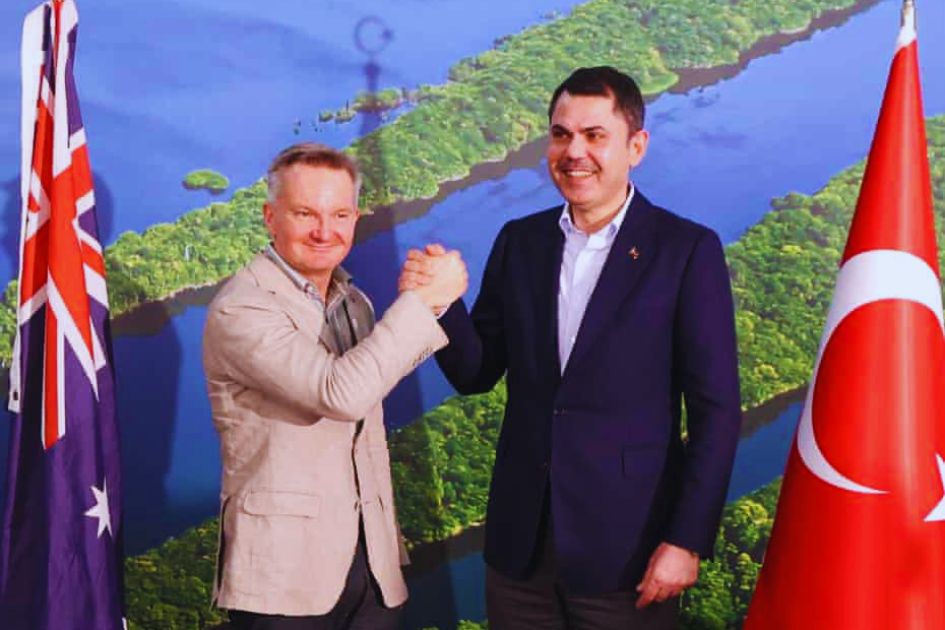
Under the COP31 arrangement, Türkiye will host the conference and hold the presidency, while Australia will lead the negotiation process. The joint leadership model aims to combine host-country coordination with negotiation expertise as Parties seek to accelerate implementation after the Global Stocktake.
The COP31 Presidency has now issued its third formal letter to all Parties, outlining the next phase of preparations and inviting governments and stakeholders to engage with the ten-point action agenda ahead of Antalya.
Following the 64th sessions of the UN Framework Convention on Climate Change (UNFCCC) subsidiary bodies, known as SB64, in Bonn, Germany, the letter reflects the Presidency’s effort to move the process from broad commitments towards structured cooperation, implementation pathways and practical outcomes.
The initiative comes at a politically sensitive moment as developing countries continue to demand stronger commitments on climate finance, adaptation support, technology transfer and assistance for loss and damage.
Global Stocktake: The World’s Climate Progress Report Card
A central pillar of the COP31 agenda is the first Global Stocktake, a comprehensive review of collective progress under the Paris Agreement.
The Global Stocktake is not an assessment of individual countries. Instead, it examines how the world as a whole is progressing towards climate goals and identifies where urgent corrections are needed.
Created under the 2015 Paris Agreement, the process reviews global progress in reducing greenhouse gas emissions, strengthening adaptation, mobilising climate finance and advancing technological cooperation.
In simple terms, the Global Stocktake works as the world’s climate progress report card. It compares where global action needs to be with where countries currently stand and identifies the gaps that must be addressed.
Although it does not impose legal penalties, it creates political pressure by showing where collective efforts are falling behind scientific requirements.
The first Global Stocktake, completed in 2023, delivered a serious warning: current climate action is insufficient to prevent the most dangerous consequences of global warming.
It found that countries must move faster to reduce emissions, accelerate the transition away from fossil fuels, expand renewable energy, strengthen resilience and significantly increase support for developing nations.
The assessment exposed a major gap between climate ambition and actual delivery. Its findings are expected to guide countries as they prepare stronger Nationally Determined Contributions (NDCs) and updated climate strategies beyond 2030.
COP31 will be a key moment in translating the Global Stocktake findings into a global response, ensuring that its recommendations move from assessment to implementation.
Ten Priorities to Accelerate Climate Action
The COP31 Presidency’s ten-point action agenda is focused on transforming the findings of the Global Stocktake into practical implementation.
The first priority focuses on clean energy transition and electrification. The agenda aims to increase electricity’s share of final energy consumption from around 23 percent today to 35 percent by 2035.
The target reflects a broader effort to accelerate electrification across transport, industry and households while reducing dependence on fossil fuels.
Other priorities include achieving zero waste, reducing methane emissions and developing climate-resilient cities. The plan highlights the need to improve energy efficiency in buildings and prepare urban systems for increasingly severe climate impacts.
The agenda also focuses on green industrial transformation, resource efficiency, recycling, food security, ocean protection, climate-resilient health systems and stronger coordination among global environmental agreements to address biodiversity loss and land degradation.
These priorities reflect a wider understanding that climate action is not only about reducing emissions. It is also about protecting livelihoods, ecosystems, economies and human security.
Rio Synergies: Connecting Climate, Biodiversity and Land Agendas
Beyond climate negotiations, COP31 is expected to strengthen cooperation among the three Rio Conventions, recognising that climate change, biodiversity loss and land degradation are interconnected global challenges.
A growing focus of COP31 discussions is the concept of ‘Rio Synergies’, which seeks to strengthen cooperation across the three major global environmental agreements: the UN Framework Convention on Climate Change (UNFCCC), the Convention on Biological Diversity (CBD) and the UN Convention to Combat Desertification (UNCCD).
Building on momentum from previous COPs and international environmental negotiations, Rio Synergies aims to promote coherent action across climate, biodiversity and land agendas through coordinated ecosystem restoration, protection of carbon sinks, sustainable land management and stronger cross-convention cooperation.
Experts and policymakers increasingly argue that addressing these challenges separately can reduce effectiveness and overlook opportunities for integrated solutions.
The IPBES–IPCC Joint Workshop Report highlighted that integrated approaches can simultaneously strengthen climate mitigation and adaptation, biodiversity conservation and ecosystem resilience while avoiding unintended trade-offs.
The growing emphasis on Rio Synergies also reflects increasing global attention on land restoration and drought resilience, particularly as countries work to strengthen implementation under the UN Convention to Combat Desertification.
For countries facing overlapping challenges of climate vulnerability, ecosystem degradation and livelihood insecurity, stronger cooperation among the Rio Conventions provides a practical pathway to improve policy coherence, mobilise more efficient investment and accelerate implementation at national and international levels.
A stronger Rio Synergies approach could therefore help advance progress across all three global environmental conventions while supporting sustainable development, ecosystem protection and climate resilience.
For COP31, the challenge will be ensuring that Rio Synergies becomes more than a coordination concept and contributes to measurable action on climate, biodiversity protection and land restoration.
Climate Implementation Bridge: Connecting Plans with Investment
One of the key elements of the COP31 agenda is the ‘Climate Implementation Bridge’, which aims to help developing countries transform climate plans into practical and finance-ready projects.
Many developing nations have already developed ambitious climate strategies but struggle to deliver them because of limited access to finance, technology, technical expertise and project preparation support.
The initiative seeks to connect climate priorities with investment opportunities and help countries move from planning to action.
For vulnerable countries, the challenge is not only developing climate strategies but ensuring that resources reach communities facing the greatest risks.
Climate Finance and Loss and Damage: The Political Test
Climate finance will remain one of the most important political issues at COP31.
Developing countries argue that climate action cannot succeed without predictable, accessible and adequate financial support.
The debate is not only about how much money is promised, but whether funds reach affected communities quickly, transparently and in forms that do not create additional debt burdens.
Adaptation finance remains a major concern for vulnerable countries facing rising seas, extreme weather events and economic losses. They are calling for greater access to grants, stronger support for locally led solutions and financial mechanisms that respond to real climate needs.
For climate-vulnerable nations, the Loss and Damage Fund represents a major test of global climate solidarity. After years of negotiations, the priority now is ensuring that communities suffering irreversible climate impacts can access effective support.
Bangladesh and Global South Priorities: Climate Justice and Just Transition
For Bangladesh and other countries across the Global South, the success of COP31 will depend on whether international commitments translate into practical support for communities on the frontline of climate change.
Bangladesh, one of the world’s most climate-vulnerable countries, continues to face rising sea levels, coastal erosion, floods, salinity intrusion and climate-induced displacement.
For millions living in vulnerable regions, the outcome of COP31 will be measured through practical results: stronger coastal protection, climate-resilient agriculture, improved disaster preparedness, livelihood security and support for affected communities.
For Bangladesh, just transition is not only an energy issue. It is also about protecting climate-vulnerable workers, supporting green livelihoods and ensuring that adaptation and development pathways remain socially inclusive.
A just transition for Bangladesh also includes transforming agriculture, transport, industry and urban systems while ensuring that vulnerable workers and communities benefit from new green economic opportunities.
A major emerging development in this area is the Belém-Antalya Mechanism for Global Just Transitions (BAM), an evolving global climate governance framework designed to operationalise the shift away from fossil fuels while supporting affected workers, communities and vulnerable populations.
The mechanism builds on commitments made at COP30 in Belém, Brazil, with the aim of addressing the implementation gap that has slowed progress on just transition efforts.
Its core purpose is to strengthen international cooperation, provide technical assistance, build local capacity and ensure that economic transformation is fair, inclusive and socially responsible.
BAM seeks to move the just transition agenda from political discussions towards practical implementation. However, the mechanism is still under development, with governments negotiating its structure, mandate and implementation pathways ahead of COP31 in Antalya.
For developing countries, BAM represents an opportunity to connect climate action with decent work, social protection, skills development and sustainable economic transformation.
However, important debates remain over its future design. Countries and stakeholders are discussing whether BAM should become a stronger institutional body with a clear mandate and authority, or operate as a more flexible cooperation platform focused on coordination and knowledge sharing.
Finance remains one of the biggest challenges. Developing countries argue that technical assistance alone will not be enough without dedicated resources to support workers, communities and economies undergoing transition. Some developed countries remain cautious about creating a new global financing mechanism.
Civil society organisations, trade unions and Indigenous groups are also calling for meaningful participation in BAM’s governance, arguing that communities most affected by energy and economic transitions must have a direct role in shaping solutions.
For Bangladesh, the principles behind BAM are particularly important. A just transition must ensure that climate action creates green jobs, strengthens skills development, supports vulnerable livelihoods and reduces inequality while accelerating cleaner and more resilient development pathways.
The same concerns are shared across Africa, where drought and land degradation threaten millions, and among Small Island Developing States facing existential risks from rising seas.
The central issue remains climate justice. Countries that have contributed the least to global emissions are often experiencing the most severe impacts.
Developing nations are demanding that climate finance become faster, fairer and easier to access, while also calling for greater recognition of locally led solutions and community knowledge.
From Announcements to Accountability
COP31 President-designate Murat Kurum has presented the ten-point action agenda not as a legally binding framework, but as a platform for cooperation among governments, businesses, research institutions and civil society.
Each priority area is expected to create coalitions of willing partners focused on advancing practical solutions and accelerating implementation.
However, climate experts and developing countries have repeatedly warned that voluntary initiatives alone may not be enough.
The experience of previous climate summits shows that ambitious announcements often face challenges when governments return home and implementation slows.
The challenge facing COP31 is not a shortage of ideas. The world already has climate agreements, targets and pathways. The unresolved question is whether political leaders are willing to match commitments with finance, policy reforms and accountability.
The credibility of Antalya will depend on whether governments establish clear pathways for tracking progress, reporting delivery and ensuring that climate finance reaches intended beneficiaries.
Effective implementation will require stronger monitoring systems, transparent reporting, measurable indicators and greater accountability from governments, financial institutions and private sector actors.
The success of COP31 will ultimately depend on whether it can close the widening gap between climate ambition and climate action.
Road to Antalya
Several major events will shape the path towards COP31.
These include the Climate Finance Conference in Istanbul on September 4–5, the Ocean and Marine Conference in Trabzon on September 10–11, New York Climate Week from September 20–27, the Pacific Pre-COP from October 5–8 and the World Leaders’ Summit in Antalya on November 11–12.
The leaders’ summit aims to build political momentum before formal negotiations begin and encourage stronger commitments from heads of government ahead of the conference.
Meanwhile, countries are expected to submit their second Biennial Transparency Reports by December 31, 2026, while continuing preparations for stronger climate commitments and updated National Adaptation Plans.
These processes will be closely watched by developing countries, which are seeking greater transparency on finance, stronger implementation support and clearer pathways for meeting global climate goals.
Antalya’s Defining Test
As COP31 approaches, the central question is whether the Antalya action agenda will become a turning point in global climate cooperation or remain another ambitious declaration with limited follow-through.
The summit will test whether the international climate system can move beyond repeated commitments and deliver solutions at the scale and speed required by science.
The true measure of Antalya will not be the number of declarations adopted inside conference halls, but whether climate-vulnerable communities experience stronger protection, greater resilience and a fairer transition.
The final judgment on COP31 will come not from diplomatic statements alone, but from actions taken afterwards in capitals, communities, financial institutions and industries.
Antalya’s legacy will ultimately be written not in promises made, but in actions delivered.




