

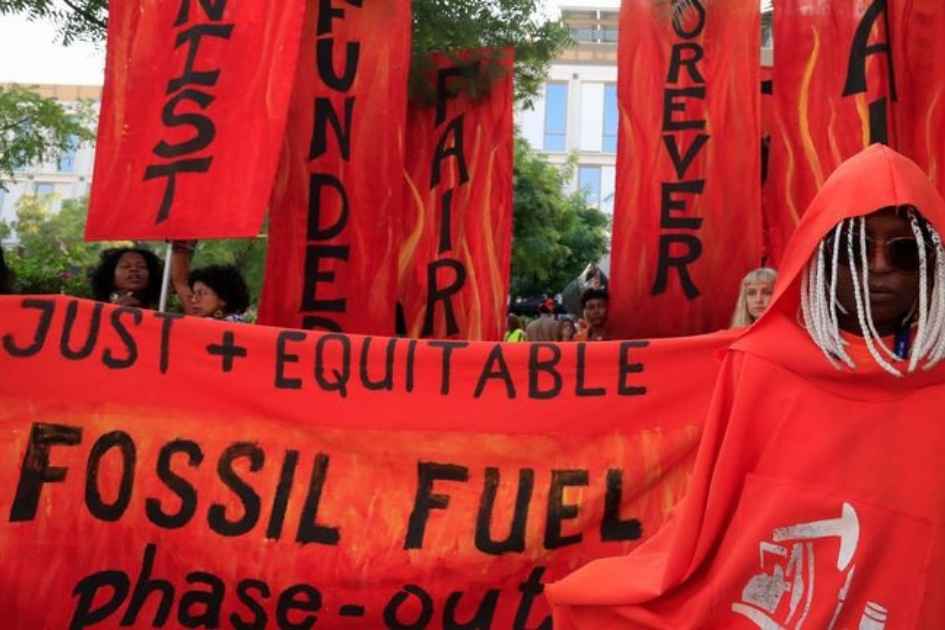



Colombia and the Netherlands will host a global summit in Santa Marta to build political and financial momentum for a just and equitable transition away from fossil fuels worldwide efforts.
Colombia is aiming to turn the world’s first global conference on transitioning away from fossil fuels into something more permanent: a platform to help a “coalition of the willing” accelerate the shift beyond coal, oil and gas.
Set to take place in Santa Marta on April 28–29, 2026, the summit will bring together governments and other actors to build the political and financial foundations for a just fossil fuel phase-out, filling a gap left by the UN climate process.
“Although there is growing consensus to gradually eliminate fossil fuels, there were still no specific spaces or meeting places dedicated to comprehending and addressing the pathways needed to overcome economic, fiscal and social dependence on fossil fuels, especially for producing countries,” said María Fernanda Torres Penagos, PhD., director of climate change at Colombia’s Environment Ministry.
The conference, co-hosted by Colombia and the Netherlands, will gather governments, civil society groups, Indigenous representatives, academics and private sector leaders. The goal is to lay the political, economic and financial foundations for a just and equitable transition away from fossil fuels. Officials say the event will complement UN climate negotiations and address gaps left by the recent COP30 talks.
At COP30 in Belém, Brazil, Colombia and several other nations presented the Belém Declaration, committing to a just transition. However, the final COP30 texts did not include a clear roadmap for phasing out fossil fuels, prompting the Santa Marta initiative.
The event is being described as a “coalition of the willing,” a group of countries and actors ready to go further than the official UN process. They aim to advance concrete strategies, policies and financing mechanisms to support the global energy transition.
Communities dependent on coal mining or oil production will face major changes. The summit emphasizes that workers’ livelihoods, retraining and fair compensation must be part of any transition plan.
For countries like Bangladesh, which faces severe climate risks and relies on fossil fuels for energy, the summit offers lessons on just and sustainable energy transitions.
Sohanur Rahman, executive coordinator of YouthNet Global, said, “Global cooperation on phasing out fossil fuels is crucial. Events like the Santa Marta summit show that a just transition is possible if governments, communities and youth work together. Bangladesh, as a climate-vulnerable country, must learn from these initiatives to ensure our industry shift is fair and inclusive.”
The conference agenda will cover strategies to reduce fossil fuel extraction, promote renewable energy, protect affected workers and communities and mobilize international climate finance. Observers say the Santa Marta summit could mark a new era of global cooperation in ending dependence on coal, oil and gas.




