

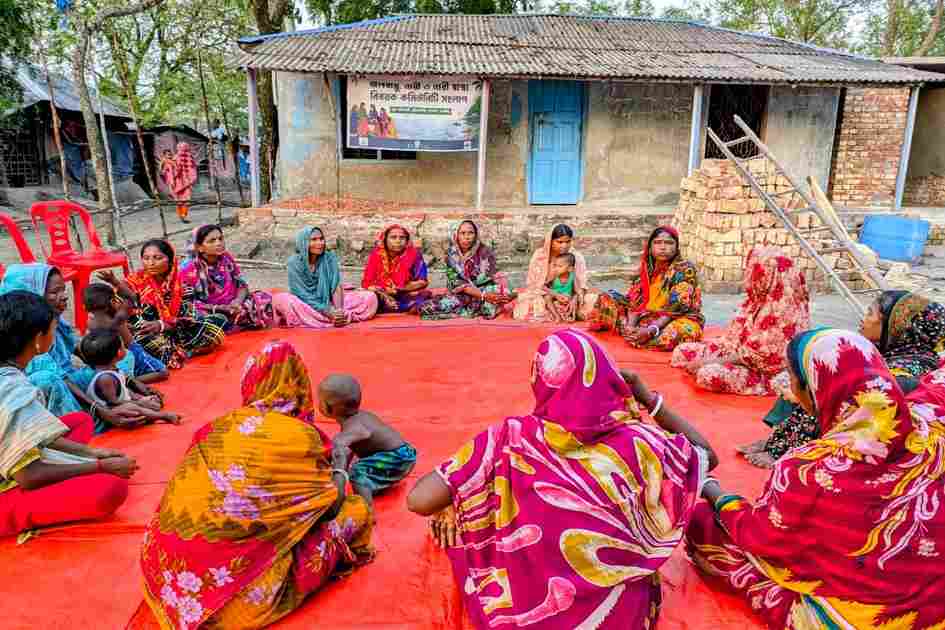



Satkhira called for stronger representation in climate decision-making, highlighting worsening health risks, water scarcity, salinity and livelihood challenges linked to climate change.
Coastal and Indigenous women, among the worst affected by climate change, are still being left out of climate policy, environmental protection and development planning despite their lived experience, knowledge and frontline role, speakers said at a community dialogue in Bangladesh’s southwest.
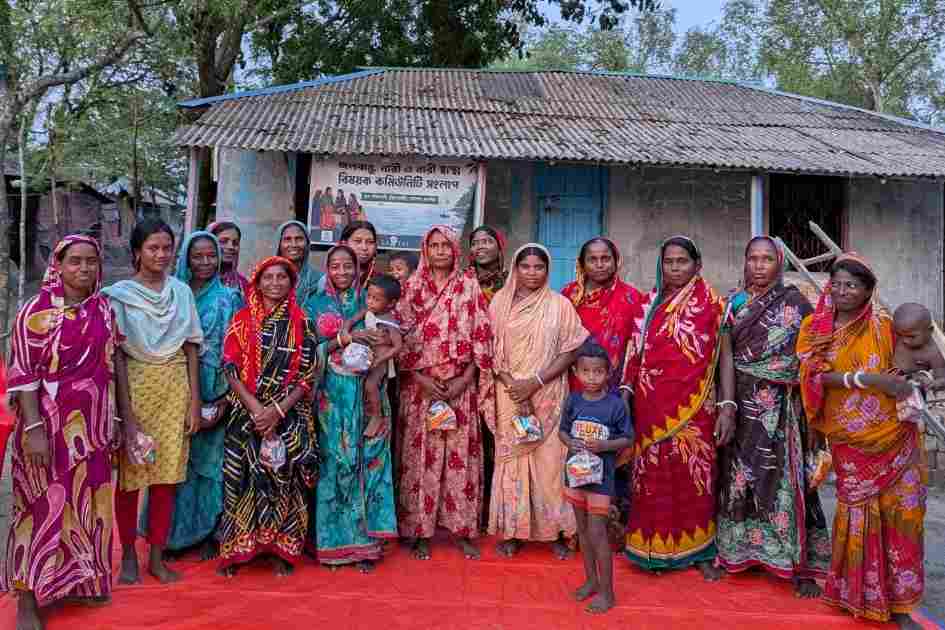
The dialogue, titled “Climate, Women and Women’s Health,” was held recently in Datinakhali area of Burigoalini union in Shyamnagar upazila of Satkhira on the occasion of World Environment Day. It was organized by Santal, a group working on the rights of women, Indigenous people and marginalized communities, with support from Forest-Based Women’s Development Organization and SAYA, or Social Action for Youth Alliance.
Forest-dependent women, women fishers, women farmers, tiger widows and women from the Munda community took part in the discussion.
Participants said rising salinity, a shortage of safe drinking water, fragile livelihoods and frequent disasters were making their lives increasingly difficult. They said many women have to carry heavy pitchers of water on their heads and waists from distant places every day, and that even pregnant women are often forced to do this exhausting work, creating serious health risks for both mother and child.
They also said long hours of working in saline water were increasing skin diseases, reproductive health problems, urinary tract infections, physical weakness, high blood pressure, dehydration, knee pain and lower back pain. They said the lack of safe water, treatment and necessary health services was causing many of these problems to become long-term.
Participants complained that in many areas, the water in ponds, canals and tube wells had turned saline, putting daily life at risk. Saline water is now being used for bathing, washing clothes, cooking and drinking, they said. Pregnant women, adolescent girls, elderly women and sick women are suffering the most from the crisis.
The discussion also raised the issue of child marriage. Participants said worsening women’s health, poverty, disasters and livelihood stress linked to climate change were pushing many families to marry off girls at an early age. As a result, early motherhood, malnutrition, maternal health complications and school dropout rates are increasing, they said.
A local woman leader who joined the dialogue highlighted the limits placed on women’s participation in policymaking and said their voices were being reduced even when they were invited to speak about the Sundarbans.
“If we are given the chance to speak about the Sundarbans at big meetings, seminars and programmes, we are told we have only two minutes,” she said. “But the women who are fighting every day to protect the Sundarbans and the coast are facing saline water, storms, river erosion, uncertain livelihoods, health risks and poverty. It is not possible to tell the story of our struggle for survival in two minutes.”
Her remarks reflected not only a personal experience but also the long-standing exclusion and invisibility faced by coastal and Indigenous women, organizers said. They said those who bear the heaviest burden of climate change remain the least heard at decision-making tables.
Marking World Environment Day, the organizers called on the relevant government ministries, local administration, development partners and international climate stakeholders to give priority to women’s health in climate adaptation and environmental policy.
They also urged authorities to ensure meaningful participation of coastal, forest-dependent and Indigenous women in decision-making processes, take special healthcare and research initiatives to address salinity and climate-related health risks, expand access to safe water, sanitation and reproductive healthcare, and ensure fair participation of women and marginalized communities in climate finance.
Bringing the experience, knowledge and leadership of women, Indigenous communities and coastal people to the centre of climate action is now a pressing need, the organizers said.
They said real climate justice would not be possible without the voices of those whose lives, health, labour and future are paying the highest price for the climate crisis.




