

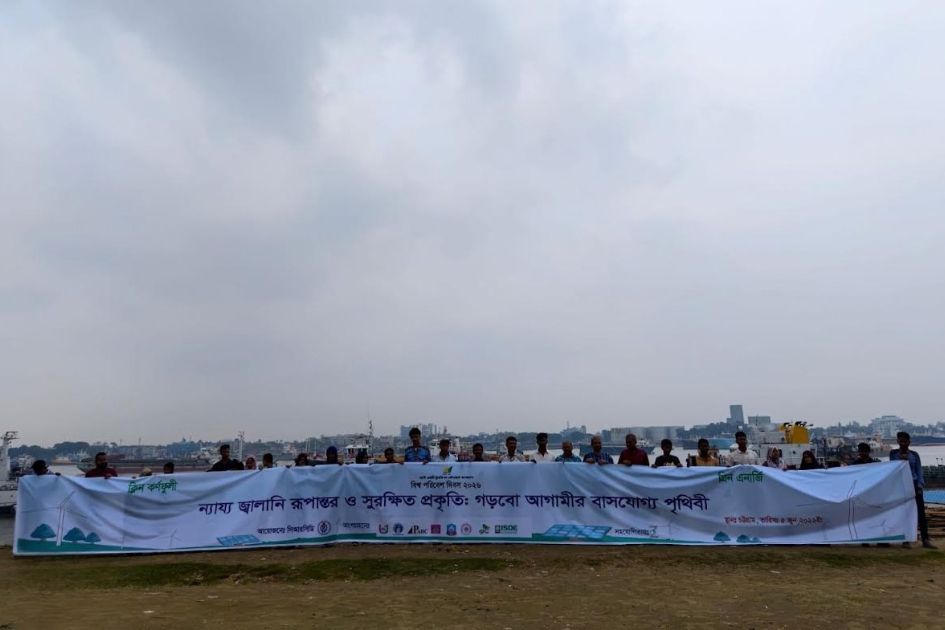



Environmental groups and community leaders staged a Karnaphuli River rally in Chattogram, urging climate justice, renewable energy expansion, river protection and affordable electricity while highlighting Bangladesh’s vulnerability to climate change.
Environmental activists, development workers and community representatives staged a large boat rally and human chain on the Karnaphuli River in Chattogram, Bangladesh’s second-largest city, on Friday (June 5) to mark World Environment Day, calling for climate justice, a fair energy transition and stronger protection of the country’s natural resources.
The programme was organized by Community Resource and Cultural Development (CRCD) with support from the Just Energy Transition Network Bangladesh (JETNET) under the global and national theme, “Inspired by Nature. For Climate. For Our Future” and “Fair Energy Transition and Protected Nature: Building a Livable Planet for the Future.”
Held under the slogan “Clean Karnaphuli, Green Energy,” the event sought to raise public awareness about environmental protection, save the Karnaphuli River from polythene and plastic pollution and draw attention to the need for a sustainable energy future in Bangladesh.
Speakers at the programme highlighted what they described as a major global climate injustice, noting that Bangladesh contributes only 0.5 percent of global carbon emissions yet remains among the ten countries most vulnerable to the impacts of climate change.
“Remaining silent in the face of this injustice is not an option. We must respond to the climate crisis by building a greener future through the expansion of renewable energy,” they said.
The speakers outlined three key reasons why Bangladesh should accelerate investment in renewable energy.
They said the shift could strengthen the country’s economy by reducing dependence on imported fossil fuels, including oil, gas and coal. Bangladesh spends thousands of crores of taka every year on fuel imports and investing those resources in solar and wind power would keep money within the country while creating substantial employment opportunities for young people.
They also stressed the social benefits of renewable energy, saying that more than three million people in Bangladesh still lack reliable access to electricity. Solar mini-grids and home solar systems could provide power to underserved communities without requiring conventional grid connections.
In addition, the speakers argued that leadership in renewable energy would reinforce Bangladesh’s position in the global climate justice movement. A stronger commitment to clean energy would help the country press developed nations for climate compensation and adaptation funding on international platforms, they said.
Participants also called for urgent action to prevent further increases in electricity prices and to ensure affordable energy access for ordinary citizens. They urged the government to accelerate efforts to achieve a national target of generating 10,000 megawatts of solar power.
The programme further demanded reductions in import duties and taxes on solar technologies and called for wider adoption of rooftop solar systems as well as community-based and decentralized solar energy models to establish what organizers described as “energy democracy” in Bangladesh.
The event was moderated by CRCD Chief Executive Iqbal Bahar Chaberi and coordinated by Agradut Dasgupta, director of Sangsaptak and Chattogram divisional coordinator of JETNET Bangladesh.
Among those who addressed the gathering and expressed solidarity were Zobayer Faruk Liton, chief executive of Upakul Samaj Unnayan Sangstha, Mohammad Ali Sikdar of Swapnil Bright Foundation, Sangsaptak Chief Executive Liton Chowdhury, Sangsaptak Assistant Director and agriculturist Rafiqul Islam and PARK Chief Executive Nazrul Islam Manna.
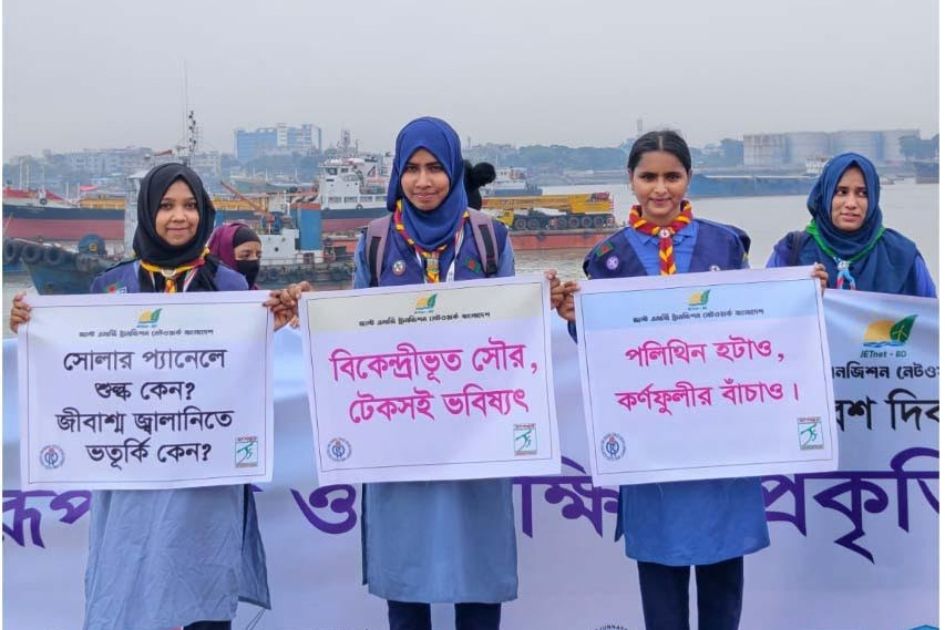
Members of scout groups in Chattogram, leaders of various JETNET member organizations, representatives from CCDO, ISDE, Bihanga Samaj Unnayan Sangstha and DDRC, environmental activists and local residents also took part in the boat rally and human chain.
Organizers said the programme aimed to strengthen public engagement in environmental protection while promoting renewable energy and climate justice as essential components of Bangladesh’s sustainable future.




