




Countries remain divided over climate finance, trade measures and technology access as just transition talks highlight growing tensions around food security, equity and responsibility in global climate action.
The fifth dialogue under the United Arab Emirates Just Transition Work Programme, taking place in Yeosu, Republic of Korea, from 24 to 25 April 2026 in a hybrid format, brought together governments, observers and stakeholders to discuss just transition pathways for holistic approaches to food security, with a focus on agriculture and oceans.
In 2026, the Just Transition Mechanism (JTM) is entering a critical phase of operationalisation, functioning both as a concrete financial tool in the European Union and as a newly designed global framework under the UNFCCC following COP30 decisions.
Sharp divisions over climate finance, the European Union’s Carbon Border Adjustment Mechanism (CBAM) and technology access dominated the dialogue as participants debated how to build fair food systems, protect livelihoods and tackle global warming.
At the heart of the debate was a growing dispute over who should pay for the transition, how benefits should be shared and whether climate action can advance without deepening hunger, debt and inequality.
Developing countries demanded grants, concessional finance and policy space for nationally determined pathways, while several developed countries promoted investment reforms, carbon pricing tools including CBAM and new regulatory frameworks.
Finance gaps stall action
Speaking for the Least Developed Countries (LDCs), HRH Princess Abze Djigma of Burkina Faso delivered one of the strongest interventions of the session, warning that climate commitments are being blocked by a broken finance system.
“Implementation is limited because financing is limited. We need public investments aligned with NDCs, not more barriers,” she said.
She called for stronger institutions, easier access to climate funds and wider support for technology and capacity building.
“Poor countries, African nations and LDCs do not have the fiscal space. Concessional finance is not charity, it is essential,” she said.
In a pointed message to negotiators, the Princess added: “If we do not fix the architecture of finance, we will keep talking in circles.”
She also stressed that principles of equity must be embedded in future frameworks, warning against additional reporting burdens that could overwhelm already constrained systems.
Several delegates echoed concerns that existing climate finance systems remain slow, fragmented and difficult to access.
Argentina said international cooperation is essential to overcome structural barriers, while Kenya stressed that many countries still struggle to turn climate plans into bankable investment pipelines.
South Africa urged negotiators to treat finance as an enabler of ambitious climate action rather than an afterthought, warning that many current models prioritise bankability over real social and environmental impact.
Trade tensions intensify around CBAM
Some of the sharpest disagreements centred on CBAM and broader climate-linked trade measures.
Saudi Arabia, India, Cuba and others warned that CBAM and similar mechanisms could reverse financial flows, increase food and commodity prices and place fresh burdens on developing economies already facing inflation and debt pressures.
India said even where direct export impacts of CBAM appear limited, wider consequences for commodity markets and food systems could threaten food security.
Belgium noted that studies on CBAM impacts, particularly on fertilisers, suggest per-tonne effects may be limited, while emphasising that EU due diligence requirements are being paired with support measures for developing countries and smallholder producers.
China called for a more open and fair trade environment for climate-friendly goods such as solar panels and wind turbines.
The exchanges highlighted rising tensions between climate ambition, trade competitiveness and equity concerns, with CBAM emerging as a key flashpoint in negotiations.
Technology access fault line
Technology transfer emerged as another major divide.
Developing countries called for affordable and locally appropriate technologies, including renewable energy systems, climate-smart agriculture tools and early warning systems.
The Dominican Republic said solutions must be rooted in local realities, adding that decentralised energy systems can reduce vulnerability when affordable.
South Korea highlighted artificial intelligence as a tool for accelerating climate resilience and just transition pathways, especially in vulnerable countries.
India said technologies must remain accessible and warned against restrictive intellectual property systems that limit access to agricultural innovation and climate solutions.
Civil society groups also cautioned that innovation must not deepen inequality, calling for open-source, transparent and community-designed technologies.
Concerns were raised that seed patents and plant variety protections may disadvantage small farmers, weaken traditional seed-saving systems and concentrate market power.
National sovereignty debate
A recurring political divide focused on whether just transition pathways should be globally prescribed or nationally determined.
Saudi Arabia said discussions should remain focused on establishing an institutional work programme and should not pre-judge future mechanisms, including debates linked to CBAM and fossil fuel dependency pathways.
China, India and several developing countries said transitions must reflect domestic priorities and development realities.
They argued that one-size-fits-all models would contradict equity principles under the global climate framework.
India reiterated that developed countries must lead on emissions cuts and provide finance and support under the principle of common but differentiated responsibilities, warning that CBAM-like measures should not become unjustified trade barriers that undermine food security.
Push for inclusive investment
Delegates also debated how to attract investment into agriculture and ocean-based action while protecting decent work, human rights and sustainable resource use.
The European Union promoted its Global Gateway initiative to mobilise investment in climate action, resilient value chains and decent jobs, while linking investment planning to broader economic indicators including GDP impacts.
EU delegates also called for comprehensive policy frameworks, sectoral stability, food security safeguards and long-term investment certainty, supported by multilevel partnerships and participatory policy design.
The United Kingdom backed multidisciplinary frameworks to align investment systems with local realities, warning that rising energy prices, inflation, shipping costs and fertiliser prices are already hurting communities and slowing growth.
Egypt promoted carbon pricing as one financing option, but warned that higher costs linked to fertiliser production and agriculture inputs could increase food prices unless carefully managed within a broader socioeconomic framework.
Youth representatives from YOUNGO urged governments to redirect subsidies away from industrial farming and toward sustainable agriculture, while ensuring private sector investment reduces social risks and avoids reinforcing inequality.
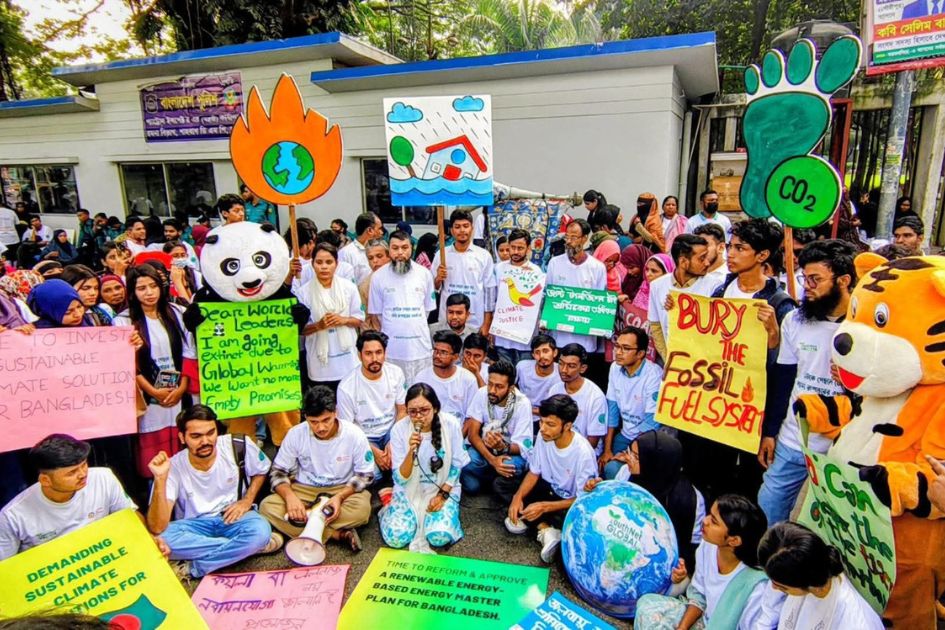
Sohanur Rahman, Executive Coordinator of YouthNet Global, said youth must be placed at the centre of just transition decision-making.
“A just transition cannot be designed for young people without young people. Climate finance, food security and decent jobs must directly reach communities on the frontlines,” he said.
He added that climate responses must ensure equity and opportunity for youth, women and marginalised groups, particularly in vulnerable food systems.
Burkina Faso emphasised the need to systematically involve local universities and national talent, noting that existing infrastructure can be leveraged and capacity building further scaled up.
Road to future climate talks
Negotiators are expected to continue efforts to turn climate plans, adaptation strategies and food system commitments into credible, scalable investment pipelines.
Key upcoming milestones include the 6th Global Dialogue on Just Transition and the 64th Sessions of the UNFCCC Subsidiary Bodies, scheduled for 8–18 June 2026 in Bonn, Germany. COP31 is also expected to take place in Antalya, Türkiye, from 9 to 20 November 2026.
Analysts said the debate has moved beyond emissions targets alone and now centres on whether the global transition can be financed fairly, governed inclusively and delivered without deepening inequality.
With divisions still unresolved, CBAM, climate finance reform and food security are likely to remain central issues on the road to upcoming global climate negotiations.




