




Glacial lake outbursts, retreating ice and unpredictable weather threaten Sherpa livelihoods, highlighting the growing risks facing mountain communities and climbers.
Climate change is transforming the Himalayas and making mountaineering increasingly dangerous, the son of legendary climber Tenzing Norgay Sherpa has warned, as a new biopic about his father’s life and historic ascent of Mount Everest brings his legacy back into focus.
Jamling Tenzing, 61, said Nepal’s recent natural disasters were not isolated events but a stark warning about the mounting dangers facing mountain communities as glaciers melt and weather patterns become increasingly unpredictable.
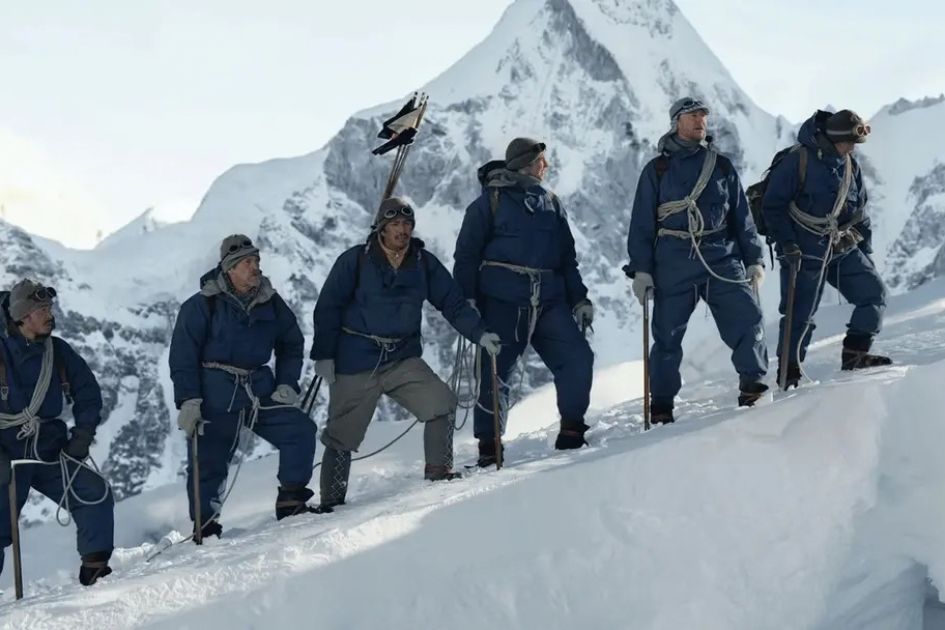
The film, “Tenzing”, was released on Apple TV on Friday, October 2. It recounts the landmark 1953 expedition in which Tenzing Norgay and Edmund Hillary became the first people to reach the summit of Mount Everest, the world’s highest peak.
Told from Tenzing Norgay’s perspective, the film revisits an achievement that transformed the history of mountaineering.
More than seven decades after his father reached the summit, Nepal is struggling to recover from devastating floods that have highlighted the severe consequences of climate change in mountainous regions.
“Natural disasters are not isolated incidents. They are an extreme warning to all of us,” Jamling said.
He said Nepal was particularly vulnerable to climate change because almost half of the country is covered by mountains.
The consequences extend beyond high-altitude areas, he added, threatening the lives of people living in lower valleys and river basins.
Jamling recalled how his father’s birthplace, the village of Thame, situated at an altitude of 3,800 metres (12,460 feet), was devastated two years ago when a glacial lake burst its banks, unleashing a destructive surge of water.
“This is now the biggest threat,” he said, explaining that as glaciers melt, water pressure in glacial lakes increases until their natural barriers collapse, sending floodwaters through surrounding areas.
“This is exactly what happened in Thame,” he said, recalling how the flood wiped out half the village in an instant.
Jamling followed in his father’s footsteps in 1996, reaching the summit of Everest after nurturing the ambition since he was eight years old.
He described his father as his greatest inspiration, saying he had regarded him as a hero and wanted to be just as courageous.
But climate change is now leaving visible marks on Everest itself.
Jamling said guides had begun finding standing water at Camp 2, located at an altitude of about 6,400 metres (21,000 feet), where conditions had previously remained frozen and water had never been seen.
Comparing photographs of the mountain from his father’s climbing days with present-day images also revealed how significantly the glaciers had retreated, he said.
For members of the local Sherpa community, many of whom work as mountaineers and guides, these environmental changes are making an already hazardous profession more dangerous. Unpredictable weather and increasingly frequent avalanches have added to the risks.
Jamling said responsibility for tackling climate change rested primarily with the countries that emit the largest quantities of greenhouse gases.
“This is not only affecting our Himalayas. It is also affecting European countries, while devastating wildfires have burned areas of the United States,” he said.
He warned that failure to protect the planet now would carry a heavy price for everyone in the future.
Reflecting on the new biopic, Jamling said a film about his father’s life and struggles should have been made long ago. He believed the pioneering climber had never received the recognition and respect he deserved, although his father had never been concerned about fame or public acclaim.
Tenzing Norgay had climbed not to win recognition but out of a deep love for the mountains and a lifelong dream of reaching their summits.
His courage and success helped make the word “Sherpa” internationally synonymous with bravery and dependable mountaineering guides.
Jamling said that while his father had viewed the mountains with deep passion and more Nepali climbers were now receiving recognition, the mountaineering industry continued to be driven largely by economic necessity.
Today, Sherpas climb primarily to feed their children and provide them with a good education, he said, hoping to spare the next generation from having to undertake the same dangerous work.
That financial dependence has made the changing conditions in the Himalayas an existential concern for local Sherpa communities, whose livelihoods are closely tied to mountaineering.
Jamling recalled that during his father’s lifetime, until the 1980s, climate change was rarely discussed because people had not witnessed such visible transformations in the mountains.
“Today, we are experiencing this harsh reality firsthand,” he said.




