

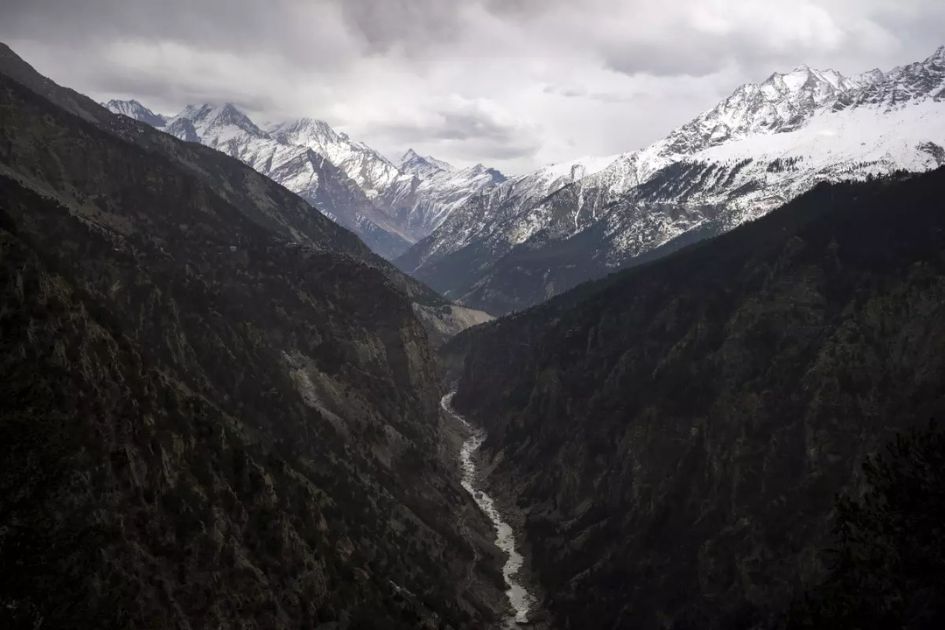

Rapid glacier melt in Nepal’s Himalaya is destabilizing Everest routes, endangering Sherpa workers, worsening waste and tourism pressures, and heightening risks of avalanches and glacial lake floods for mountain communities.
Climate change is accelerating glacier melt across the Nepal Himalaya, transforming the landscape of the world’s highest mountains and heightening risks for climbers and the Sherpa communities who depend on them.
Scientists and local observers say glaciers in the Himalayas are melting faster than in most other regions. At high altitudes, meltwater pools are now forming at Everest Base Camp, visibly altering the terrain. The extreme elevation of these glaciers makes them especially vulnerable to rapid thaw.
The changes are raising alarm among high-altitude communities, including the Sherpa, whose livelihoods and cultural-spiritual practices are closely tied to the mountains. The South Everest Base Camp, located on the shifting Khumbu glacier, is becoming increasingly unstable as ice continues to melt.
Experts and locals are urging the Government of Nepal to urgently examine measures to manage the growing pressures of tourism on Mount Everest. These include stricter garbage management across the mountain and the Khumbu region, as well as limits on the number of climbers allowed to attempt Sagarmatha each season.
The rise in commercial expeditions has worsened waste accumulation at camps and in crevasses. Increased human activity at Everest Base Camp is also contributing to glacier instability, adding to the dangers faced by climbing Sherpas.
The risks are not new but are intensifying. The 2014 and 2015 Everest disasters, when more than a dozen Sherpas were killed in avalanches, remain a stark reminder of the dangers of high-altitude work. Rising temperatures are now compounding these hazards by destabilising cornices and seracs.
Hundreds of foreign climbers rely on fixed lines set by Nepali high-altitude workers, commonly referred to as Sherpas. These workers make repeated trips through the treacherous Khumbu Icefall to transport supplies between camps, exposing them to growing threats of rock and ice avalanches.
Many Sherpas say the changing conditions are making their already hazardous work more unpredictable. Ngima Chhechi Sherpa, drawing on his experience as mountain support staff, said warming temperatures are destabilising the icefall and forcing sudden changes in climbing schedules.
Lakpa Sherpa, an IFMGA mountain guide and instructor, echoed these concerns. “Glaciers used to be solidly frozen at the onset of the Spring expeditions until 20 years ago; however, they are retreating fast by several metres now, increasing the risk of avalanches,” he said.
As glaciers retreat, crevasses are widening and more rock is being exposed, further increasing danger. Sherpas, who make up much of the high-altitude workforce, are expected to bear the brunt of these changes as weather patterns become more erratic.
Elsewhere in the region, the effects are equally stark. Island Peak, known locally as Imja Tse, has lost much of its snow cover below the summit due to reduced snowfall and accelerated melting. Nearby, Imja Tsho, one of the fastest-growing glacial lakes in the Himalaya, poses a growing threat of glacial lake outburst floods.
In 2024, the Sherpa village of Thame in Khumbu was devastated by floods and debris flows linked to such outburst events, illustrating how rapidly changing glacial systems can reshape landscapes and threaten entire communities with displacement.
Unusual weather patterns are also becoming more common. Pasang Furi Lama, a resident of the high-altitude settlement of Dzongla in Khumjung, said lightning strikes have become frequent during pre- and post-monsoon seasons over the past three years.
With snowfall declining and barren rock increasingly exposed, fear and uncertainty are spreading among high-altitude workers whose livelihoods depend on tourism. Mountaineering and trekking contribute more than 4 percent to Nepal’s economy, making the stakes particularly high for remote communities.
Despite the challenges, some collaborative efforts are emerging. In early 2026, a team of Nepali and international IFMGA guides led by Tul Singh Gurung launched a Snow and Avalanche Science programme in Gulmarg, India. The initiative brought together experts from Nepal and India to explore responses to climate change in the Himalaya.
Observers say such civil society partnerships could also help ease tensions between the two countries while strengthening regional cooperation on environmental issues.
Researchers warn that without urgent action, the accelerating effects of climate change could have devastating consequences for Nepal and the wider Himalayan region.
Gulati is a guest faculty member and independent researcher at Panjab University in India.
This post is republished from The Himalayan Times.




