




Bangladesh’s poor EPI 2026 performance underscores mounting pressure on rivers, wetlands, air quality and governance as experts call for stronger enforcement and climate justice at home.
While Bangladesh has emerged as a leading global voice for climate justice despite its historically low contribution to greenhouse gas emissions, the latest Environmental Performance Index (EPI) 2026 highlights a difficult domestic challenge: translating climate advocacy into stronger environmental protection at home.
Bangladesh has been ranked 176th out of 177 countries in the EPI 2026, exposing persistent challenges in pollution control, ecosystem protection and environmental governance.
The ranking does not measure a country’s historical responsibility for climate change or its contribution to global emissions. Instead, it assesses environmental conditions, policy performance and progress across multiple indicators.
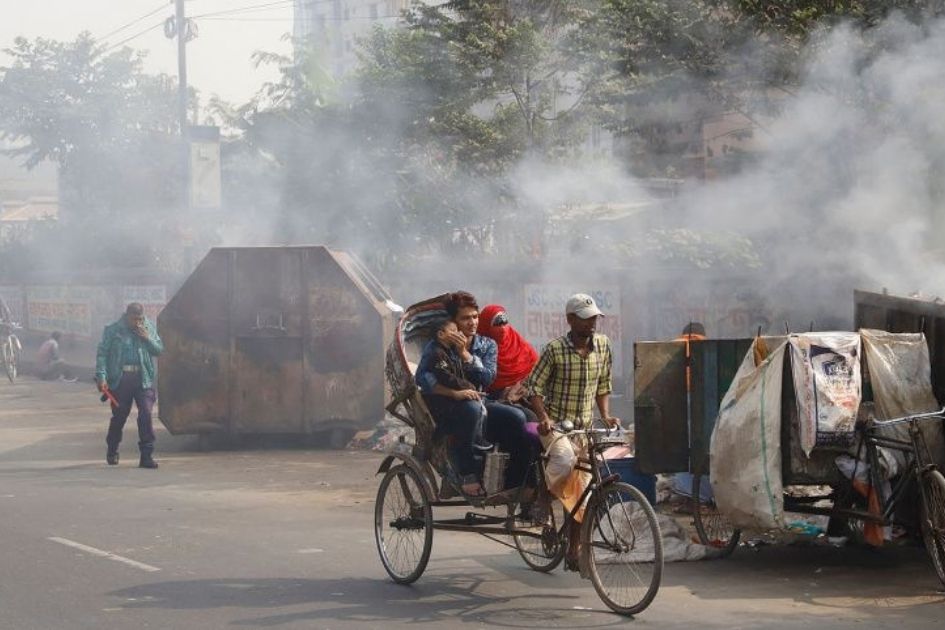
Behind the score lies a daily reality for millions of Bangladeshis: hazardous urban air, shrinking wetlands, polluted rivers, biodiversity loss and growing environmental risks for communities already facing repeated climate-related shocks.
The EPI, compiled by researchers at Yale University’s Center for Environmental Law & Policy and Columbia University’s Center for International Earth Science Information Network, gave Bangladesh a score of 23.46 out of 100. Only Laos, ranked 177th with a score of 21.78, ranked lower; India stood at 176th with a score of 22.46 in some listings, while other tables place Bangladesh at 175th (23.46), India at 176th (22.46) and Laos at 177th (21.78)-reflecting minor variations across secondary summaries.
The 2026 EPI evaluates 177 countries against 47 indicators across 12 categories under three major policy objectives: environmental health, ecosystem vitality and climate change. The assessment uses scientific datasets, environmental indicators and satellite-based analysis to measure progress towards global environmental targets.
Bangladesh ranked near the bottom in the previous 2024 edition as well; however, researchers caution that methodological changes between editions mean rankings should be interpreted carefully and do not represent direct year-to-year comparisons.
Pressure Mounts Across Rivers, Wetlands and City Air
Bangladesh’s weakest performance came in ecosystem vitality, reflecting severe pressure on forests, wetlands and rivers caused by rapid urbanisation, land-use changes, pollution and weak enforcement.
The Buriganga and other major rivers continue to face industrial waste, untreated sewage, plastic pollution and encroachment. The destruction of wetlands around expanding urban areas has reduced natural protection against flooding while increasing climate vulnerability.
Dhaka remains at the centre of the environmental crisis. Vehicle emissions, construction dust, unmanaged waste and unplanned urban expansion have contributed to worsening air quality and growing public health concerns.
Bangladesh ranked among the lowest globally in air quality and in the mid-to-lower range in climate change performance, highlighting the challenge of reducing environmental risks while meeting rising energy and development needs. (Exact sub-indicator ranks vary across summaries; readers should consult the official EPI 2026 tables for precise category ranks.)[4thnation]
Pollution Crisis Beyond the Index
Environmental experts warn that Bangladesh’s pollution crisis extends far beyond international rankings and is directly affecting public health, productivity and quality of life.
According to data presented at a seminar organised by Bangladesh Poribesh Andolon (BAPA) at the National Press Club, noise levels in 82 percent of areas in Dhaka exceed 60 decibels. In heavily congested areas such as Farmgate, Shahbagh and Gabtoli, noise levels reportedly reach between 80 and 110 decibels.
Experts at the seminar said prolonged exposure to excessive noise contributes to hearing problems, sleep disruption, stress, psychological distress and increased risks of high blood pressure.
Air pollution has also become a major public health concern. Environmental assessments have linked polluted air to a reduction of around 3.5 years in average life expectancy and more than 120,000 premature deaths annually.
World Bank assessments have highlighted the significant economic costs of environmental degradation, showing that pollution and environmental damage affect productivity, public health and national development.
Lead contamination has also emerged as a growing environmental and health concern. Unsafe informal recycling of used lead-acid batteries exposes workers and surrounding communities to toxic substances, creating risks for human health and ecosystems.
Experts warned that without immediate action to control air, noise and plastic pollution, environmental risks could become more severe for future generations.
Enforcement Remains the Missing Link
Environmental experts say Bangladesh’s challenge is not only the absence of policies or laws, but weak implementation, fragmented governance and limited accountability.
Professor Jamal Uddin Ranu of Jahangirnagar University’s Department of Environmental Sciences said environmental initiatives often remain disconnected and poorly coordinated, leaving ecosystems vulnerable despite investment and policy commitments.
He said continued pollution in rivers such as the Buriganga demonstrates the urgent need for stronger enforcement, institutional coordination and sustained political commitment.
Professor M M Abdullah Al Mamun of the University of Chittagong’s Institute of Forestry and Environmental Sciences said environmental protection requires shared responsibility among government agencies, industries, researchers and citizens.
He noted that Bangladesh has relatively strong environmental laws, but enforcement remains inadequate. Some industries avoid operating effluent treatment plants to reduce costs, while unplanned construction, plastic waste and uncontrolled urban expansion continue to damage ecosystems.
Climate Justice Voice Faces Domestic Test
Bangladesh has earned international recognition for highlighting the injustice of climate change, calling for greater adaptation finance and support for countries facing severe impacts despite contributing little to global emissions.
However, environmental advocates say climate leadership abroad must be matched with stronger action at home.
A just transition requires faster renewable energy expansion, stronger environmental institutions, improved pollution control systems and greater investment in nature-based solutions such as wetland restoration and biodiversity conservation.
Experts say priorities should include restoring degraded ecosystems, improving wastewater treatment, enforcing industrial pollution standards, expanding renewable energy access and ensuring climate-affected communities have a meaningful role in environmental decision-making.
Sohanur Rahman, Executive Coordinator of YouthNet Global, said Bangladesh’s environmental challenges must be understood through the lens of climate justice and environmental equity.
“Bangladesh is a small country with limited land but a very large population, facing repeated climate shocks and environmental risks despite contributing very little to global emissions. This is not only a climate challenge; it is a question of justice, because communities that contributed the least often suffer the greatest consequences,” he said.
Rahman said environmental protection is also a human rights issue.
“Climate justice cannot stop at international negotiations. It must also be reflected in the right of every citizen to breathe clean air, access safe water and live in a healthy environment,” he said.
He added that protecting nature and supporting vulnerable communities must be a shared responsibility of the international community.
“Environmental action must protect both ecosystems and the people whose lives depend on them,” he said.
Rahman said Bangladeshi youth are ready to contribute to climate solutions, ecosystem restoration and environmental action but require meaningful participation, resources and institutional support.
Government Response and the Implementation Challenge
The government has acknowledged growing environmental pressures and highlighted several planned interventions to reduce pollution, improve urban mobility and promote cleaner alternatives.
State Minister for Environment Shaikh Faridul Islam said the government is working on alternatives to polythene, exploring measures to reduce pollution and taking steps towards introducing electric buses in Dhaka.
As part of efforts to promote cleaner transportation, the government has also announced plans to introduce electric vehicles (EVs), aiming to reduce transport-related emissions and support a gradual transition towards more sustainable urban mobility. (Specific targets such as “400 EVs” have appeared in media reports; exact numbers should be verified against official announcements.
The State Minister also mentioned measures such as reducing unnecessary electricity consumption, including turning off billboard lights after midnight, as part of broader efforts to improve environmental management and reduce energy waste.
Environmental experts welcomed policy initiatives but stressed that previous environmental commitments have often faced implementation gaps.
They said the success of measures such as electric mobility, plastic alternatives and pollution-control initiatives will depend on effective implementation, transparent monitoring, institutional accountability and consistent enforcement.
South Asia Shares Similar Pressures
India ranked 176th out of 177 countries, with its low position linked to challenges including air pollution, environmental health pressures, biodiversity loss and waste management.
The EPI measures overall environmental performance across multiple indicators rather than ranking countries solely based on pollution levels.
Across South Asia, rapid urbanisation, fossil fuel dependence, industrial pollution and ecosystem degradation remain shared challenges requiring stronger regional cooperation.
The region also has opportunities for collaboration on clean energy expansion, air quality management, river protection and climate adaptation.
Global Environmental Divide
European countries dominated the upper ranks of the EPI 2026 rankings, with Estonia taking the top position due to stronger environmental governance, renewable energy expansion and effective waste management systems.
Among major economies, the United States ranked around the upper-middle tier while China ranked in the lower-middle tier, reflecting the challenge large economies face in balancing economic growth, energy demand and environmental protection. (Exact ranks vary by summary; consult the official EPI 2026 tables for precise positions.)[sdthailand]
A Warning for Bangladesh’s Future
Experts say Bangladesh needs a long-term environmental strategy built on political commitment, stronger institutions, scientific innovation and genuine community participation.
The EPI ranking is more than a scorecard. It is a warning that climate resilience must be matched by action at home.
Protecting rivers, restoring wetlands, reducing pollution, strengthening environmental governance and empowering vulnerable communities will determine whether Bangladesh can transform its global climate leadership into lasting environmental progress.
Bangladesh’s climate leadership will ultimately be judged not only by the strength of its demands on the global stage, but by whether every citizen can breathe cleaner air, drink safer water and live in harmony with a protected natural environment.




