




Nepal is urging stronger climate adaptation, Himalayan research and cross-border cooperation as scientists warn that warming is intensifying risks across the region.
Disaster raises concerns over accelerating climate risks in the Hindu Kush Himalaya as Nepal calls for stronger adaptation, research and cross-border cooperation.
At least 675 people have died and thousands remain missing after devastating flash floods near the Nepal-Tibet border, prompting Nepal to call for urgent global action on climate change and greater protection for the fragile Himalayan ecosystem.
The disaster has renewed concerns over the growing risks facing Himalayan communities as scientists warn that rising temperatures are accelerating changes in glaciers, snow systems and mountain landscapes.
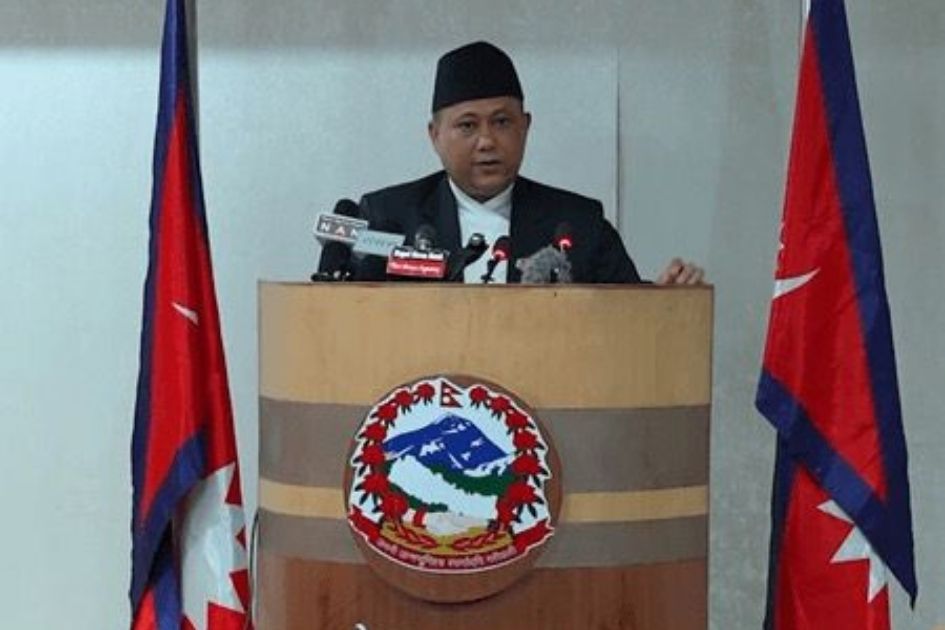
Nepal’s Foreign Minister Shisir Khanal said his country, despite being among the world’s lowest contributors to greenhouse gas emissions, is experiencing some of the harshest consequences of global warming.
“We’d ask the world to take climate change as one of the major challenges that Nepal and its citizens face, and this has to be a global effort,” Khanal told reporters at a press conference on Saturday.
“We request the global community to come together and preserve the Himalayan ecosystem,” he added.
Khanal said the government would conduct further research into the causes of the disaster, including through an existing joint mechanism with Chinese researchers to better understand changes taking place across the Himalayas.
According to Nepal’s National Disaster Risk Reduction and Management Authority (NDRRMA), at least 675 people have died, while 2,498 people have been rescued and 219 injured following the floods. More than 2,400 people remain missing.
More than 18,700 rescuers have been deployed to support search and recovery operations across affected areas.
The floods struck after a sudden mountain event in the high-altitude areas along the Nepal-Tibet border, sending water and debris into communities and damaging critical infrastructure. Scientists say detailed investigations will be needed to determine the exact causes and the role of climate change in the disaster.
Recovery efforts and identification of victims
Authorities have begun burying recovered bodies as they face major humanitarian and logistical challenges.
Nepal’s health officials said systematic burials are being carried out in government, community and forest areas to ensure victims are treated with dignity while following safety and legal procedures.
Many of the bodies recovered so far cannot be immediately identified. Officials said DNA samples are being collected, along with records of physical identification marks and burial locations, to help families locate missing relatives in the future.
Damodar Adhikari, a disaster management expert who previously worked with the Nepalese government and the World Health Organization after the 2015 earthquake, said recovered bodies must be managed carefully so relatives can identify them and, where required, carry out religious traditions.
Climate risks in a warming Himalaya
While the direct role of climate change in this specific disaster remains under scientific investigation, researchers say there is growing evidence that global warming is transforming the Himalayan environment and increasing risks.
The Hindu Kush Himalaya region, stretching across Afghanistan, Pakistan, India, Nepal, Bhutan and China, is home to millions of people whose lives and livelihoods depend on mountain ecosystems, rivers and glaciers.
Scientists say rising temperatures are accelerating the melting of glaciers, icefields, snowpacks and permafrost, increasing the likelihood of glacier instability, glacial lake outburst floods and other mountain hazards.
Glaciers and frozen landscapes act as natural stabilisers for mountain slopes. As ice and snow retreat, mountains can become more fragile, contributing to increased risks of rockfalls, landslides, avalanches and debris floods.
Experts also warn that higher mountain areas are increasingly experiencing rainfall instead of snowfall due to rising temperatures, creating additional pressure on already unstable landscapes.
A study released in March by the International Centre for Integrated Mountain Development (ICIMOD) found that glacier loss rates in the Hindu Kush Himalaya region have doubled since 2000.
Scientists at ICIMOD and other Himalayan research institutions have warned that rapid warming is changing the region’s cryosphere, the frozen systems of glaciers, snow and permafrost that regulate mountain stability and water flows.
Calls for greater international support
Sunil Acharya, an international climate policy and just transition specialist based in Kathmandu, said the disaster demonstrates the consequences of delayed global action on climate change.
“This is the cost of not acting in the face of the climate crisis,” Acharya said. “Nepalis and Tibetans must not pay the price for global heating caused by wealthy states.”
Acharya called for greater international support for Nepal’s climate adaptation efforts, including early warning systems, mountain monitoring, climate research, anticipatory action, resilient infrastructure and disaster preparedness.
“Because Himalayan hazards originate beyond national borders, this must also include stronger cross-border cooperation and timely sharing of information,” he said.
The disaster has renewed calls from Himalayan countries for increased climate finance and stronger international cooperation, as communities living in some of the world’s most climate-sensitive landscapes continue to face rising risks despite contributing little to global emissions.
As Himalayan nations confront increasingly complex climate threats, experts say protecting mountain ecosystems will require not only stronger local preparedness but also global responsibility from countries that have contributed most to climate change.




