

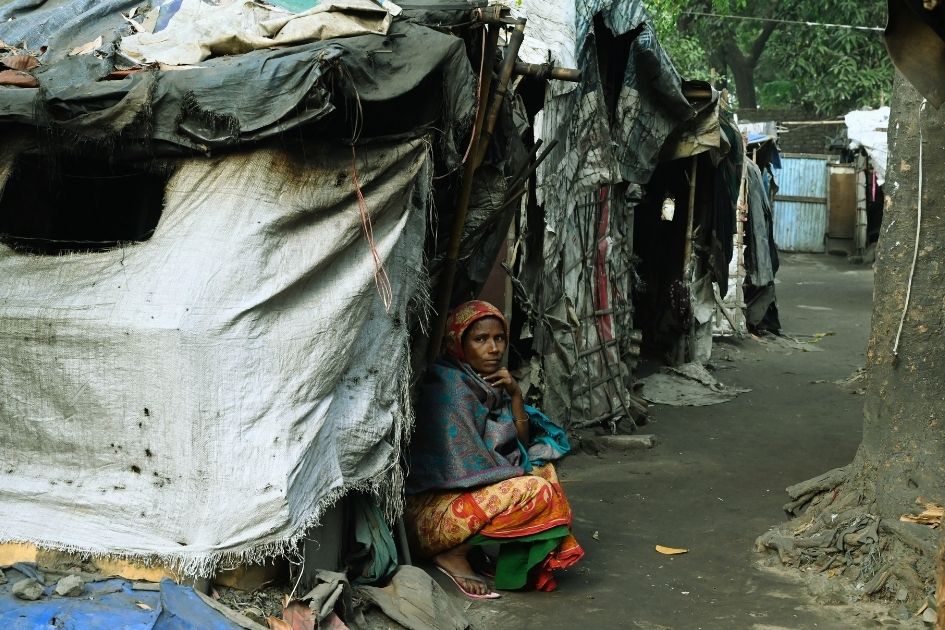



A survey of 540 displaced residents shows how erosion, poverty, insecure housing and weak services are shaping life for long-term migrant families in Chattogram’s slums.
Climate-induced migrants comprise an estimated 30% to 40% of the population living in slums in Chattogram, Bangladesh’s second-largest city and largest port city, with river erosion emerging as the dominant driver of displacement, according to a new study.
The August 2026 study by Young Power in Social Action (YPSA), a voluntary nonprofit organisation working in Chattogram, said the estimate was based on slum-wise household data, key informant interviews and focus group discussions. The report, titled “Unraveling the Nexus of Climate-Induced Displacement and Rural-to-Urban Migration in Bangladesh: Impacts, Adaptation Strategies, and Policy Responses”, examined how displaced rural households adapt after moving to the coastal city.
River erosion was responsible for the displacement of 70.4% of surveyed migrants, followed by floods at 15%, influx of tidal water at 5.3%, cyclones at 4.4%, sea-level rise at 1.3%, tornadoes and landslides at 0.9% each and salinity and salinisation at 0.7%.
Despite being displaced by environmental hazards, 85.3% of respondents said they had no idea about climate change. Only 14.7% reported some awareness or understanding of it, associating climate change with increased river erosion, cyclones, higher temperatures, extreme heat, tornadoes, floods and excessive rain.
The study surveyed 540 climate migrants living in Chattogram’s slum areas, including 297 women and 243 men, meaning women accounted for 55% of respondents. Most, or 88.7%, were married. It found that 36.6% were illiterate while another 32.8% could only sign their names. More than 62% reported having no savings and a further 29.6% said they had no surplus income to save.
Family income and expenditure were generally within the range of Tk 10,001 to Tk 15,000 a month. The report said the combination of low education, limited savings and precarious earnings sharply restricted migrants’ opportunities to move into formal employment or build financial protection against future shocks.
Displacement was often repeated rather than a single event. More than 41% of respondents had experienced at least one relocation before reaching Chattogram, with some reporting multiple moves across districts. Relatives influenced 42.6% of respondents in deciding to move to their present location.
The financial losses associated with disasters were substantial. Some 38.9% of respondents estimated losses of Tk 100,000 to Tk 500,000, while 21.4% reported losses between Tk 500,000 and Tk 1 million. Another 14.4% estimated losses of Tk 50,000 to Tk 100,000.
The research found that Chattogram city was the primary destination for around 26.3% of respondents while 35.8%, particularly women, migrated to other cities or towns. The highest influx among respondents occurred between 1991 and 2000, followed by substantial migration in later decades. About 83.5% said they had left their ancestral homes with their entire families.
Economic survival was the leading reason for moving to cities. Some 34.5% cited income or work while 29.8% sought a safe habitat. Another 9.4% moved in search of a disaster risk-free area, 8.9% sought a safer life for their children, 7.1% moved for their children’s education, 6.5% sought improved living arrangements and 3.5% cited improved healthcare.
But moving to the city did not end their vulnerability.
Only 33.8% rated their urban living conditions as “good” or “very good”, compared with 86.5% for their previous village settlements. Some respondents earned more in Chattogram than in their villages, but rent, utilities, transport and food absorbed much of the increase. Some 41.6% reported being “not very satisfied” with their monthly family income in the city.
Livelihood satisfaction stood at 46.6% in the city compared with 53.3% in villages. Men were commonly engaged in day labour, rickshaw pulling, construction, driving, small trading and other informal employment while women were primarily homemakers, with some working as domestic workers or in other informal activities.
Some 62.4% of respondents said they needed skills training or cooperation to make better use of their existing abilities. Focus group participants identified tailoring, cattle rearing, poultry farming, sewing, beauty parlour work, computer skills and motor-parts repair among the training they wanted. They also cited a lack of birth certificates and national identity cards, local politics, corruption, inadequate training, declining job opportunities and low or irregular wages as barriers to livelihoods.
Housing insecurity was another major problem. Some 57.5% lived in colony housing and 41.6% in single-room accommodation. Satisfaction with house ownership fell from 66% in villages to 38.4% in the city, while 24.7% described their urban housing situation as bad.
The study also found that 50.9% lived in housing made of temporary bamboo fencing, tin fencing or earthen walls while 40.5% lived in semi-pucca structures. Some 46.8% were living on government land through occupation and more than half of participants lived in rented houses.
Overall, 63.1% had a negative perception of the disaster resilience of their dwellings while 32.4% believed their houses were disaster resistant. The report identified land disputes, eviction risks, overcrowding, inadequate space, poor ventilation and exposure to climate hazards among the housing problems facing migrant households.
Healthcare presented a more complex picture. Some 64.6% rated medical care in the city as good and 18.5% as very good, but about 80% said they had received no healthcare assistance from the Chattogram City Corporation. High medical costs, long waiting times, distance from healthcare facilities and rising drug prices were cited as major barriers.
Education remained difficult for children in slum areas. The high cost of education was the most frequently cited obstacle at 20.5%, followed by rising prices of educational materials at 16%, poverty at 13% and the distance of schools from slums at 10.7%. Children’s involvement in income-generating activities was also identified as a cause of school dropout.
Access to water and sanitation was uneven. Piped water was available to 43.6% of respondents in urban areas, but satisfaction with drinking water quality was lower than in villages. Some 62.6% used shared latrines, including 70.9% of female respondents, raising concerns over privacy for women.
Safety also deteriorated for many after migration. Some 60.2% reported feeling insecure in city areas and respondents generally considered their ancestral villages safer. Among female participants reporting violence or harassment during mobility, teasing was cited by 28.8% and theft by 24.9%.
Respondents identified violent adolescents as the group most commonly involved in unethical or illegal activities in slum areas at 29.3%, followed by drug users at 26.3% and political persons at 17.5%. Women and children were described as facing heightened risks from violence, sexual harassment and other security problems after moving to the city.
The findings also pointed to gaps in civic rights and social protection. Some 56% of respondents said they did not have civil rights while 44% said they did. Respondents linked difficulties in obtaining those rights to corruption, local political influence, nepotism, lack of education and awareness and demand for assistance exceeding available services.
Asked about allowance programmes for people including older persons, people with disabilities and poor households, 43.8% said such programmes operated in their slums, 49.8% said they did not and 6.3% did not know.
The report said 64.2% of respondents reported that no public, private or community-based organisation was involved in improving the adaptation process in their slums. Focus groups nevertheless identified some organisations providing food, healthcare, education and disaster-awareness activities.
Focus group participants described cramped housing, poor waste management and sewerage, mosquito infestation, tidal inundation, land disputes and fear of eviction. They also cited high living costs, inadequate gas, electricity and water services, restrictions imposed by landlords, safety concerns for women, restricted mobility and the risk of landslides.
Many appear unlikely to leave Chattogram without substantial support. Some 57.3% expressed unwillingness to return to their ancestral areas, citing a lack of housing and land, adaptation to urban life and economic opportunities in the city.
Focus group participants said many had lost everything at their places of origin and remained in the city despite dissatisfaction with living conditions because they needed income. They said they would consider returning if permanent housing and livelihood opportunities were provided in their ancestral areas.
The report said 93% of respondents had lived in Chattogram for more than 10 years, leading it to recommend rehabilitation within the city as one long-term solution.
Key informants said many climate migrants originated in Barisal, Bhola, Comilla and Noakhali, where they had been exposed to river erosion, coastal hazards, sea-level rise, frequent cyclones and floods. Within Chattogram, migrants were reported to live on hilly forest land, vacant Bangladesh Railway land beside railways in Dewanhat, Jhautola and Pahartoli and on alluvial land.
The study said migrants also contribute labour to the city, including the ready-made garment sector, construction, petty businesses and informal activities such as street vending and hawking.
A Chattogram City Corporation key informant said the local authority had a department dealing with slum-related health, water, sanitation and education issues and had implemented a housing loan scheme under which 1,000 to 1,200 houses had been built. The city corporation also carried out drainage and road management and provided shelter and food during disasters and emergencies.
Other city corporation key informants cited vocational training, healthcare facilities, maternity clinics, free medicines and vaccines and satellite clinics among services, while acknowledging that the corporation had not taken an initiative specifically aimed at integrating climate-induced migrants with local society.
The report’s policy review found that Bangladesh still lacked specific policy intervention for climate-induced migration.
It said the Bangladesh Climate Change Strategy and Action Plan 2009 recognised links between climate change and displacement but provided no clear policy guidelines for migrants. The Mujib Climate Prosperity Plan 2022 described climate change as a humanitarian issue but did not outline policy initiatives addressing climate-induced displacement.
The National Housing Policy 2016 addressed reconstruction and rehabilitation in disaster-affected areas but did not cover rural-to-urban migration, while the National Strategy on Internal Displacement Management 2021 addressed pre-displacement, displacement and post-displacement measures but did not consider some critical socio-environmental perspectives, the study said.
It also said government agencies and the city corporation had no intervention specifically related to climate-induced rehabilitation in Chattogram and that no context-based policy guideline existed for different climatic events.
The study recommended both immediate assistance and longer-term measures.
Short-term responses should include housing, food security, medical care, temporary accommodation with basic services, food distribution and medical assistance, it said.
Long-term measures should include climate-resilient infrastructure and urban planning, stronger coastal protection and flood-management infrastructure, livelihood support, skills development, employment placement and support for small-scale businesses. It also called for securing land-tenure rights to reduce conflicts and fear of eviction.
Further recommendations included sustainable embankments, urban rehabilitation, social security allowances, easier access to citizenship certificates and national identity cards, gender-sensitive policies, climate-awareness campaigns and greater community participation.
The study called for affordable healthcare through existing community clinics and additional slum-based clinics, measures to reduce mosquito infestation and waterlogging, low-cost or free schools, financial literacy training, improved waste management, gender-sensitive toilets and bathing facilities and more water points.
It also recommended protection measures addressing violence against women and children, domestic and gender-based violence, child marriage and the involvement of teenagers in gangs.
The report called for climate adaptation to be integrated into local development planning across infrastructure, urban planning, agriculture and disaster risk reduction and said government agencies, local communities and civil society organisations should jointly develop adaptation strategies.
The researchers acknowledged several limitations. The detailed survey took a long time to administer, many participants were difficult to find during the day because their livelihoods required them to move around and the research focused on urban migrants without examining internally displaced people who remained in their villages. Some respondents requested money or assistance after interviews and some participants in the pilot survey could not later be located because they had again been displaced within the city.
The household survey covered 100 slums across Chattogram City Corporation, while nearly 50 key informant interviews were conducted and focus group discussions were held at 100 urban hotspots. Preliminary findings were presented at a validation workshop involving officials from Chattogram City Corporation and other stakeholders in November 2023 before comments and suggestions were incorporated into the final report.
The report said more than 7.1 million people in Bangladesh had been internally displaced by climatic events by 2022 and projected that figure could reach 13.3 million by 2050, underscoring the wider pressure climate-linked displacement could place on the country’s rapidly growing urban areas.




