




COP17 boosted restoration finance and drought planning, but a delayed global pact and a $278 billion annual funding shortfall leave vulnerable countries facing mounting pressure.
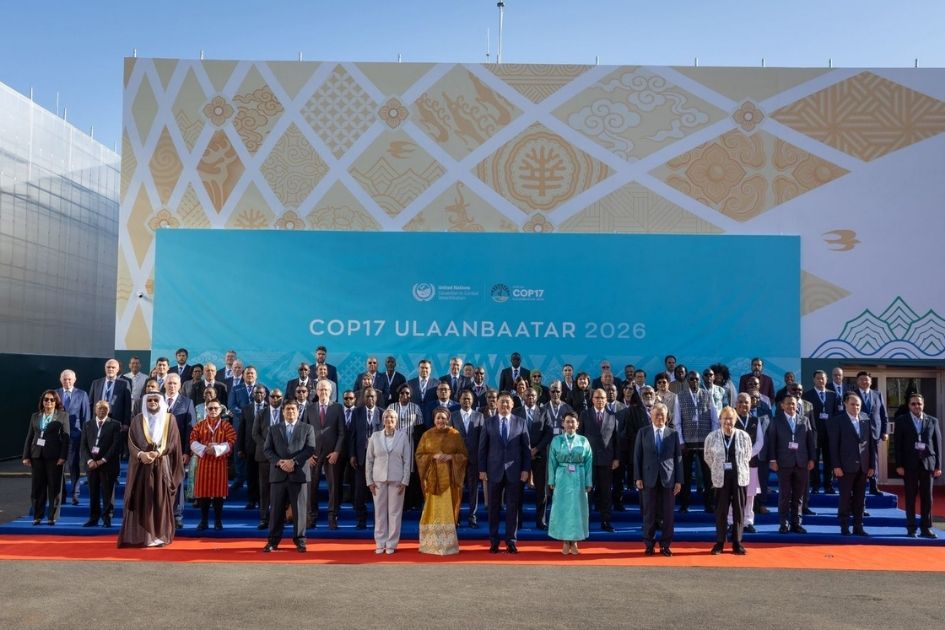
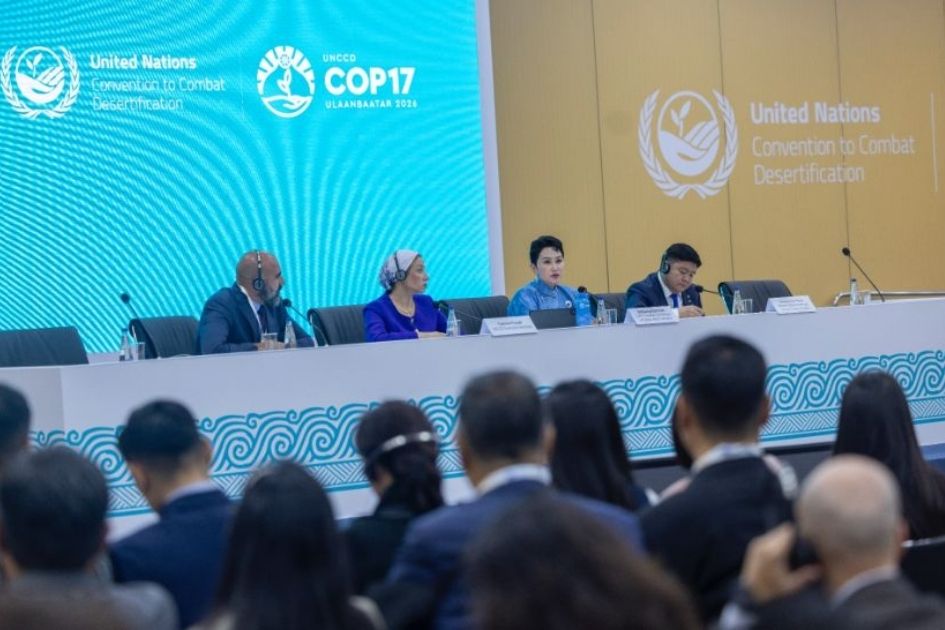
Nearly 200 countries wrapped up 12 days of United Nations desertification negotiations in Mongolia on Friday with new financing commitments for land restoration and drought resilience, but failed for the second time to reach a legally binding global drought agreement as vulnerable nations face worsening water stress and a massive funding gap.
The outcome highlighted the widening gap between the accelerating threat of drought and land degradation and the political commitment and resources available to address the crisis.
The talks were held under COP17 of the United Nations Convention to Combat Desertification (UNCCD), a UN process focused on land degradation, drought and desertification.
Governments discussed drought preparedness, food security, water management and the future of the world’s rangelands as climate impacts intensify across regions.
According to UNCCD, around 40 percent of the planet’s land is already degraded, while droughts are increasingly affecting areas once considered less vulnerable to severe dry conditions.
“Drought is coming coupled with the impact of climate change,” UNCCD Executive Secretary Yasmine Fouad told, warning that dry periods are becoming more frequent, intense and longer lasting.
Global drought pact delayed again
Despite growing pressure from climate vulnerable countries and scientists, governments failed to agree on a legally binding global drought agreement.
The decision has been deferred for a second time, with countries agreeing to revisit the issue at the next round of negotiations in Egypt in two years.
The proposed agreement aims to strengthen international cooperation on drought preparedness, early warning systems, resilience building and financing.
Experts at the summit stressed that drought is not only a question of rainfall. The condition of land before a dry period begins often determines how severely communities are affected.
Healthy soils retain moisture and protect crops and ecosystems, while degraded land loses water faster and increases vulnerability.
Joao Campari, global food and agriculture lead at WWF International, warned that land and water management cannot be treated as separate challenges because both are central to global food security.
$278bn annual funding gap
The financial challenge remains enormous.
The world needs an estimated $355 billion annually until 2030 to meet global land restoration targets, while current investment stands at around $77 billion, leaving a shortfall of approximately $278 billion every year.
Private investment contributes only around 6 percent of global land restoration finance, increasing pressure on governments, development banks and businesses to scale up funding.
The challenge is expected to intensify as global food demand rises. UN projections suggest the world may need to produce 50 percent more food by 2050 than it did in 2012.
Experts warned that expanding agricultural land into grasslands and savannas could accelerate degradation while releasing carbon stored in these ecosystems.
Bangladesh faces growing drought and water pressure
For Bangladesh, the global land degradation crisis has direct consequences for agriculture, groundwater and freshwater security.
The country highlighted increasing drought pressure in the northwest, declining groundwater reserves and rising salinity in coastal areas during the Mongolia talks.
Environment, Forest and Climate Change Minister Abdul Awal Mintoo said around 5.46 million hectares of land in northwestern Bangladesh are drought prone.
He said groundwater levels are declining rapidly in many areas because of excessive extraction through nearly 16,000 deep tube wells.
Bangladesh has restricted new irrigation activities in some areas while strengthening drought monitoring and agricultural advisories.
Farmers are receiving crop specific recommendations through SMS, voice services and mobile applications using information from the Bangladesh Agro Meteorological Information Service.
Climate experts say the crisis is increasingly affecting small farmers, women and rural communities whose livelihoods depend on climate sensitive agriculture and water resources.
Mintoo said Bangladesh plans to excavate and re excavate around 20,000 kilometres of canals, rivers and water bodies over the next five years to increase surface water availability and reduce pressure on groundwater.
The government has also set a target of planting 250 million saplings under the National Green Mission.
The initiatives come as changing rainfall patterns, rising temperatures and extreme weather events place additional pressure on agricultural systems.
Salinity deepens coastal vulnerability
Drought is not the only land and water challenge facing Bangladesh.
Mintoo said rising sea levels and reduced dry season river flows are allowing saline water to move further inland, threatening farmland and freshwater sources in coastal areas.
Flooding and river erosion are adding further pressure on vulnerable communities and ecosystems.
He called for stronger regional cooperation, equitable water sharing, sustainable water management and technology transfer to strengthen drought resilience.
He also stressed the importance of effective management of the Ganges, Brahmaputra and Meghna river basins and greater cooperation among neighbouring countries.
Rangelands gain attention
Rangelands became a major focus of the Mongolia talks.
Grasslands, savannas and other rangeland ecosystems cover about 54 percent of the Earth’s land surface and support the livelihoods of around two billion people.
Yet these ecosystems face increasing pressure from land conversion and degradation.
Campari said rangelands are being converted to other uses roughly four times faster than forests, despite their major role in carbon storage.
The summit launched a new rangelands initiative valued at $1.2 billion across 45 projects.
A new assessment estimated that global grasslands provide between $21 trillion and $47 trillion in annual benefits through food production, water security, biodiversity conservation, carbon storage and other ecosystem services.
ADB pledges $2bn for Asia Pacific
The financing push also extended to Asia Pacific.
The Asian Development Bank and its partners launched the FIELD Initiative, which aims to mobilise at least $2 billion by 2035 to combat land degradation and strengthen drought resilience across Asia and the Pacific.
A Drought Resilience Investment Facility announced at the summit also aims to mobilise up to $400 million in public and private capital for water security, sustainable agriculture and land restoration projects.
Plans expand, but money remains limited
More than 70 countries now have national drought plans, compared with only three in 2013.
However, experts warned that many strategies remain underfunded.
Early warning systems, water management and agricultural adaptation require sustained investment if national plans are to deliver results.
Fouad urged governments to move beyond preparing drought plans and develop investment strategies that bring businesses, communities, women and young people into climate resilient projects.
Esther Penunia, secretary general of the Asian Farmers Association, warned countries should not delay action while waiting for another global agreement.
“We cannot wait for COP18 for solutions,” she said, stressing that many workable approaches already exist and require resources.
Investors urged to support restoration
Governments alone cannot close the $278 billion annual financing gap.
COP17 placed greater emphasis on attracting businesses, banks and investors into land restoration through financial instruments and investment models.
The Business4Land agenda aims to make restoration projects more attractive to private capital.
However, experts said investors need transparent, measurable projects with reliable returns.
Governments and development institutions will need stronger policies, project preparation systems, data and risk sharing mechanisms to unlock investment.
Youth groups urge action beyond negotiations
Climate advocates said the outcome of COP17 showed the urgent need to move from commitments to implementation, particularly for communities already facing drought, water shortages and land degradation.
Sohanur Rahman, Executive Coordinator of YouthNet Global, said the failure to reach a legally binding drought agreement was disappointing for millions of people living on the frontline of the climate crisis.
“COP17 has once again shown that global environmental negotiations cannot move at the speed of bureaucracy while communities are losing their land, water and livelihoods. The billions pledged for restoration are important, but finance must reach the people who are protecting ecosystems and facing the impacts of drought first hand,” he said.
He said land restoration efforts must be people centred and inclusive, ensuring stronger participation of youth, women, local communities and pastoralist groups.
“Drought is a crisis of food and nutrition security, justice and human rights. Bangladesh and other vulnerable countries need meaningful international cooperation, predictable climate finance and locally led solutions to build resilience,” Rahman added.
Action cannot wait
The Mongolia summit delivered major financing announcements and pushed land restoration and drought resilience higher on the international agenda.
But the failure to conclude a legally binding drought agreement and the continuing funding gap remain major challenges.
For drought affected communities, the consequences of delay are immediate.
Farmers need reliable water. Pastoralists need healthy grazing lands. Local communities need finance and a voice in decision making. Countries like Bangladesh need stronger cooperation to manage shared rivers and water resources.
The next round of negotiations in Egypt will provide another opportunity to resolve the global drought agreement issue.
But the real test of COP17 will not be in another negotiating room. It will be whether promised finance reaches communities before the next drought strikes.
For millions already living with dry fields, falling groundwater and shrinking livelihoods, the challenge now is turning promises made in Mongolia into action.




