




Bangladesh’s youth climate paper sets out priorities on climate justice, loss and damage, finance, adaptation, green jobs and a stronger role in policymaking.
Speakers have called for meaningful participation by young people in policymaking to address climate change as about 300 youths from across Bangladesh handed a national youth climate position paper to the government on Thursday.
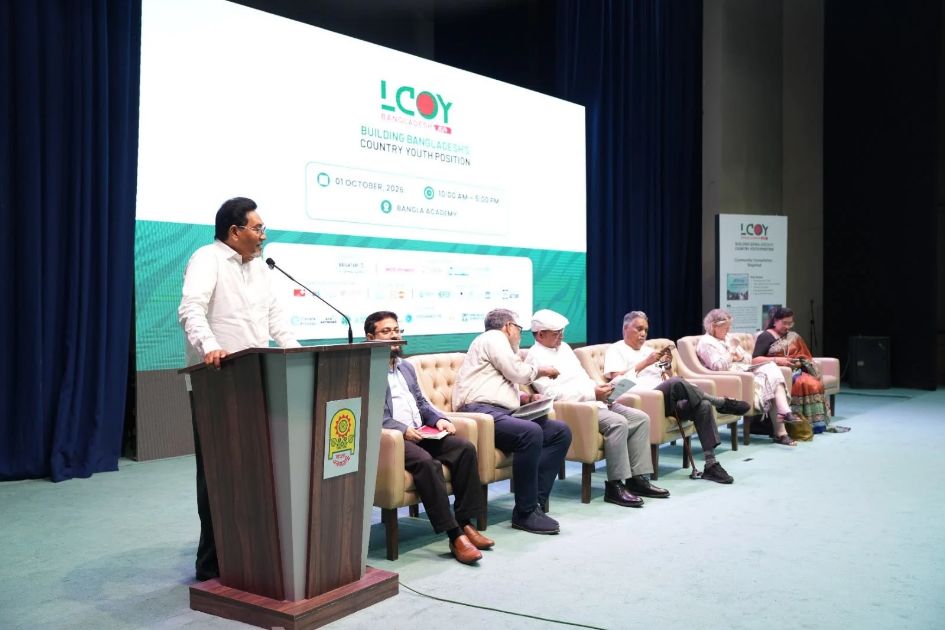
The paper was presented at the closing ceremony of the two-day “Youth Local Conference Bangladesh 2026” at the Bangla Academy in Dhaka. It was developed through the participation of young people from across the country and outlines their demands and recommendations on climate justice, loss and damage, climate finance, adaptation, green jobs and youth participation in policymaking.
Nurul Islam Moni, chief whip of Bangladesh’s parliament and a vice chairman of the Bangladesh Nationalist Party (BNP), was the chief guest at the event. Dr Saimum Parvez, special assistant to the prime minister for environment, forests and climate change, attended as the guest of honour.
Other special guests included Dr Susan Weisz, UNESCO representative in Bangladesh; Ishrat Shabnam, country director of Practical Action; Sharif Jamil, coordinator of Waterkeepers Bangladesh; and Dr Ainun Nishat, emeritus professor at BRAC University.
“The government welcomes young people. Young people should speak out more on environmental and climate issues and play an active role through their opinions and initiatives. The government will stand by them,” Moni said.
Parvez said the government was taking the position paper prepared by young people from across the country seriously.
“We are taking this position paper prepared by young people from across the country seriously. Efforts will be made from the government’s side to present the climate priorities of young people in the appropriate forums. The government will always support young people in such initiatives,” he said.
The conference brought together young people from climate-vulnerable regions of Bangladesh, with their experiences, realities and demands reflected in the national position paper.
Khairul Islam Muna, founder and executive director of Greenpeace Youth Development Society and head of communications and media for the conference, said the platform sought to bring the voices of coastal communities to the national level.
“Through this platform, we have tried to bring the voices of the coastal areas to the national level. The experiences, realities and demands of young people from 19 districts most affected by climate change have been included in the national position paper,” he said.
Thirty youth organisations supported the event, with ActionAid, CARE and UNICEF Bangladesh also providing support.
The conference was held on Sept 30 and Oct 1, with young people from various climate-vulnerable areas of Bangladesh taking part.
Organisers said the youth position paper would be used as a basis for presenting the priorities and demands of Bangladeshi youth at the next international climate conference.




