




Stakeholders want Nepal’s proposed climate policy to strengthen adaptation, disaster preparedness, community rights, climate finance and accountability before it is finalised.
Nepal’s government is facing criticism over a draft national climate policy that stakeholders say was hastily prepared following the August Bhotekoshi flood and ahead of the United Nations climate change conference, COP31, in Türkiye in November.
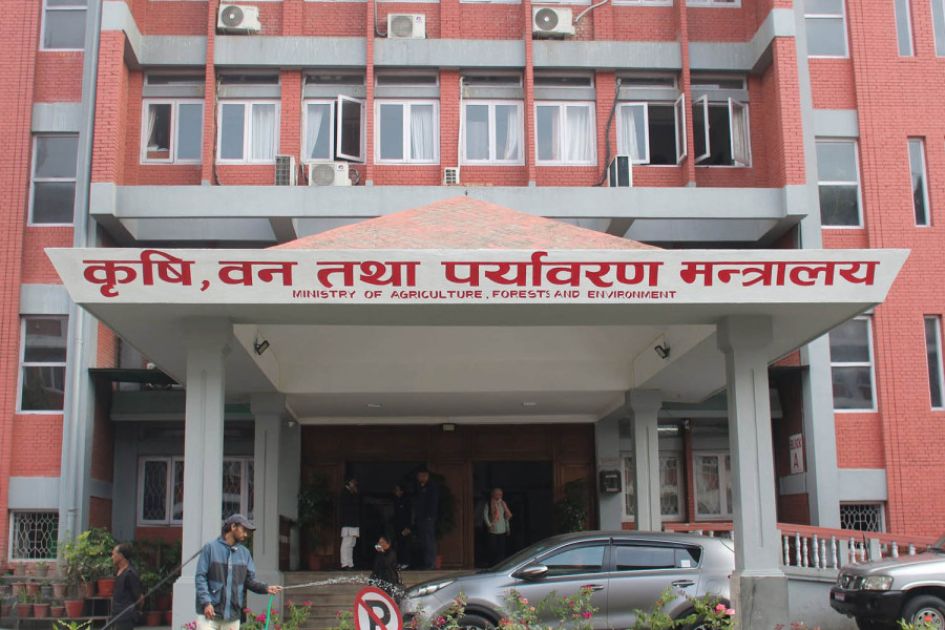
The Ministry of Agriculture, Forest and Environment last week circulated a draft of the National Climate Policy-2083 and invited comments and recommendations from interested groups.
Stakeholders have raised concerns over gaps in the draft, including its response to rising temperatures, lessons from the Bhotekoshi flood, climate governance, institutional mechanisms for implementation, monitoring, accountability and transparency.
The government, however, said the draft was released specifically to gather input from different sectors and that a revised version would be prepared after the consultation deadline.
On Wednesday, a group of stakeholders led by the Non-government Organisations Federation of Nepal met Agriculture, Forest and Environment Minister Geeta Chaudhary, ministry climate change department head Maheshwor Dhakal and other officials to present their concerns, according to federation president Arjun Bhattarai.
The NGO federation had also held an urgent consultation with civil society members, experts, the Nepal SDG Forum, the Federation of Community Forestry Users Nepal (FECOFUN), Oxfam and other stakeholders on Tuesday. The participants discussed the proposed policy and agreed to draw the government’s attention to their concerns.
Dhakal said the ministry had conducted extensive consultations during the drafting process with line ministries, provincial governments, local governments and the donor community.
“It’s not true that the policy came without consultations with stakeholders,” Dhakal said. “In each province, we organised a consultation process with multiple stakeholders. Each consultation drew 700 to 1,000 people. We tried to make it more inclusive, one that can reflect and represent the spirit and voices of all clusters of society.”
According to Bhattarai, stakeholders urged the government to make the policy timely, inclusive, participatory, rights-based and effective. They called for adequate and meaningful consultations with all stakeholders, including communities affected by climate change, rather than rushing to finalise the policy.
Participants also said the policy should be practical and focused on implementation as Nepal continues to face the direct impacts of climate change.
A statement issued after the consultation said the policy should address rising temperatures in the Himalayan region, changes in glaciers and glacial lakes, irregular rainfall, floods, landslides, inundation and drought, as well as impacts on agriculture, food security and livelihoods.
“We have expressed our concerns and reservations to ministers and officials,” Bhattarai said. He alleged that the government appeared to have introduced the policy in a hurry because of COP31, which will be held in Türkiye in the second week of November.
On Wednesday, Dhakal received two memoranda from different stakeholders concerning the draft.
“We have given a deadline to furnish the grievances and we will come up with the new draft after vetting those recommendations,” he said.
Stakeholders said the recent Bhotekoshi flood, which resulted in loss of lives as well as social, economic and infrastructural damage, demonstrated the need to integrate climate risk management, early warning systems and disaster preparedness into the policy, alongside issues ranging from relief to recovery and reconstruction.
They said the policy should go beyond emissions reduction and environmental protection by placing climate justice, adaptation, disaster risk reduction, loss and damage, climate finance, local community rights, livelihoods, gender equality and intergenerational justice at its centre.
Experts and representatives from various organisations and sectors also took part in the discussions, including Manish Raj Pandey, director of the National Trust for Nature Conservation; Prakash Lama of Clean Energy Nepal; and representatives of the Prakriti Resources Centre.
The stakeholders called for meaningful participation and rights for communities affected by and vulnerable to climate change. They also sought clearly defined responsibilities for climate governance and implementation across federal, provincial and local levels of government.
They further called for the concerns of women, youth, Indigenous Peoples, Dalits, marginalised groups and vulnerable communities to be placed at the centre of the policy, with climate justice, loss and damage and social justice given policy priority.
Participants said the formulation of a policy alone should not be considered an achievement and that effective implementation and positive changes in the lives of affected communities were what mattered. They urged the government to finalise the policy only after incorporating experiences and lessons from the Bhotekoshi flood and other recent climate-related disasters.
Bhattarai also urged the government not to rush the policy for the sake of donors and NGOs.
“We have urged the government to hold more consultations and discussions, listen to the voices of affected communities, and finalise the policy only after incorporating their suggestions,” he said.
Stakeholders also called for local communities and civil society to have access to climate finance, stronger early warning systems, disaster preparedness and climate risk reduction, and stronger links between relief, recovery and reconstruction and long-term climate resilience.
They also sought an integrated approach to community forestry, agriculture, water, energy, biodiversity and livelihoods, as well as clear institutional mechanisms for policy implementation, monitoring and accountability.
The groups further called for Nepal’s actual needs and the priorities of affected communities to be effectively reflected when mobilising international climate finance and cooperation.
To prepare a common position, the stakeholders have formed a seven-member task force to collect, analyse and consolidate recommendations before presenting them to the government.




