

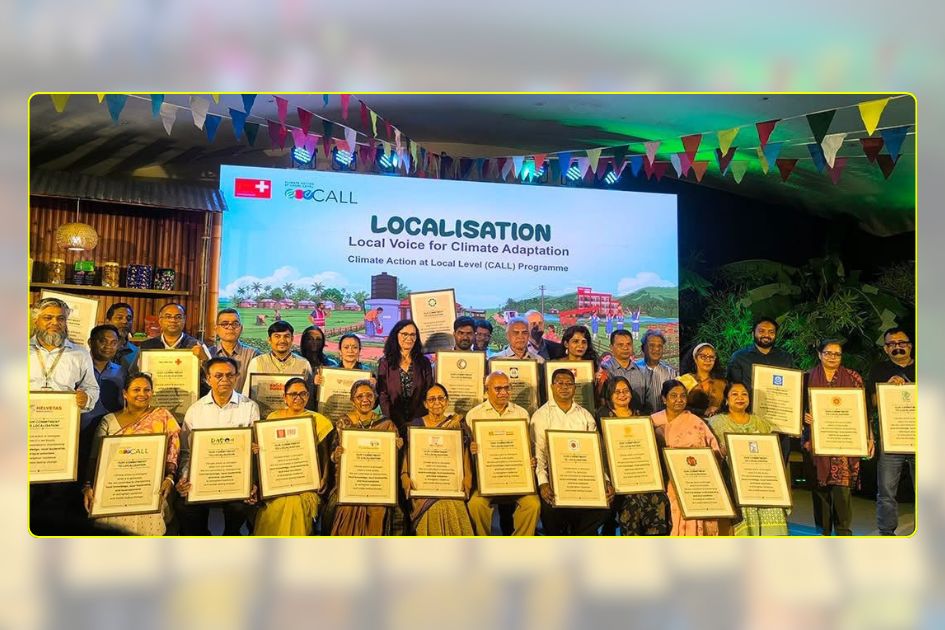



A national workshop brought together development partners and local organizations to share practical approaches for community-led climate adaptation, leadership and capacity building.
A national workshop in Bangladesh has called for greater community participation, local leadership and coordinated action to address the growing impacts of climate change.
The workshop, titled “Localization”, was organised by the Climate Action at Local Level (CALL) Consortium with support from the Swiss Agency for Development and Cooperation (SDC). It focused on putting the experiences, knowledge, leadership and initiatives of local communities at the centre of efforts to tackle the climate crisis.
Participants included Deepak Pelmar, Head of Cooperation at the Swiss Development Cooperation (SDC); Marc Dietrich, Program Manager (Nexus) at SDC; Shireen Lira, Senior Program Manager at the Swiss Embassy; Ulrich Kleppmann, Head of Cooperation at German Development Cooperation; Cynthia Mela, Country Director of Agence Française de Développement (AFD); and Dr. Md. Arifur Rahman, Founder and Chief Executive of YPSA, along with chief executives, directors and senior representatives from 27 international and national development organisations.
Discussions focused on effective and practical initiatives at the local level to address climate change impacts, strengthen community participation and develop local leadership. Participants also discussed sharing knowledge and experiences, building capacity and applying lessons learned to future activities.
Particular attention was given to adopting effective local-level adaptation measures based on the lived experiences of climate-vulnerable communities, while making development efforts more people-friendly, inclusive and sustainable.
Dr. Md. Arifur Rahman, Chief Executive of YPSA and a prominent implementing partner of the CALL project, spoke at the event. He stressed the need to engage local communities as active partners in the development process to address the impacts of climate change.
“We must build local leadership and capacity by utilizing the real-life knowledge and experiences of local people. At the same time, a coordinated effort involving the government, development partners, local organizations, civil society, and the public is key to bringing about long-term and sustainable change in tackling climate risks,” he said.
Representatives of CALL consortium partner organisations, development partners, national and international agencies and other relevant stakeholders also took part in the workshop.
The event provided a platform for participants to share experiences, learn from successful initiatives and discuss more effective and coordinated approaches to climate action in the future.




