




A village-led seed preservation system is helping restore farmers’ control over local varieties while encouraging rural women to safeguard indigenous seeds for future harvests.
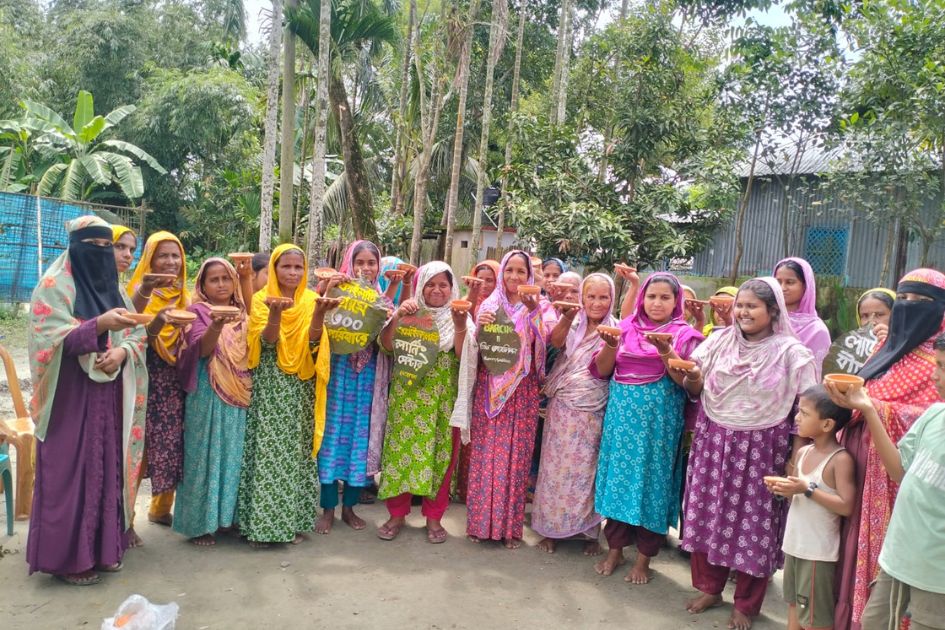
Some 300 women in Kailati village in Netrokona Sadar upazila have received seeds of a local variety of gourd as part of an initiative to preserve indigenous seeds and reduce farmers’ dependence on commercial seed companies.
The seeds were distributed jointly by the Bangladesh-based private research organisation BARCIK and the Kailati Agroecology Learning Centre, with the aim of keeping farmers’ seeds in farmers’ hands.
The distribution programme was jointly organised by members of the Kailati Sabujpata Adolescent Girls’ Organisation, the management committee of the Agroecology Learning Centre, the Shikor Adolescent Girls’ Organisation, the Gobindachatal ‘Bile Amra Kojon’ Farmers’ Organisation and the Padma Bil Par Adolescent Girls’ Organisation.
The programme was inaugurated by elderly woman Jahanara Akter.
The initiative to preserve local seeds in households was launched by young people, farmers and elderly residents of Kailati village. The effort began about five years ago to promote local seed varieties and reduce dependence on commercial companies.
As part of the initiative, a seed house has been established in the village. Local farmers can collect seeds from the seed house according to their needs and deposit seeds again after harvesting their crops.
Farmer Rahima Akter said villagers had previously preserved their own seeds but that people had increasingly started buying seeds from the market.
“We used to preserve seeds ourselves, but now everyone buys them from the market. We have taken the initiative to keep our own seeds in our village again. We will no longer buy seeds from the market,” she said.
Priya Akter, president of an adolescent girls’ organisation, said seeds should remain with farmers rather than companies.
“Why should this seed remain with the company? The company is not a farmer. Seeds have spread through women’s hands and this has traditionally continued and will continue in the future,” she said.
The initiative is intended to reduce farmers’ excessive dependence on market-based commercial seeds and preserve the sustainability of local varieties. The seed preservation system led by women is also expected to encourage rural women to preserve local seeds.




