

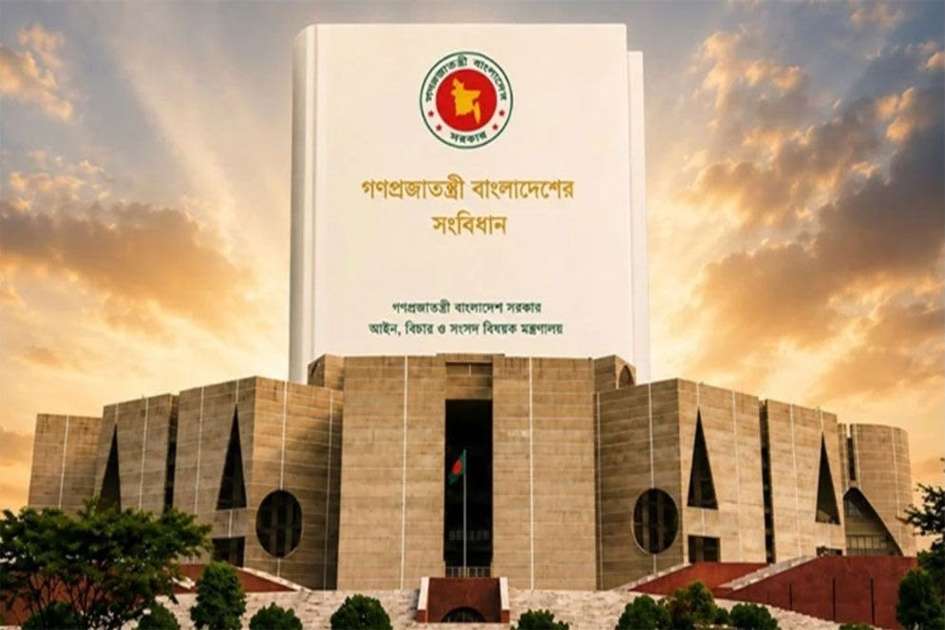



Climate activist argues Bangladesh’s constitutional reform process should make climate justice enforceable, protecting frontline communities, ecosystems, displaced people and future generations.
A mother in coastal Bangladesh watches saltwater enter the land where her family has grown rice for generations. A young fisher sees the river that once sustained his community becoming increasingly unpredictable. A family displaced by erosion searches for a new place to call home.
These are not isolated stories. They are the human face of the climate crisis.
They reveal one of the greatest injustices of our time: those who contributed least to global warming are often carrying its heaviest burdens.
For countries like Bangladesh, the climate crisis is not simply a challenge of adaptation. It is a question of justice, responsibility and survival.
In a delta nation shaped by rivers and the sea, climate change is not a distant forecast; it is already transforming the lives, livelihoods and futures of millions.
Climate change is forcing humanity to rethink one of its oldest political instruments: the Constitution. A Constitution is more than a document that defines how a country is governed; it is a promise about what a nation chooses to protect.
In the climate era, that promise must include the right of people to live with dignity in a safe, healthy and resilient environment.
My understanding of climate justice has been shaped by people whose daily realities are being transformed by rising seas, salinity, floods, river erosion and environmental degradation. For them, climate change is not an abstract issue discussed only at international conferences. It is about homes, livelihoods, identity and survival.
Climate change extends far beyond environmental policy and international negotiations. It is an existential threat and a responsibility to those who will inherit the planet.
At the same time, the climate crisis offers an opportunity to build a fairer, more resilient and more inclusive society where development respects nature and protects human dignity.
For Bangladesh, this is a defining constitutional moment.
A constitutional shield for climate justice would ensure that protecting people, ecosystems and future generations is not dependent on changing political priorities. It would transform climate responsibility from a policy choice into a lasting commitment of the state.
From environmental duty to climate rights
Bangladesh has already taken important steps toward recognizing environmental responsibility.
Article 18A of the Constitution provides that the state shall endeavour to protect and improve the environment and to preserve and safeguard natural resources, biodiversity, wetlands, forests and wildlife for present and future citizens. The provision was inserted into the Constitution through the Fifteenth Amendment in 2011.
However, Article 18A is located in Part II of the Constitution, within the Fundamental Principles of State Policy. Under Article 8(2), the principles contained in Part II are not directly enforceable through the courts.
Bangladesh should therefore retain Article 18A as a guiding state obligation while adding an expressly enforceable right to a clean, healthy, safe and sustainable environment in Part III, which contains the Fundamental Rights.
This would represent an important constitutional shift.
Although the courts have interpreted the right to life under Articles 31 and 32 to encompass environmental protection, the Constitution still lacks an express and comprehensive environmental or climate right.
The next constitutional step should therefore be to move from a state duty to an enforceable citizen right.
Moving environmental protection from Part II, the Fundamental Principles of State Policy, into Part III, the Fundamental Rights section of the Constitution, would represent a transformative shift.
Such recognition would strengthen citizens’ ability to seek constitutional remedies against state action or regulatory failure. If the right is intended to apply directly to private actors, the amendment or implementing legislation should expressly provide for that.
This would place climate and environmental protection alongside other fundamental rights and establish stronger constitutional accountability for safeguarding people, ecosystems and the natural systems that sustain life.
Embedding climate obligations into the Constitution would transform climate action from a policy commitment into a permanent responsibility of the state. It would strengthen accountability, protect citizens from environmental threats and ensure continuity beyond political transitions.
Climate change transcends political divisions. It does not affect people according to party identity; it affects every citizen, every community and every generation.
Rising seas, floods, heatwaves, salinity and environmental degradation are national challenges requiring national unity.
Bangladesh’s courts and the evolution of environmental rights
Bangladesh’s judiciary has already moved toward a rights-based understanding of environmental protection.
In 2019, the High Court Division of the Supreme Court of Bangladesh recognized the Turag River as a living entity, legal person and juristic person, and extended the same status to all rivers flowing through and within Bangladesh. The court also identified the National River Conservation Commission as the legal guardian of the rivers.
The judgment reflected an evolving understanding that rivers are not merely economic resources but living systems essential to human survival, culture and national identity. It sought to strengthen protection against illegal encroachment, pollution and other forms of degradation affecting the country’s waterways.
For a river-dependent nation facing climate disruption, protecting waterways is inseparable from protecting communities, livelihoods and national resilience.
The judiciary has taken another significant step in the area of water rights.
On February 27, 2025, the High Court delivered a verdict declaring free access to safe and pure drinking water a fundamental right of every citizen under Article 32 of the Constitution. The court also held that ensuring this right is a responsibility of the state.
The High Court released the full written judgment in January 2026. The 16-page judgment included directives concerning the protection and provision of safe drinking water, including measures for public places and a longer-term framework for ensuring access across the country.
In a climate-vulnerable country where salinity intrusion, water stress and environmental degradation are increasing, recognizing safe drinking water as a fundamental right carries profound significance.
These judicial milestones demonstrate that Bangladesh has already begun building a foundation for environmental rights. They place Bangladesh within a growing global movement in which courts are recognizing that nature protection and human rights are closely interconnected.
Constitutional reform now offers an opportunity to strengthen this foundation by explicitly recognizing climate responsibility and ensuring that environmental protection is not merely an aspiration, but an enforceable commitment.
Bangladesh’s constitutional moment
Bangladesh is entering an important period of constitutional reflection.
The reform process follows a broader national demand for institutional renewal, rights and accountability following the youth-led mass uprising of July 2024.
The July 2024 uprising opened a new national conversation about governance, accountability, inclusion and the future direction of Bangladesh. It also created an opportunity to rethink how the Constitution can better protect people’s rights, including the right to a safe and resilient environment.
At its heart is a demand that institutions better protect people’s dignity, rights and future security.
The same generation that has pushed for democratic accountability has also been leading Bangladesh’s climate justice movement.
Young climate activists from coastal communities, river islands, Indigenous communities and climate-vulnerable regions have brought frontline experiences into national and global discussions. They have shown that climate change is deeply connected with justice, inequality, human rights and intergenerational responsibility.
Those who will live longest with the consequences of today’s decisions must have a meaningful role in shaping those decisions.
Bangladesh’s climate leadership and global responsibility
Bangladesh has already recognized the urgency of climate action.
On November 13, 2019, the Jatiya Sangsad, Bangladesh’s national parliament, unanimously adopted a historic motion declaring climate change a “planetary emergency” and recognizing the urgency highlighted by Bangladesh’s youth climate movement.
Through this decision, Bangladesh became the first developing country and one of the first national parliaments in the world to officially declare climate change a planetary emergency, calling for a global response on a “war footing” to address environmental collapse.
This declaration reflected a growing recognition that climate change is not simply an environmental issue; it is a national and global security challenge requiring urgent collective action.
However, the 2019 parliamentary declaration also took place within a broader national debate about democratic representation, political participation and institutional trust following concerns raised around the credibility and inclusiveness of the 2018 national election.
This context is important because climate leadership and constitutional reform require both strong commitments and public legitimacy.
The current constitutional reform moment carries a different historical context. Emerging after the youth-led mass uprising of July 2024 and a renewed national demand for accountability, rights, inclusion and institutional reform, Bangladesh’s Parliament has a responsibility to respond to the aspirations of citizens.
Climate responsibility must rise above partisan politics. Climate change does not affect people according to political identity; it affects every citizen, every community and every generation.
Bangladesh has also played a significant role in shaping international climate justice discussions.
Bangladesh was part of the initial core group of countries that helped develop and champion, alongside Vanuatu, the initiative seeking an advisory opinion from the International Court of Justice on climate obligations.
The United Nations General Assembly adopted Resolution 77/276 by consensus on March 29, 2023, with support from more than 130 co-sponsoring states.
Bangladesh actively participated in the ICJ proceedings through written submissions, comments and oral arguments.
Its engagement reflected the voice of climate-vulnerable countries seeking accountability, fairness and recognition under international law.
Bangladesh’s participation demonstrated that climate-vulnerable countries are not passive victims of climate change; they are active contributors to shaping international law.
The ICJ’s landmark advisory opinion, delivered on July 23, 2025, reinforced that climate action carries legal and moral responsibilities.
For climate-vulnerable countries, this was not simply a legal proceeding; it was a global demand for fairness from those who contributed least to a crisis they did not create.
For Bangladesh and other climate-vulnerable nations, the advisory opinion represents a historic effort to ensure that international law responds to the realities of climate injustice.
A global shift toward climate constitutionalism
Bangladesh’s constitutional debate reflects a wider global movement.
Around the world, countries and courts are increasingly recognizing that environmental protection is inseparable from human rights, state responsibility and the protection of future generations.
Ecuador’s 2008 Constitution recognized the rights of nature, Pachamama, allowing ecosystems to have legal rights to exist, persist and regenerate.
Tunisia has recognized citizens’ constitutional right to participate in climate protection.
France integrated the Charter for the Environment into its constitutional framework in 2005, strengthening constitutional recognition of environmental rights and responsibilities.
South Africa’s Constitution explicitly recognizes everyone’s right to an environment that is not harmful to health or well-being and requires the state to protect the environment through reasonable legislative and other measures.
These examples show that constitutions are evolving to respond to the realities of the climate crisis. Governments are increasingly recognizing that protecting nature is a fundamental responsibility toward present and future generations.
Bangladesh does not need to copy other models. It can develop its own constitutional approach, rooted in its history, rivers, communities and climate realities.
For a country shaped by the world’s largest delta, climate responsibility is deeply connected with national identity and survival.
Youth, climate democracy and a just transition
Young people are facing the consequences of climate change while becoming powerful agents of change.
Bangladesh’s youth climate justice movement demonstrates that young people are already shaping climate governance.
Climate justice requires climate democracy: meaningful participation of affected communities, especially youth and frontline populations, in decisions about their future.
The transition to a low-carbon economy must also be a just transition.
Climate action should create opportunities, not deepen inequality. Workers, communities and vulnerable groups must receive support through skills development, decent employment, social protection and meaningful participation.
For millions whose livelihoods depend on agriculture, fisheries, coastal ecosystems and natural resources, a just transition must protect both people and the planet.
The workers who power Bangladesh’s economic growth are often among those most exposed to extreme heat and climate risks, making climate adaptation a matter of labour rights and social justice.
A green future must also be a fair future.
Climate security, economic resilience and future generations
For Bangladesh, climate security is human security.
Protecting rivers, coastlines, food systems, ecosystems and communities is essential to protecting national stability.
Climate change is no longer only an environmental challenge; it is becoming a direct threat to economic survival.
A World Bank assessment estimated that heat-related productivity losses cost Bangladesh between $1.3 billion and $1.8 billion in 2024. In Dhaka, lost working hours were estimated to be equivalent to about 465,000 full-time jobs annually.
The risks extend to key economic sectors.
A study examining four major apparel-producing countries found that, under a no-adaptation scenario, Bangladesh, Cambodia, Pakistan and Vietnam could collectively forego up to $65.8 billion in potential garment export earnings by 2030. The figure represents the difference between potential export earnings under a no-adaptation scenario and a climate-adaptive scenario.
These realities demonstrate that climate action is not a choice between environmental protection and economic development. Climate resilience is an essential investment in economic stability, decent work and national prosperity.
When climate change threatens livelihoods, employment and economic security, it becomes a constitutional question about protecting people’s right to dignity and a secure future.
At the international level, Bangladesh must continue advocating for ambitious climate finance and effective loss and damage mechanisms to support vulnerable countries.
For countries like Bangladesh, climate finance and loss and damage support are not acts of charity; they are matters of climate justice and international responsibility.
At home, urgent national action is needed to protect workers and communities whose lives and livelihoods are increasingly affected by extreme heat, environmental degradation and climate-related disasters.
Climate change is now directly affecting economic productivity, labour conditions and social stability. It requires a whole-of-society response that protects both people and the economy.
Climate impacts influence migration, livelihoods, food security, water availability and social resilience. These are not distant environmental concerns; they directly affect national security and human well-being.
Climate-induced displacement requires constitutional attention.
People forced to leave their homes because of sea-level rise, river erosion, floods and environmental degradation must not become invisible victims.
Their rights to rehabilitation, livelihood opportunities, healthcare, education and dignity must be protected.
A Constitution for future generations
Bangladesh’s values of justice, equality and human dignity must evolve to meet the defining challenge of this century.
The climate crisis requires a new social contract between the state, citizens, nature and future generations.
Bangladesh stands at an existential crossroads. Rising seas, shifting weather patterns, ecosystem degradation and climate displacement are challenging the foundations of security, development and human dignity.
While Bangladesh’s supreme law already recognizes environmental responsibility, the scale of the climate crisis demands a deeper constitutional commitment: one that treats future generations not as distant beneficiaries, but as legal stakeholders whose rights must be protected today.
This requires moving beyond business as usual.
It means establishing clear and enduring state obligations to protect rivers, wetlands, forests, biodiversity and the green delta that sustains millions of lives.
The constitutional reform process offers Bangladesh a historic opportunity to recognize that climate protection is not a temporary policy choice; it is a permanent responsibility to people, nature and generations yet to come.
The choices made today will shape whether tomorrow’s citizens inherit a nation prepared for climate challenges or one forced to respond after irreversible losses.
Climate justice must become an enforceable constitutional commitment.
A Constitution is a promise to the future.
Protecting the climate is protecting the nation itself.
In the climate era, the ultimate test of a Constitution is whether it protects today’s citizens while also safeguarding the generations who have no voice yet.
The writer is a climate policy advocate and the executive coordinator of YouthNet Global.




