

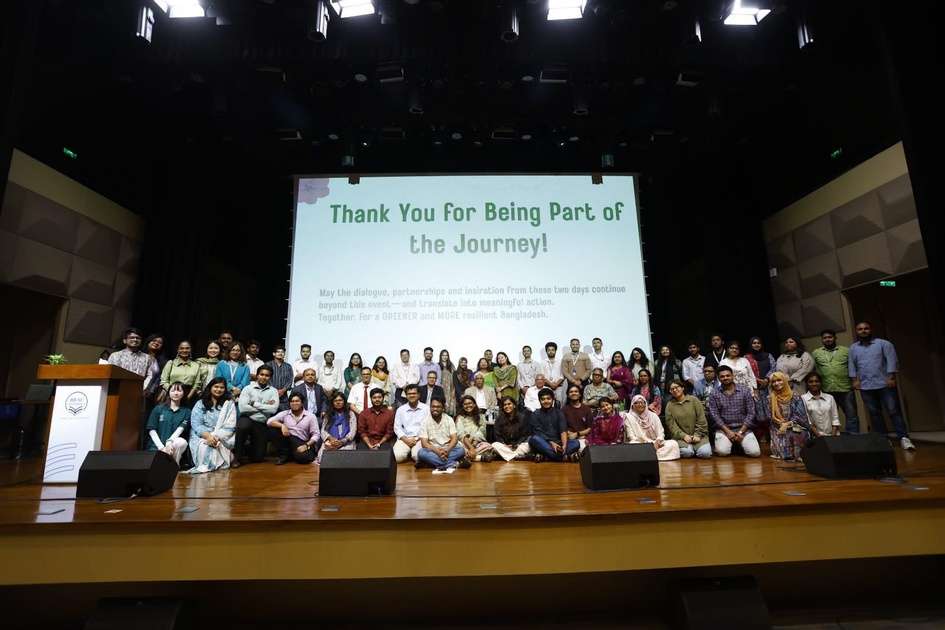



Speakers at BRAC University urged stronger partnerships, climate finance and locally led action, saying young people must help design, implement and monitor evidence-based environmental solutions across Bangladesh.
As one of the world’s most climate-vulnerable countries, Bangladesh has called for transforming environmental protection from isolated projects into a broader social movement driven by public participation, community ownership and collective responsibility.
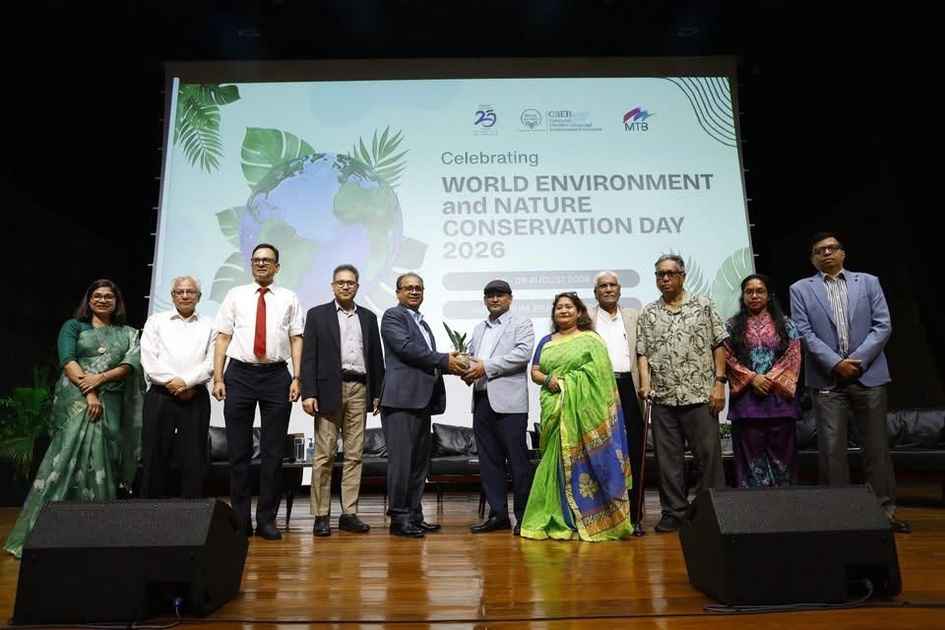
The call came at the closing ceremony of Celebrating World Environment Day & Nature Conservation Day 2026 at BRAC University, where policymakers, researchers, development partners, private-sector leaders and young climate advocates gathered to discuss pathways for climate resilience, nature conservation and sustainable development.
Dr Md. Saimum Parvez, Special Assistant to the Prime Minister of Bangladesh for Environment, Forests and Climate Change, said lasting environmental progress requires more than programmes and policies; it requires a movement involving people from all sectors of society.
“What we need is not only a project. We need participation. We need ownership. And we need a social movement,” Dr Saimum said, stressing that environmental protection must become a shared responsibility supported by long-term public engagement.
Bangladesh faces growing climate challenges, including rising sea levels, river erosion, floods, salinity intrusion and extreme weather events that threaten ecosystems, livelihoods and communities across the country.
The two-day event, held on 8–9 August and organised by the Centre for Climate Change and Environmental Research (C3ER), BRAC University, with support from Mutual Trust Bank PLC, brought together stakeholders to explore how climate commitments can be translated into practical action.
Dr Saimum said environmental achievements should not be measured only by new initiatives but by their sustainability and long-term impact. He underscored the importance of measurable targets, effective monitoring systems, continued commitment and meaningful engagement of young people in environmental stewardship.
Youth Move from Participants to Climate Decision-Makers
A key focus of the event was the growing role of young people as climate leaders, innovators and decision-makers rather than merely beneficiaries of climate programmes.
Opening the second day, Dr Dave Dowland, Registrar of BRAC University, encouraged young people to move beyond awareness and actively engage in solving environmental challenges through innovation, entrepreneurship and leadership.
In his keynote address titled “Youth Voice for Environment and Climate Action,” Istiak Ibne Rouf, Coordinator (Research) at C3ER, BRAC University, highlighted the journey from awareness to transformation, emphasising that knowledge and action can empower young people to lead change.
“Youth are not waiting for change. They are already creating it,” he said.
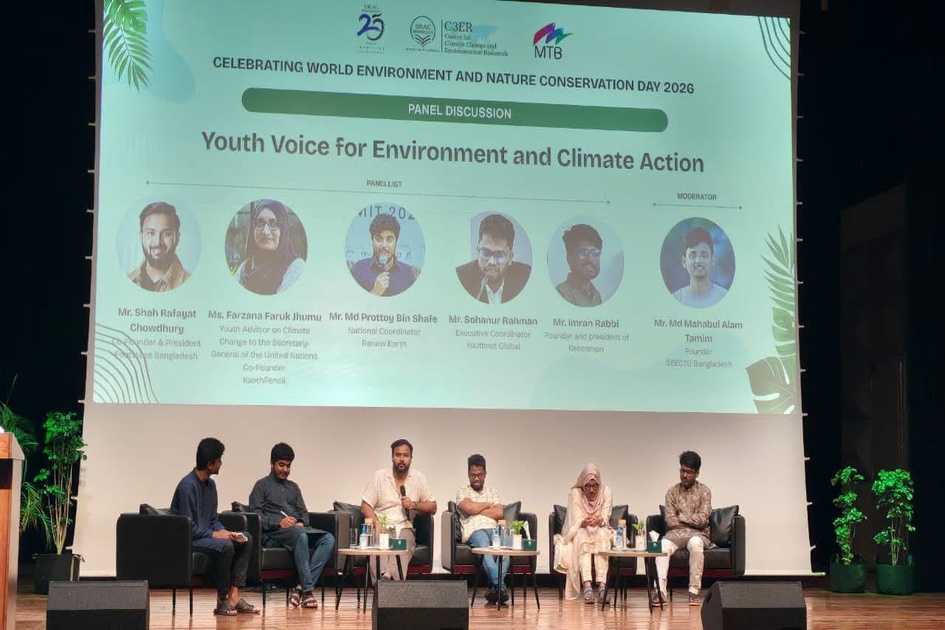
A youth-focused panel discussion, moderated by Md Mahabul Alam Tamim, Founder and Executive Director of SEECTO Bangladesh, explored how young people can influence climate policy, strengthen community resilience and scale locally developed solutions.
The discussion featured youth leaders including Shah Rafayat Chowdhury, Co-Founder and President of Footsteps Bangladesh; Farzana Faruk Jhumu, Youth Advisor on Climate Change to the Secretary-General of the United Nations and Co-Founder of KaathPencil; Sohanur Rahman, Executive Coordinator of YouthNet Global; Imran Rabby, Founder of Greenman; and Md Prottoy Bin Shafe, Founder of ReNew Earth.
The panel stressed that youth participation must go beyond symbolic representation and create meaningful opportunities for young people to contribute to decision-making, implementation and climate innovation.
Reflecting the experiences of communities on the frontline of climate change, Sohanur Rahman, Executive Coordinator of YouthNet Global, said climate solutions must be rooted in local realities and community knowledge.
“Young people from climate-affected communities are not only future leaders; they are already driving solutions. We must connect grassroots knowledge with policy and resources to scale locally led climate action,” he said.
He stressed the need to expand opportunities for young climate leaders beyond major cities and ensure that young people from climate-vulnerable regions have a meaningful role in shaping climate decisions.
Across Bangladesh, young people are working with communities affected by river erosion, salinity intrusion, floods and extreme weather, demonstrating how local experiences can inform national and global climate solutions.
Turning Knowledge into Climate Solutions
The closing discussions focused on bridging the gap between research, policy commitments and implementation through stronger partnerships, evidence-based approaches, climate finance and inclusive leadership.
Dr Ainun Nishat, Professor Emeritus and Adviser at C3ER, BRAC University, urged stakeholders to transform research findings into practical solutions and called for greater responsibility from the younger generation.
Dr A. K. Enamul Haque, Director General of the Bangladesh Institute of Development Studies (BIDS), stressed the importance of practical training, capacity building and sustained investment in future generations.
AKM Sohel, Additional Secretary and Wing Chief of the UN Wing at the Economic Relations Division, highlighted the importance of climate finance and resource mobilisation to turn environmental priorities into implementable solutions.
Professor Arshad Mahmud Chowdhury, Pro-Vice-Chancellor of BRAC University, pointed to the role of institutions in embedding sustainability through renewable energy, resource efficiency, responsible waste management and greener practices.
Sumaiya Binte Selim, Coordinator for Gender and Youth Programme at ICCCAD, noted that meaningful youth leadership requires access to knowledge, research, evidence and mentorship opportunities.
C3ER Calls for Locally Led Climate Action
Dr Md. Golam Rabbani, Director of the Centre for Climate Change and Environmental Research (C3ER), BRAC University, called for stronger collaboration across sectors to move from climate commitments to climate implementation.
“Government alone cannot address the climate crisis. Academia, private sector, communities, local institutions and youth must work together to deliver lasting solutions,” he said.
Dr Rabbani stressed the importance of research, data, evidence and documentation in expanding successful climate initiatives. He noted that responsible finance, corporate social responsibility (CSR) and climate financing can help transform local solutions into wider impact.
He also urged greater investment in locally led adaptation by ensuring that communities have ownership and a meaningful voice in shaping climate responses suited to their realities.
Dr Rabbani further emphasised the need to connect grassroots experiences with policy processes, allowing young people to turn local knowledge into evidence, influence decisions, access resources and scale proven solutions.
He called for moving beyond consultation and token representation of youth, recognising young people as equal partners in designing, implementing and monitoring climate solutions.
Building a Collective Climate Future
The event also recognised women’s climate leadership through the She4Climate Fellowship and Certificate Award Ceremony. Creative activities, including theatre, live art, environmental exhibitions, climate message walls and networking sessions, connected climate discussions with wider public engagement.
The discussions reflected a growing global recognition that communities and young people living on the frontline of climate change are not only affected by environmental disruption but are also critical architects of solutions.
The event concluded with a shared message: climate commitments must translate into implementation, scientific knowledge must guide action, communities must have ownership, and youth voices must shape the future of climate solutions.




