




Discussions linked gender, disease surveillance, humanitarian governance and storytelling, underscoring the need for integrated approaches to environmental and public-health challenges in climate-vulnerable Bangladesh.
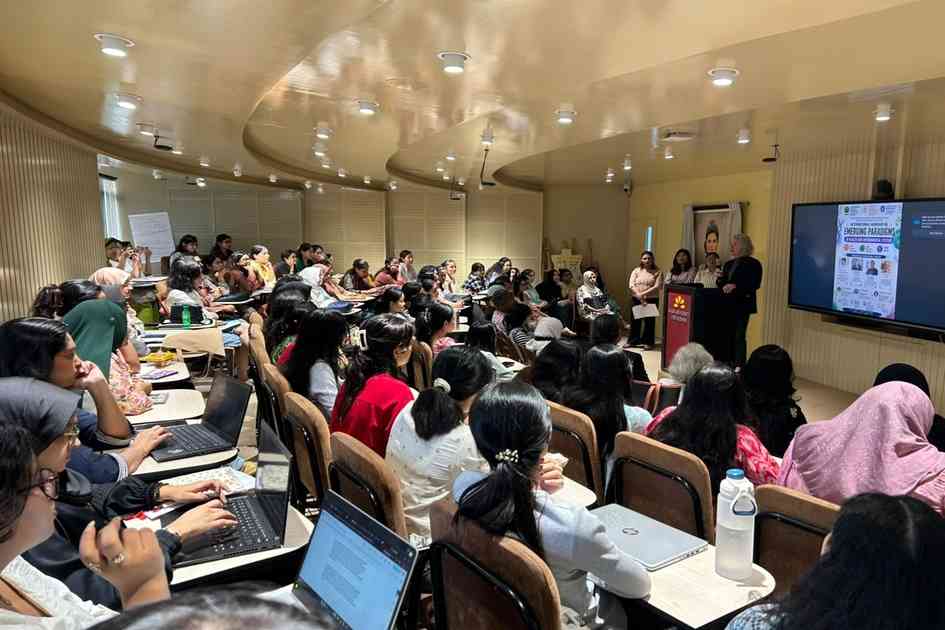
Nearly 100 students from three departments of the Asian University for Women took part in an international workshop on August 9, 2026, examining how human health, disease, disasters and the environment are increasingly interconnected.
The workshop brought together students from the university’s Environmental Sciences, Biological Sciences and Public Health departments to discuss emerging paradigms in health and environmental systems.
The session opened with remarks from Dr. Paulraj Mosae Selvakumar, Director of Environmental Science and Biological Science Program, followed by opening remarks from Dr. Mohiuddin Ahsanul Kabir Chowdhury, Associate Dean of Academic Affairs and Prof. Dr. Haseena Khan.
Their remarks framed the workshop’s central premise: that the departments represented in the room, though trained in distinct disciplines, are converging on the same set of planetary and public-health challenges, from zoonotic disease to climate-driven disasters and need to think across those boundaries rather than within them.
The workshop featured two guest speakers whose work illustrated cross-disciplinary links between environmental systems, public health, disaster management and disease.
Dr. Nancy Mock spoke about women’s leadership, disaster management and humanitarian governance. Her presentation examined how disasters, whether climatic, epidemiological or conflict-driven, are never gender-neutral in their impact or in their response structures.
Women, she argued, are disproportionately affected by disaster and displacement, yet are also frequently the most effective and underutilized actors in humanitarian response and community resilience-building.
Dr. Mock drew on field-based humanitarian governance examples to make the case that inclusive leadership is not simply an equity concern layered onto disaster management, but a determinant of how effective that management actually is.
For students preparing to enter environmental and public health fields in a country acutely exposed to climate disaster, the talk offered a reminder that technical responses to environmental and health crises are linked to the social and political structures that determine who leads the response.
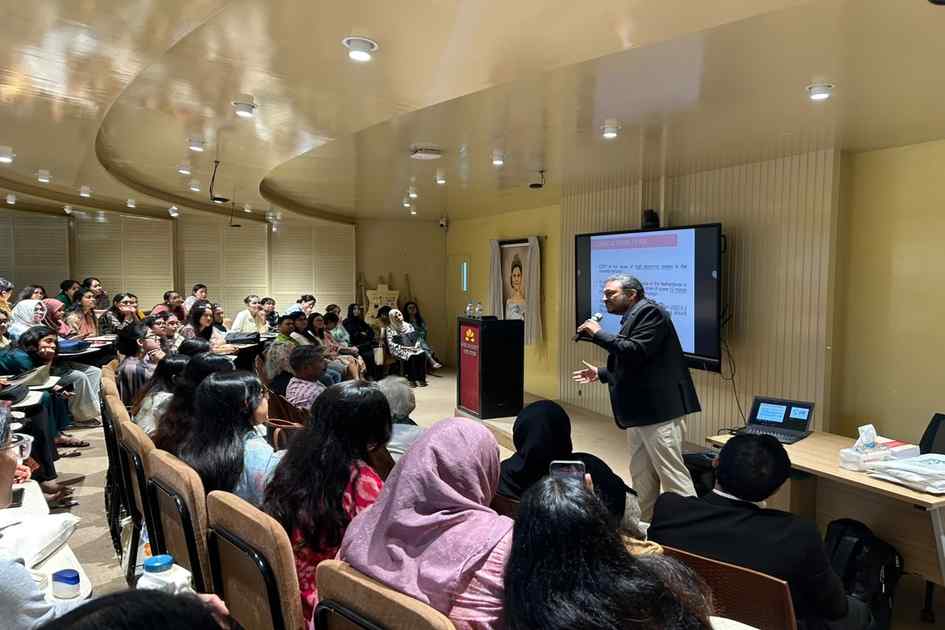
Dr. M.S.A. Muthukumar Nadar shifted the focus from governance and social systems to pathogen biology, speaking on Classical Swine Fever Virus (CSFV), a highly contagious viral disease affecting domestic and wild pigs with significant implications for livestock economies and food security.
His presentation situated CSFV within the broader framework of emerging infectious disease, tracing how viral pathogens move between wildlife reservoirs, domestic animal populations and, in some cases, human systems.
For environmental and biological science students, the talk examined how virology, ecology and epidemiology intersect. Viral evolution and transmission dynamics, he said, do not occur in isolation but are shaped by land use, animal husbandry practices and ecological disruption linked to climate change and agricultural intensification.
The discussion of CSFV was presented as a case study in why disease surveillance increasingly requires an ecosystem-level lens rather than a purely clinical one, a point relevant to Bangladesh, where livestock-dependent livelihoods are closely linked to changing environmental conditions.
The concept of ecofeminism also featured prominently in the workshop discussions. The framework connects the domination of nature to the domination of women and argues that environmental degradation and gender inequality share structural roots.
Participants discussed how ecofeminist theory can help explain why women are both highly vulnerable to environmental and health crises and central to community-level adaptation and care work, from managing household water and sanitation to leading local disaster response.
The discussion encouraged students to consider ecofeminism as a practical diagnostic tool rather than only an abstract theory, linking patterns visible in Dr. Mock’s disaster governance examples with the socio-ecological conditions that shape disease emergence discussed by Dr. Muthukumar Nadar.
The workshop also highlighted the need for researchers and practitioners who can move between biological, ecological and social systems analysis, reflecting the argument that emerging health and environmental crises do not respect disciplinary boundaries.
For AUW students from Environmental Sciences, Biological Sciences and Public Health, the event offered a model of integrated thinking spanning virology, ecology, gender studies and governance, with relevance to climate-vulnerable contexts such as Bangladesh.
The workshop also included an appreciation of documentary films on ecological and climate-related issues, presenting visual storytelling as a way to communicate complex environmental challenges beyond academic and scientific discourse.
The documentaries encouraged audiences to reflect on environmental degradation, climate vulnerability and community resilience. Their inclusion reinforced the workshop’s wider message that environmental awareness can be strengthened through research, policy discussion and storytelling that connects scientific evidence with human experience.
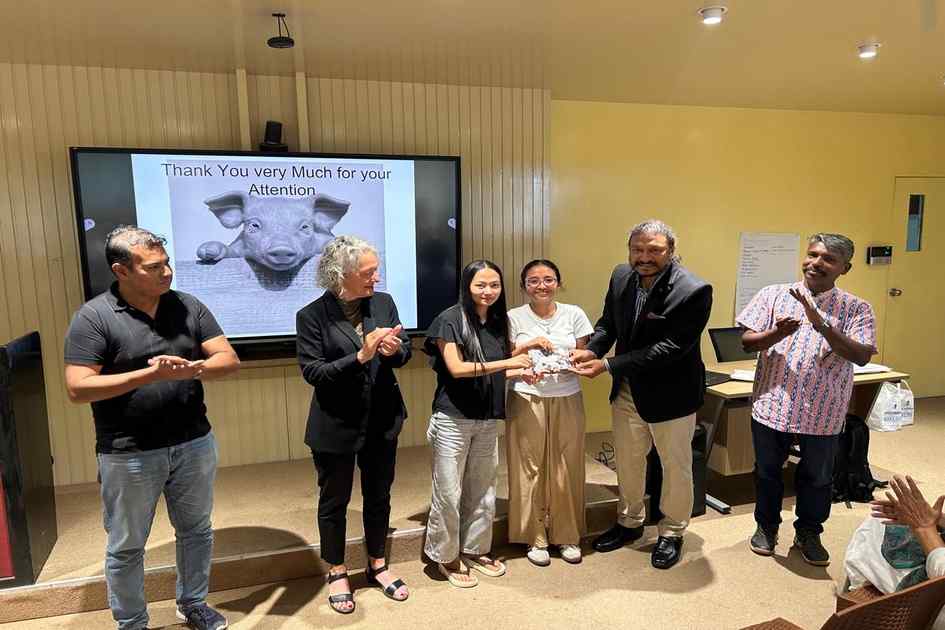
The documentary film appreciation segment recognized student contributions, with 1st Prize awarded to The Last Apology by Denazia Da Silva Pires and Hkawn Htoi Awng; 2nd Prize to Who Gets the Privilege to Be Sustainable? by Pragya Chaudhury; and 3rd Prize to What Do You Know About Green Bangle’s Moringa Initiative? by Laiqa Mehrzad, Tanusiry Dewan, Farangis Paiez and Nisha Agrawal.
The event was coordinated and hosted by Asifa Islam and Anika Tabassum Shoumi and powered by the Hotel Agrabad.




