

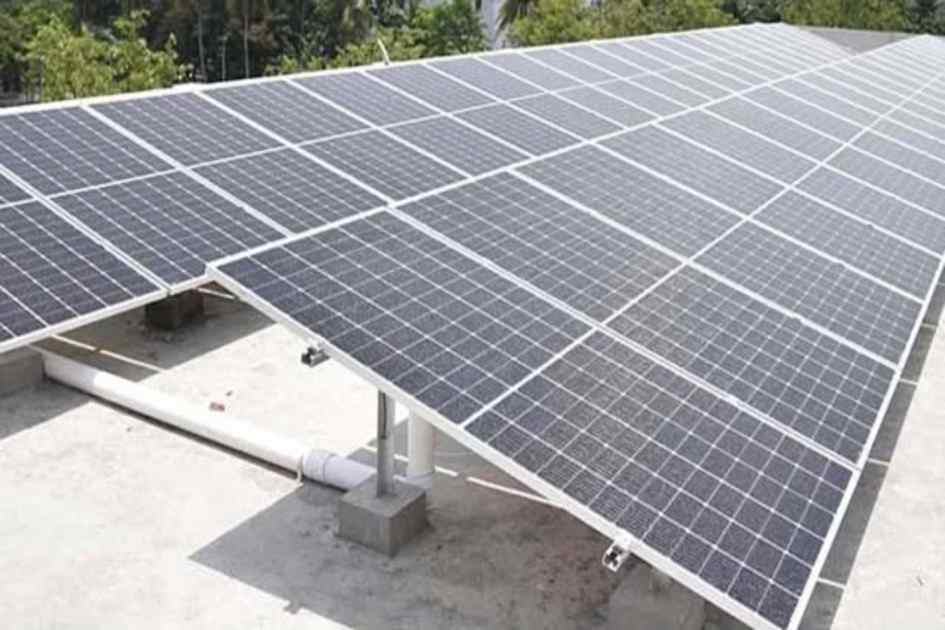



The OPEX model would let private firms install and maintain solar systems, helping universities cut power bills without upfront government spending.
Bangladesh is planning to generate nearly 60 megawatts (MW) of rooftop solar power across 31 public universities as part of efforts to reduce institutional energy costs, improve energy efficiency and accelerate the country’s transition towards renewable energy.
The initiative by the University Grants Commission (UGC), the statutory body that oversees higher education in Bangladesh, aims to provide clean electricity to public universities at significantly lower rates through private-sector investment, while reducing dependence on imported fossil fuels amid growing energy security challenges.
Under the proposed operational expenditure (OPEX) model, private investors will finance, install, operate and maintain the rooftop solar systems, while universities will purchase only the electricity they consume. The model is designed to eliminate the need for upfront government investment and encourage greater private-sector participation in renewable energy.
A UGC review meeting on “Installation of Rooftop Solar Power Systems in Public Universities” was held recently in Dhaka, where officials discussed the potential of expanding solar capacity across higher education institutions.
According to the UGC, feasibility studies have already been completed at 47 public universities and one international university. The assessment found that 31 public universities could initially generate around 52.5MW of solar electricity, with the potential to increase capacity to nearly 60MW as university infrastructure expands.
Officials said the current average cost of solar electricity in Bangladesh is around Tk 15 per unit, but the OPEX model could bring the cost down to below Tk 7.50 per unit. The proposed tariff would be less than half of the existing market price, making renewable energy more affordable for public institutions.
M Shamsul Alam, Dean of the Faculty of Engineering at Daffodil International University, said a pilot OPEX-based rooftop solar project produced electricity at Tk 7.50 per unit, which could decline further to Tk 7 when project capacity reaches 3.5MW.
Comparing Bangladesh’s solar power costs with regional examples, he noted that solar electricity prices in India and Pakistan are significantly lower, at around Tk 3.69 and Tk 3.93 per unit respectively. With appropriate policy support, tariff adjustments and tax incentives, Bangladesh could potentially reduce solar generation costs to around Tk 6.50 per unit, he added.
UGC Chairman Professor Dr Mamun Ahmed said the OPEX approach would allow private companies to take responsibility for building, operating and maintaining solar power facilities, while universities would only pay for the electricity they use.
“Through centralised tendering and effective monitoring, we expect to attract more private investment, reduce electricity costs for universities and decrease the country’s reliance on imported energy,” he said.
The initiative aligns with Bangladesh’s broader efforts to expand renewable energy use and improve energy efficiency. The UGC has set a target of reducing reliance on national grid electricity in public universities by an average of 20 percent by 2030, while improving efficiency measures to reduce overall electricity demand by 5 to 10 percent.
The proposed 60MW rooftop solar programme represents a significant step for Bangladesh’s higher education sector, although it remains part of a wider national effort needed to scale up renewable energy capacity and meet long-term climate and energy goals.
The review meeting was chaired by UGC Chairman Professor Dr Mamun Ahmed and attended by UGC members Professor Dr Mohammad Anwar Hossain, Professor Dr Md Saidur Rahman and Professor Dr Masuma Habib, and vice-chancellors of 31 public universities.




