

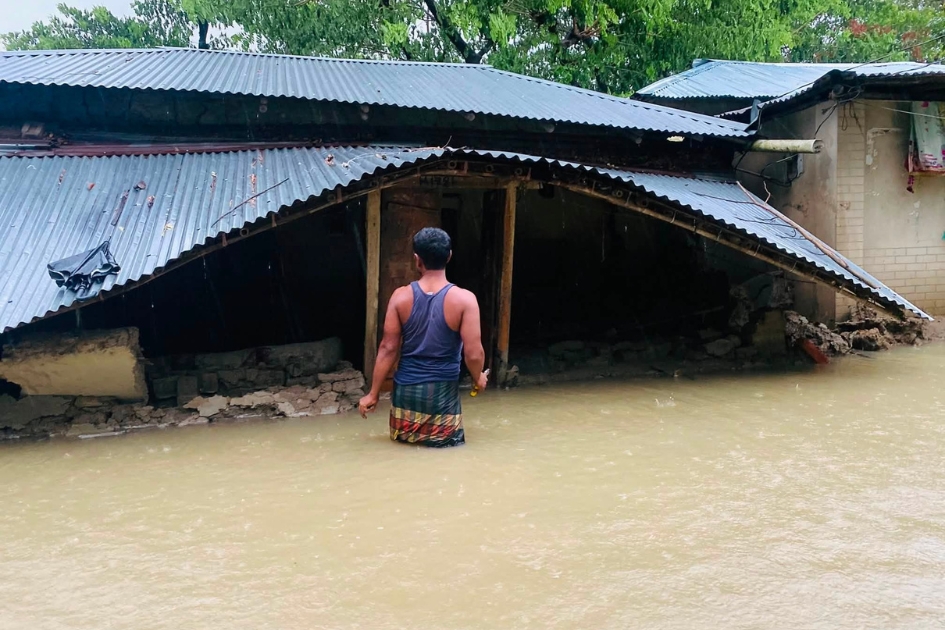

Rescue teams continue operations across flood-hit Chattogram as widespread damage, disrupted transport, overwhelmed health services and relief shortages deepen the humanitarian crisis in affected districts.
Heavy rains, flash floods and landslides continue to batter Bangladesh’s Chattogram Division, with little improvement in the flood situation, according to the latest situation report from the Ministry of Disaster Management and Relief. The death toll has risen to 39. Of them, 23 died in Cox’s Bazar, eight in Chattogram, six in Bandarban and two in Rangamati.
Nearly 928,000 people have been affected across five districts in Chattogram Division. In Chattogram district alone, 188,648 families have been affected across 16 upazilas. Flooding has inundated 176 unions and municipalities, forcing 23,853 people to take shelter in 673 shelters.
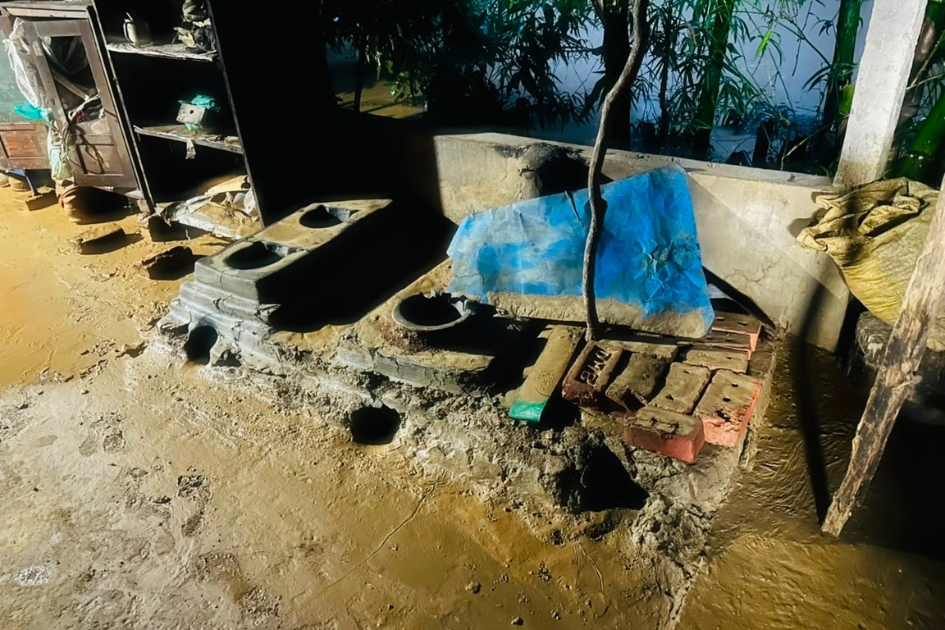
Although rainfall eased somewhat from Saturday (11 July) morning and floodwaters began receding in some areas, normal conditions have yet to return across most of the affected region. Hardship continues as floodwaters have not fully receded and transport links remain disrupted.
Worst-hit areas are Satkania and Banshkhali
Continuous rainfall since 6 July, combined with flash floods flowing down from Lohagara and the Bandarban hill district, triggered flooding in low-lying parts of the district from 8 July. The worst-affected areas are the coastal upazilas of Banshkhali and Satkania.
More than 200,000 people remain stranded in 14 unions and the municipality of Banshkhali. The worst-hit unions are Pukuria, Napora, Chhanua, Saral and Shekherkhil. Flash floods and tidal waters have washed away crops, vegetable seedbeds and hundreds of fish enclosures.
In Satkania, water entered residential areas after the embankment along the Dolu canal collapsed, inundating around 80 percent of the upazila across its 17 unions and municipality. Many areas are still under four to five feet of water. More than 500,000 people remain stranded across Satkania and Banshkhali.
Low-lying areas in Fatikchhari, Hathazari, Chandanaish, Lohagara, Boalkhali, Anwara and Raozan, along with other parts of northern and southern Chattogram, also remain flooded. Water levels in the Halda and Sangu rivers are flowing above the danger level, inundating new areas.
People search for safer shelter
Many parts of Banshkhali remain under knee-deep to waist-deep water. Families, including children and livestock, are moving in search of safer shelter. As floodwaters have yet to recede in the coastal unions, many families have taken refuge in shelters or at relatives’ homes. However, many male family members have remained behind to protect household belongings.
Local residents allege that relief shelters are facing shortages of relief supplies, dry food and safe drinking water.
The pain of losing a home
Ibtessam Hasan, a resident of Bailchhari union in Banshkhali, said: “Our mud house was the legacy of three generations. My grandfather was born in this house. It was damaged during the 2024 floods but survived. This time it could not be saved. The house collapsed on Thursday morning. I rushed home from Chattogram after receiving the news. My elderly grandmother, mother and siblings remained stranded for three days. Although the water has started to recede today, we have no way to cook. Electricity also comes only intermittently for half an hour or an hour.”
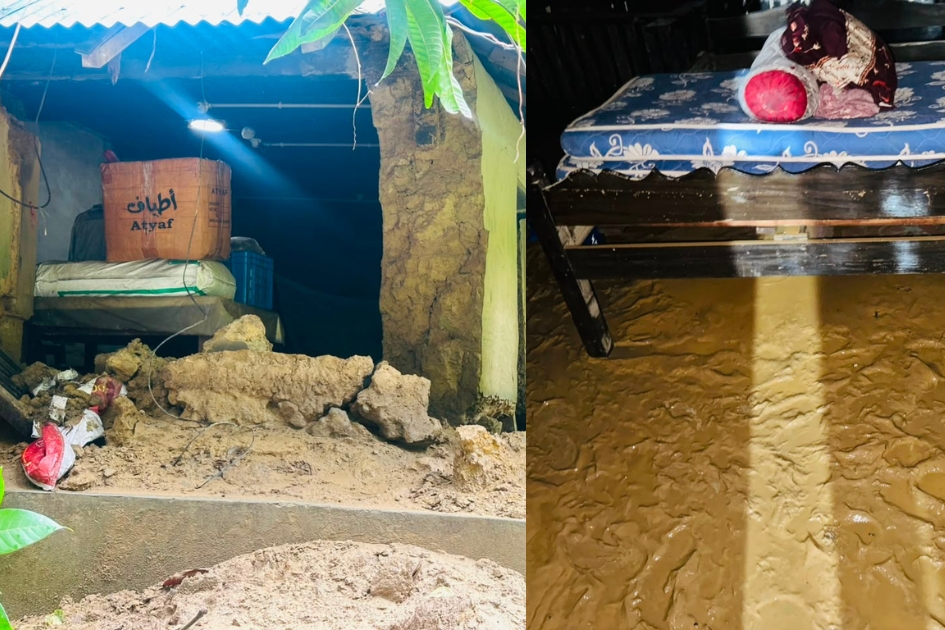
Explaining why they did not move to a shelter, he said: “This house was our last asset. Even after it collapsed in the floodwaters, we tried to save whatever remained. Besides, there was so much water all around that it was not safe to leave the house. The sudden flash floods had submerged all the roads.”
Like Ibtessam, countless families in Banshkhali are living in deep uncertainty after losing their homes to the sudden flash floods.
Power, communications and transport disrupted
Road transport across southern Chattogram has been severely disrupted. Traffic has been affected on several sections of the Chattogram-Cox’s Bazar highway due to flooding. Traffic on the Satkania-Bandarban road remains suspended.
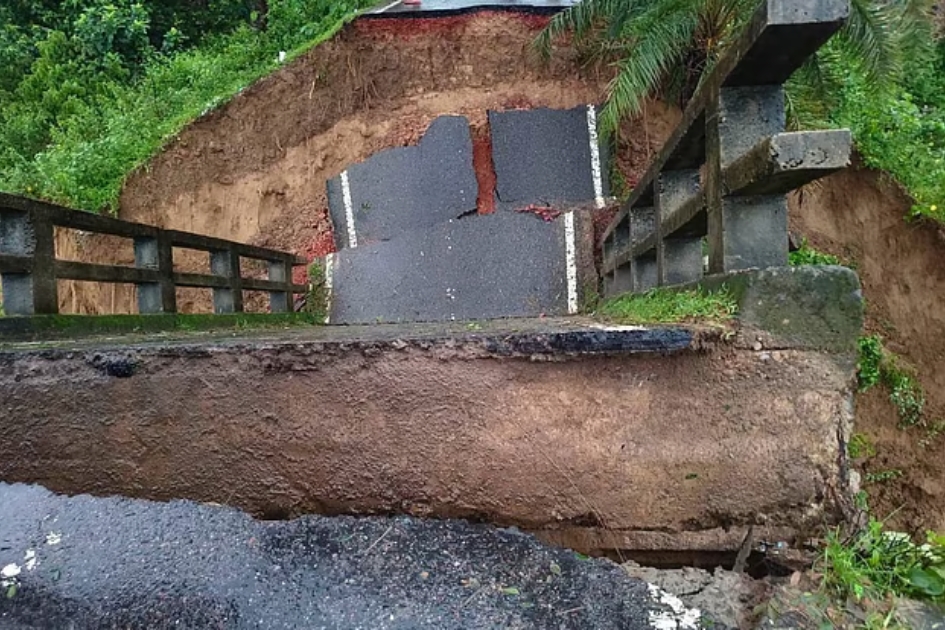
A bridge on the Rangamati-Bandarban road collapsed in Rangunia upazila’s Dudhpukuria area under the force of flash floods, completely severing direct road communication between the two districts. The Roads and Highways Department said it would try to restore traffic by installing a Bailey bridge once floodwaters recede.
Most parts of Satkania and Banshkhali remained without electricity for extended periods. Many mobile phone towers have become inoperative, leaving flood victims unable to communicate. Rescue and relief operations have also been hampered.
Health complex under water
Floodwaters have submerged the road in front of Satkania Upazila Health Complex and the ground floors of five buildings. Medical services have been disrupted in seven units, including the emergency department.
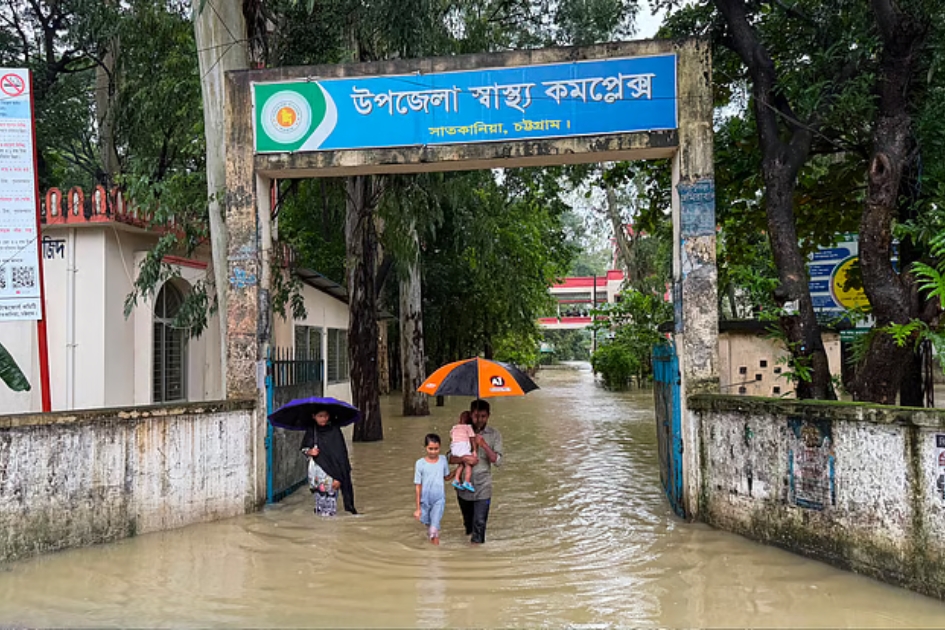
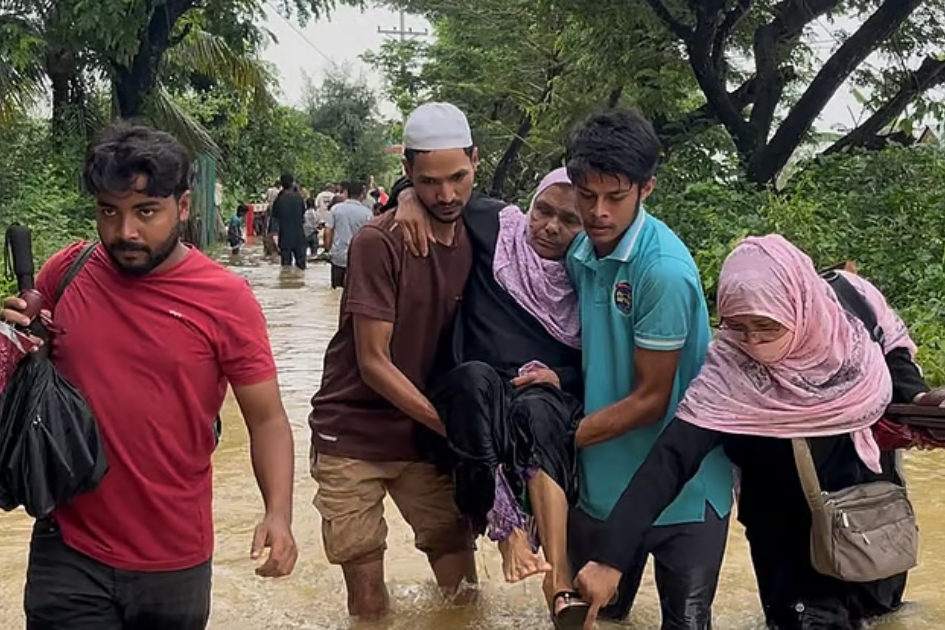
Doctors are treating patients from tables set up on the second-floor veranda of the building. Critically ill patients, injured people and pregnant women are being brought to the hospital by boat, raft or on people’s shoulders. Essential laboratory equipment has also been damaged.
Rescue operations continue
Members of the Bangladesh Army’s 10th and 24th Infantry Divisions are conducting rescue operations in the affected areas using speedboats and life jackets. Three temporary camps have been established to coordinate the rescue efforts. Fire Service and Civil Defence personnel and the Bangladesh Navy are also carrying out rescue operations in different areas.
Firefighters rescued a family of 13, including a pregnant woman and a child, who had been trapped inside their home in the Chechuria area of Banshkhali.
Meanwhile, 561 tourists stranded in Sajek in Rangamati were safely evacuated in two phases with the assistance of the Bangladesh Army using boats and bamboo rafts.
Death toll rises to 39
According to official figures, 39 people have so far died across Chattogram Division due to floods, landslides and drowning.
The dead in Chattogram include several children who died in landslides, drowning and being swept away by floodwaters. Three people, including two children, died in Baharchhara of Banshkhali. Twelve-year-old Tahin Nur drowned after being swept away by floodwaters in Saral union. Eleven-year-old Mohammad Ashik and six-year-old Mohammad Miraj drowned in Baharchhara. Six-year-old madrasa student Md Ishtiaq drowned in floodwaters in Anwara. In addition, two children died in landslides in Chattogram city, one person died in Sitakunda and one child was swept away by floodwaters in Raozan.
Relief efforts and shortages
The government has allocated 700 tonnes of rice and Tk 60 million for flood victims. Of this, 300 tonnes of rice, Tk 43 million, 22,250 packets of dry food and 18,330 packets of cooked food have already been distributed.
However, local public representatives and residents allege that adequate relief supplies, dry food and safe drinking water have yet to reach many remote and isolated areas.
Ashraf Hossain Chowdhury, a resident of Kotpara village in Katharia union of Banshkhali, said: “No one has brought relief to our area yet.”
Volunteers step forward
Alongside government relief efforts, various volunteer groups, social and humanitarian organisations and individuals have stepped forward to support flood-affected people.
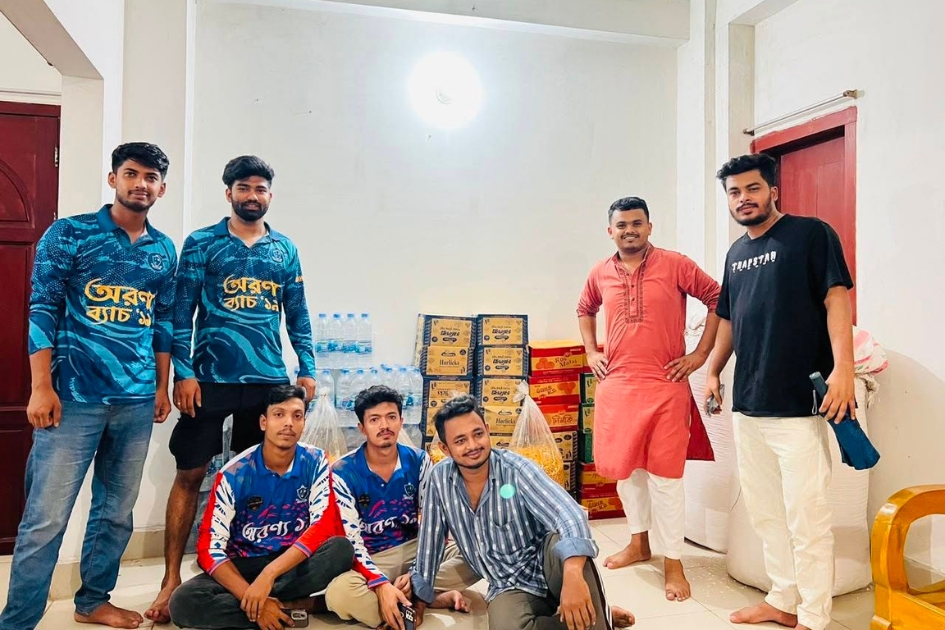
Several young volunteers from Bailchhari union in Banshkhali, including Touhid Redoy, Jisan Ali and SM Shafin, have raised funds and are distributing relief supplies in different areas.
Touhid said that although floodwaters have receded somewhat in their area, many places remain waterlogged. He said they have been working tirelessly to help local residents.
More heavy rain expected
The Bangladesh Meteorological Department has forecast heavy to very heavy rainfall in Chattogram, Cox’s Bazar, Bandarban, Rangamati and Khagrachhari until 12 July. Special bulletins issued by the Regional Integrated Multi-Hazard Early Warning System (RIMES) and the Bangladesh Meteorological Department have identified all five districts as being at high risk of landslides. With the situation likely to deteriorate further, local authorities have urged residents to remain alert.




