

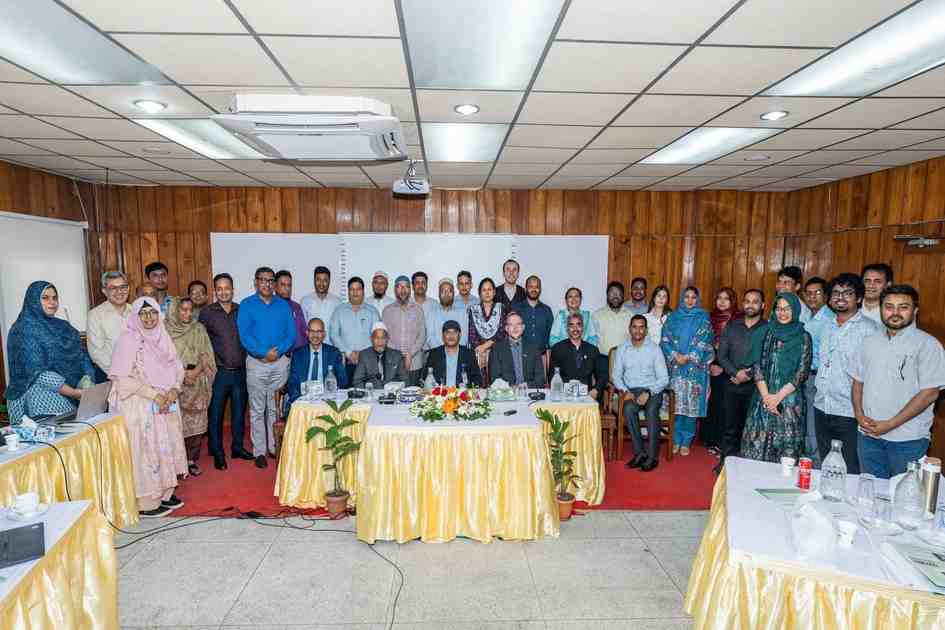



A capacity-building workshop in Dhaka brought together government officials and climate experts to strengthen policy implementation, improve institutional coordination and enhance Bangladesh’s access to international climate finance for loss and damage.
Amid rising climate impacts and growing global concerns over climate finance gaps, Bangladesh has called for stronger institutional coordination and enhanced government preparedness to address loss and damage.
Dr Saimum Parvez, Special Assistant to the Prime Minister on Environment, Forest and Climate Change, made the call while addressing the closing session of a two day capacity building workshop on climate change, loss and damage, and climate finance. He emphasised the importance of building the capacity of government officials and strengthening collaboration among institutions to translate climate policies into effective action.
“Bangladesh is at a critical stage in strengthening its national response to climate change, particularly in addressing loss and damage. Building the capacity of government officials and strengthening coordination among institutions are essential to translating climate policies into effective action,” Dr Saimum Parvez said.
The workshop titled “Climate Change Policy and Governance: Understanding the Adaptation, Loss and Damage Nexus and Pathways to Access International Finance from Global Funding Mechanism” was held on July 21 and 22 at the Bangladesh Climate Change Trust (BCCT) Conference Room at Ban Bhaban, Mohakhali, Dhaka.
The event was organised by the International Centre for Climate Change and Development (ICCCAD) and ADAMS Foundation, supported by the Royal Norwegian Embassy in Dhaka and hosted by the Bangladesh Climate Change Trust.
Bangladesh, one of the world’s most climate vulnerable countries, has consistently highlighted the need for climate justice, equitable climate finance, and stronger international support for communities facing the most severe impacts of climate change.
The country has also been a leading voice among developing nations calling for predictable and accessible climate finance, recognising that countries with the least contribution to global emissions are often experiencing some of the harshest consequences of the climate crisis.
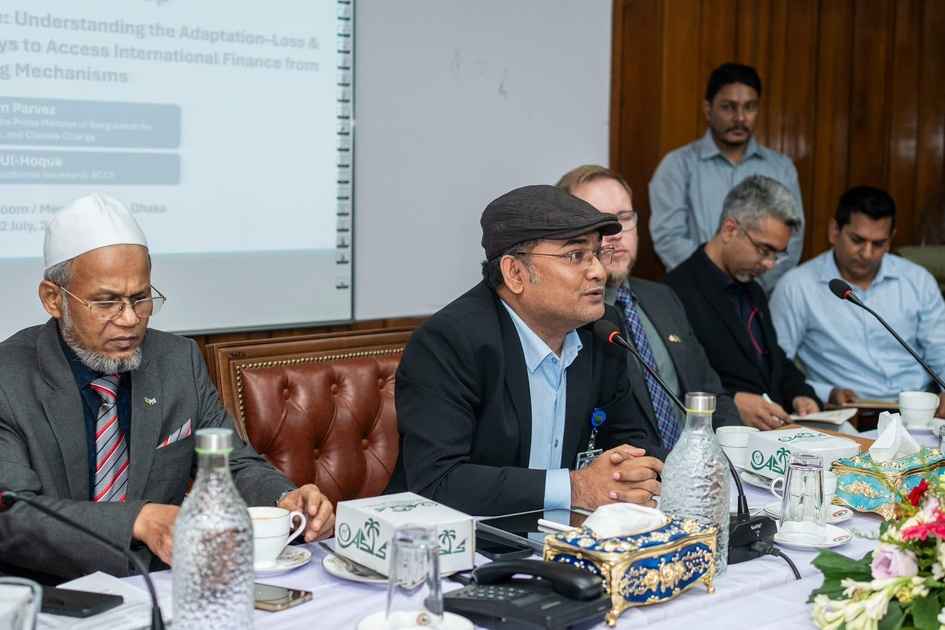
The workshop aimed to strengthen understanding of climate governance among government officials, improve knowledge of national climate policy frameworks, and help institutions design stronger projects and access international climate finance.
Loss and damage refers to climate impacts that cannot be fully avoided through adaptation measures, including climate induced displacement, ecosystem destruction, livelihood losses, and economic damages caused by extreme weather events.
The closing session was attended by Mr Fredrik Karlsrud, Head of Administration and Chargé d’affaires of the Royal Norwegian Embassy in Dhaka, as Special Guest.
Speaking at the event, Mr Karlsrud said Norway remains committed to supporting initiatives that enhance Bangladesh’s ability to address climate change, adaptation, and loss and damage.
“Norway is pleased to support initiatives that strengthen Bangladesh’s capacity to address climate change, adaptation, and loss and damage. We hope that the knowledge and partnerships developed through this initiative will contribute to further progress in climate action and adaptation in Bangladesh,” he said.
The two day workshop brought together officials from government ministries, departments, and institutions involved in programmes related to climate change. The sessions covered global climate governance, Bangladesh’s national climate policy framework, emerging Loss and Damage finance architecture, and pathways to access international climate funding.
Technical sessions on the second day were led by Mr Saqib Huq, Managing Director of ICCCAD, who discussed Bangladesh’s emerging Loss and Damage architecture and institutional coordination; Mr Gazi Md Waliul Haque, Managing Director (Additional Secretary) of BCCT, who highlighted Bangladesh’s climate finance readiness and the role of the Bangladesh Climate Change Trust Fund; and Md Shamsuddoha, Chief Executive of the Centre for Participatory Research and Development (CPRD), who guided participants in developing sector-specific climate project concepts aligned with national priorities and international financing opportunities.
The first day featured sessions by experts from the Department of Environment, ICCCAD, and other climate institutions focusing on national climate governance, international climate commitments, and policy frameworks.
A key outcome of the workshop was the development of climate project concepts by participants from different government ministries and departments aimed at accessing resources from the Fund for Responding to Loss and Damage (FRLD).
The FRLD, established under the United Nations climate process, aims to provide financial support to vulnerable developing countries dealing with climate impacts that exceed their ability to adapt.
The group exercises and project presentations focused on evidence-based project development, stronger cooperation among government institutions, and improving Bangladesh’s ability to prepare proposals that meet international climate finance requirements.
In his closing remarks, Mr Saqib Huq highlighted the importance of a whole-of-society approach to climate change, noting that effective responses to loss and damage require collaboration among government institutions, development partners, local communities, researchers, and civil society organisations.
He stressed the importance of connecting local climate realities with evidence-based planning and reliable financing opportunities to ensure climate action delivers meaningful results for vulnerable communities.
Mr Asiq Mahmud of ADAMS Foundation reaffirmed the importance of building national preparedness and enabling stakeholders to develop effective climate actions while improving access to global climate finance.
The workshop was chaired by Mr Gazi Md Waliul Haque, Managing Director (Additional Secretary) of BCCT, who appreciated the continued support of the Royal Norwegian Embassy in Dhaka and the technical contributions of ICCCAD and ADAMS Foundation in successfully completing the initiative.
Earlier, the workshop was inaugurated by Mohammad Navid Saifullah, Additional Secretary of the Ministry of Environment, Forest and Climate Change.
The initiative comes at a critical time when developing countries are demanding stronger global commitments on climate finance, particularly increased access to grant-based resources to address escalating climate impacts.
As climate impacts intensify across vulnerable regions, Bangladesh’s efforts to strengthen institutional readiness reflect a wider global effort by developing countries to secure fair, accessible, and predictable climate finance for communities on the frontlines of the climate crisis.




