

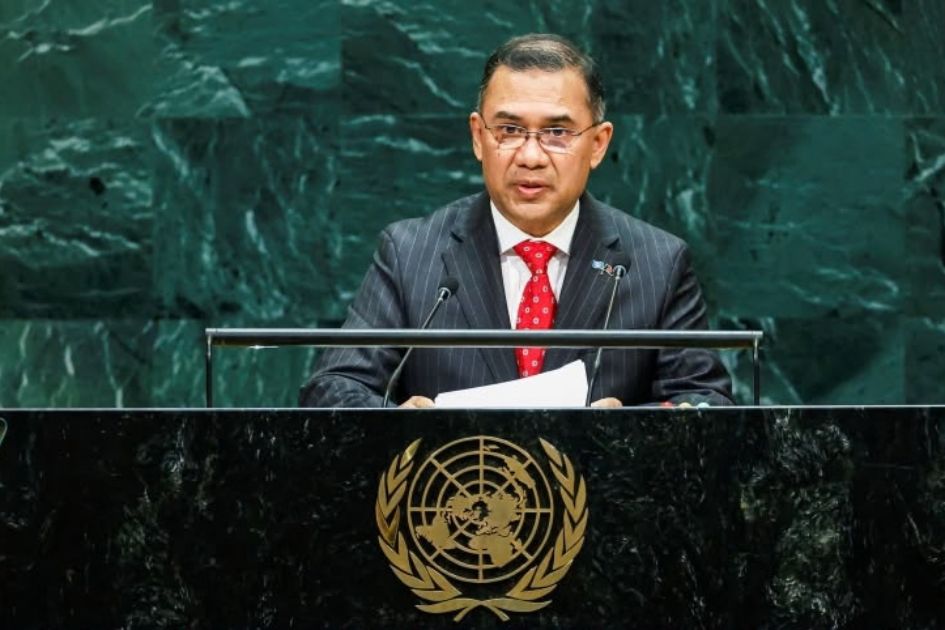



At the UN, Bangladesh outlined adaptation priorities, resilience programmes and development needs while urging stronger international cooperation on climate action.
Prime Minister Tarique Rahman has urged stronger global action on climate change, saying Bangladesh’s efforts to protect people from floods, cyclones and other threats must be matched by accessible finance and technology from international partners.
Speaking at a high-level meeting on Climate Action and the Just Transition at UN headquarters on Thursday, the Prime Minister called for deeper cuts in greenhouse gas emissions to keep the Paris Agreement’s 1.5°C goal within reach. He also sought predictable adaptation finance, wider access to climate-smart technology, support for renewable energy and full implementation and regular replenishment of the Loss and Damage Fund.
Bangladesh accounts for less than 0.5% of global greenhouse gas emissions but faces severe climate risks, the Prime Minister said. He called for more decisive action at UN Climate Summit COP31 on climate justice, finance and adaptation support.
Bangladesh’s resilience plans
Rahman said Bangladesh had allocated about $3.19 billion for climate adaptation in its current budget. Without international support, however, the country remained at risk of major losses.
The government plans to plant 250 million trees over five years and excavate or re-excavate about 20,000 kilometres of rivers and canals. Rahman said the waterway programme would help conserve water, reduce flood risks, revive wetlands and restore groundwater. He also cited progress on plans for the Padma Barrage and Teesta Barrage.
Bangladesh became the first South Asian country to join the 1992 UN Water Convention in June 2025, reinforcing its commitment to cooperation over shared water resources.
Technology and development
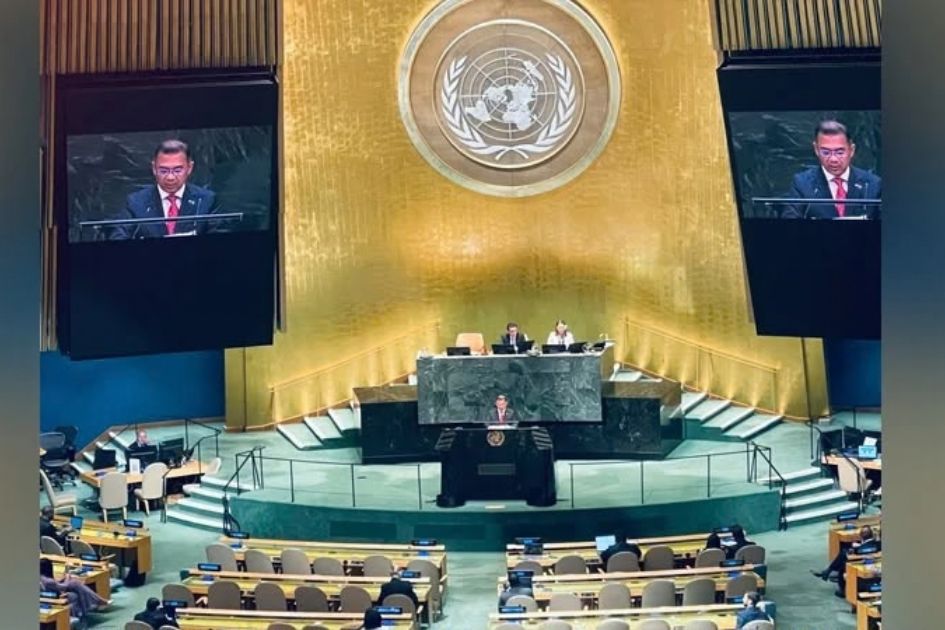
In his address to the General Assembly on Thursday, Rahman warned that unequal access to advanced technology could leave developing countries further behind. He called for technology transfer, skills development and affordable access to modern tools, alongside international cooperation on the responsible use of artificial intelligence and social media.
The Prime Minister also sought continued support as Bangladesh prepares to graduate from the Least Developed Country category. Financing, market access, technology transfer and capacity-building would be important to sustaining the country’s development after graduation, he said.
Rahman closed with a vision of a Bangladesh where young people can pursue their ambitions, women can live with confidence and children can realise their potential, reflecting his government’s “Bangladesh First: Bangladesh for All” message.




