




Bangladesh and IOM highlighted climate-induced displacement, migration as an adaptation strategy, and stronger international cooperation to build resilience, support vulnerable communities and advance sustainable development amid escalating climate impacts.
Bangladesh and the International Organization for Migration (IOM) have underscored the importance of addressing climate change-induced displacement and leveraging migration as an adaptation strategy to support sustainable development.
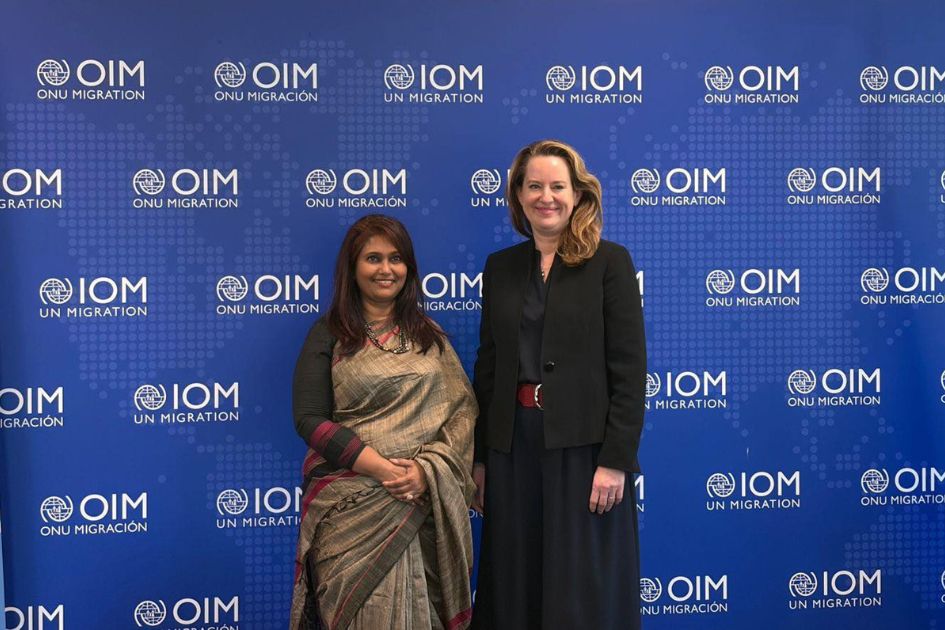
The issue was discussed during a meeting between Bangladesh’s Permanent Representative and Ambassador to the United Nations Office in Geneva, Nahida Sobhan, and IOM Director General Amy Pope, according to a message received in Dhaka on Sunday.
During the meeting, the two sides exchanged views on the interlinkages between climate change, migration and sustainable development. They stressed the need for stronger international cooperation to enhance resilience, safeguard human dignity and respond to growing migration challenges as the impacts of climate change continue to intensify worldwide.
Ambassador Nahida Sobhan congratulated Amy Pope on the successful conclusion of the International Migration Review Forum (IMRF) and the publication of the World Migration Report 2026.
She expressed hope that the forum and the report would further strengthen global efforts to harness migration as a driver of sustainable development, particularly for least developed countries (LDCs) and nations highly vulnerable to climate change.
The ambassador also said Bangladesh is ready to contribute to future editions of the World Migration Report and share its experiences in migration management with the international community.
The meeting also discussed ways in which IOM could provide more effective support to the Rohingya population sheltered in Bangladesh, formally referred to as Forcibly Displaced Myanmar Nationals (FDMNs), as well as to host communities to enhance their welfare and resilience.
Both sides agreed that strengthening international cooperation is essential to addressing the growing challenges posed by climate change and ensuring greater resilience and protection for affected populations.




