

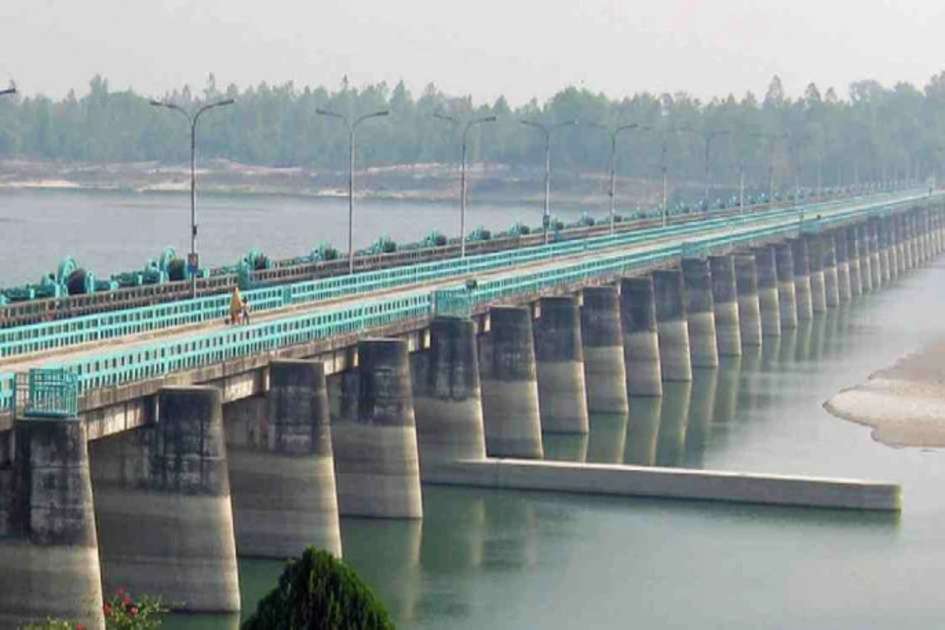



Prime Minister Tarique Rahman says the Teesta Barrage Masterplan will be implemented “at any cost” to boost northern agriculture, strengthen water security and expand canal restoration nationwide.
The government of Bangladesh has declared the implementation of the Teesta Barrage Masterplan a national priority, with Prime Minister Tarique Rahman vowing to complete the project “at any cost” to strengthen water security and support agriculture in the country’s northern region.
Speaking during the general discussion on the proposed 2026-27 national budget in the Jatiya Sangsad on Monday, the prime minister said the government is committed to addressing long-standing water management challenges through large-scale investments in rivers, canals and irrigation infrastructure.
“The Teesta Barrage Masterplan is a national priority. To ensure water security, support our farmers and improve livelihoods in the northern region, this project will be implemented at any cost,” he told Parliament.
Addressing the Water Crisis
Highlighting persistent water shortages in the Rangpur and Rajshahi regions, the prime minister acknowledged recurring concerns raised by lawmakers over the condition of the Teesta and Padma river systems.
He said the government is working “relentlessly” on sustainable solutions, placing particular emphasis on integrated river basin management and expanding water storage capacity.
Central to the plan is the proposed Padma Barrage, which is intended to store surplus monsoon water for use during the dry season. The prime minister said the project would help ensure year-round irrigation and reduce long-standing agricultural vulnerability.
“I have personally seen farmers unable to irrigate their land despite being surrounded by water during the monsoon,” he said, adding that improved water management would transform agricultural productivity in the affected regions.
Large-Scale Canal Restoration Drive
The prime minister also outlined an extensive infrastructure programme to excavate and re-excavate 20,000 kilometres of canals over the next five years.
According to him, nearly 900 kilometres of canal restoration have already been completed over the past three months as part of the ongoing national water revitalisation drive.
New Support Measures for Farmers and Migrant Workers
In addition to infrastructure plans, the prime minister announced expanded support for the agricultural sector, including loan waivers with interest of up to Tk 10,000 for around 1.3 million farmers.
He also announced a proposed “Special Farmer Card” for the 2026-27 fiscal year, which will provide financial assistance and access to at least 10 essential services for about 4.3 million farmers.
For expatriate workers, the government will introduce a “Migrant Card” to simplify access to services and reduce administrative difficulties faced by overseas Bangladeshis.
Energy Sector Reform and Future Strategy
Turning to the energy sector, the prime minister attributed ongoing challenges to “long-standing corruption, weak planning and neglect”, criticising the country’s overreliance on imports and insufficient domestic exploration.
He stressed the need to strengthen domestic gas exploration, expand renewable energy capacity and improve efficiency to reduce vulnerability to global market fluctuations.
“Our goal is to build a strong and resilient economy,” he said, adding that energy security would remain central to national development planning.
The budget session, chaired by Speaker Hafiz Uddin Ahmed, also featured remarks by Opposition Leader Shafi-qur Rahman before the prime minister’s address.




