

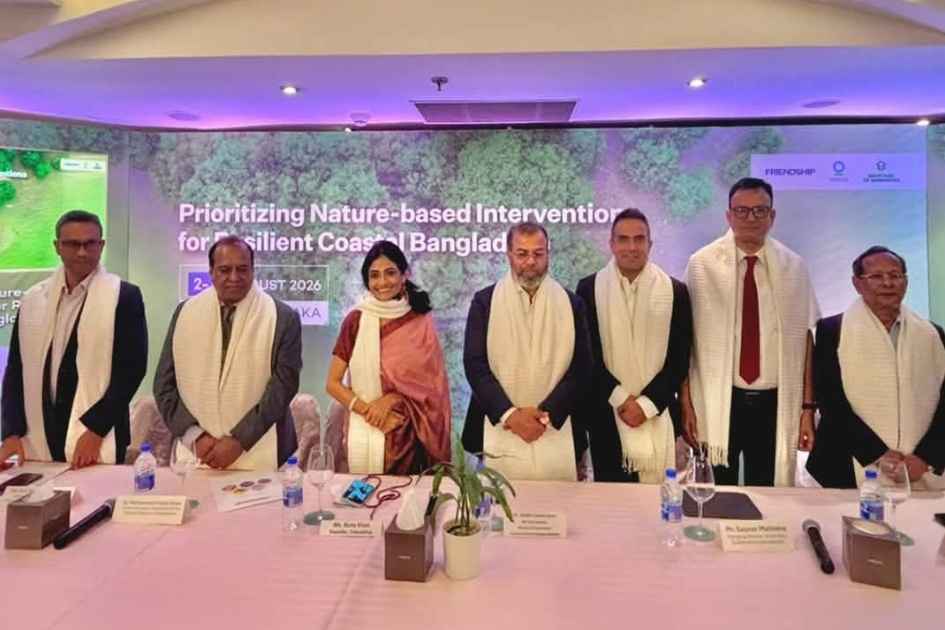



With mangroves central to the agenda, the consultation is expected to guide technical discussions on priority coastal landscapes where nature-based interventions can benefit communities and ecosystems.
The first day of the National Consultation on Advancing Nature-based Solutions for Resilient Coastal Bangladesh brought together policymakers, technical experts and development partners to discuss coordinated action to strengthen the country’s coastal resilience.
The consultation was jointly organised by Friendship and Conservation International in collaboration with Bangladesh’s Ministry of Environment, Forest and Climate Change.
Shaikh Faridul Islam, state minister at the Ministry of Environment, Forest and Climate Change, inaugurated the consultation as chief guest.
Dr Mohammad Faridul Islam, former secretary to the Government of Bangladesh, attended as special guest. AKM Sohel, additional secretary at the Economic Relations Division, and Mohammad Amir Hossain Chowdhury, chief conservator of forests at the Ministry of Environment, Forest and Climate Change, joined as guests of honour.
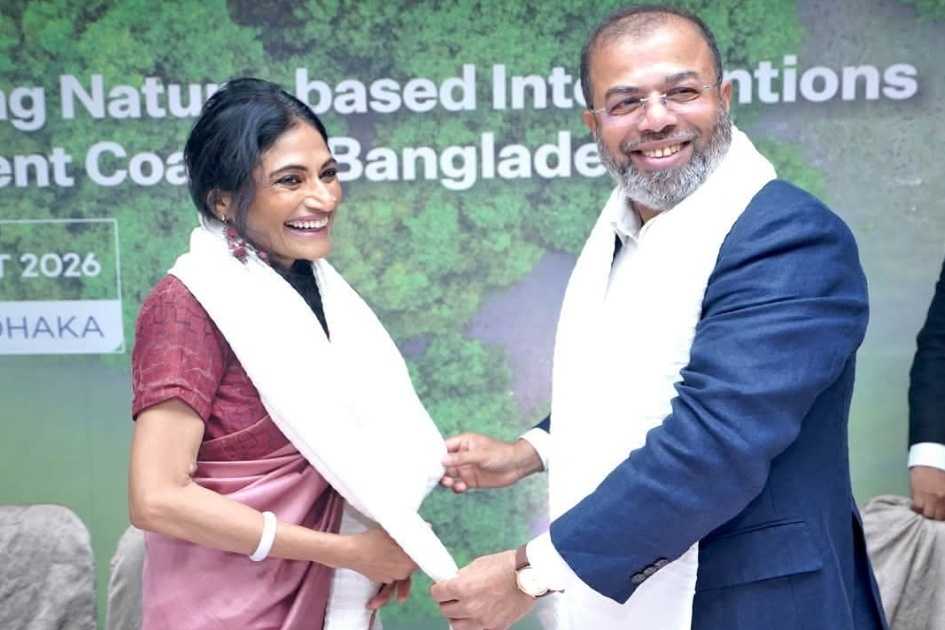
The opening session included remarks from Runa Khan, founder of Friendship and Saurav Malhotra, managing director for South Asia at Conservation International, who highlighted the importance of coordinated action, science-driven planning and strong partnerships in protecting Bangladesh’s coastal ecosystems.
Discussions on the first day focused on how restoring and protecting mangroves can strengthen climate resilience, safeguard biodiversity and support coastal livelihoods.
Participants also emphasised the need for closer collaboration among government institutions, technical experts and development partners.
The consultation is being held as part of the Mountains to Mangroves initiative and will continue tomorrow with technical sessions to identify priority coastal landscapes where nature-based interventions can deliver the greatest impact for both people and nature.




