

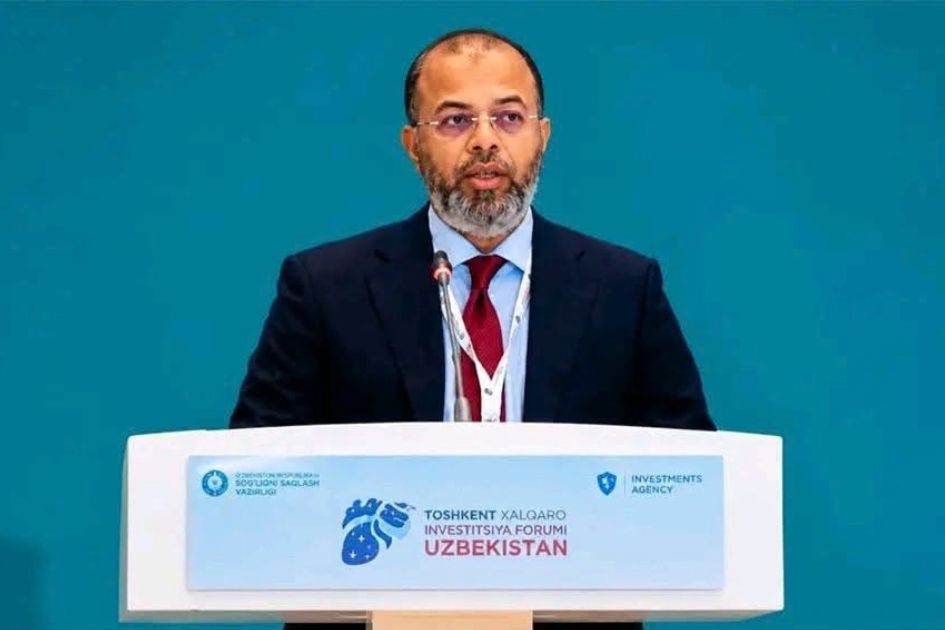

At the GEF Conference in Uzbekistan, Bangladesh called for stronger global climate cooperation, highlighting ambitious environmental targets, renewable energy expansion and nature-based solutions to strengthen resilience.
Bangladesh called for stronger international cooperation to combat climate change and environmental degradation, emphasizing that collective action is essential to secure a livable planet for present and future generations.
Addressing the second-day session of the Global Environment Facility (GEF) Conference in Samarkand, Uzbekistan, State Minister for Environment, Forest and Climate Change Sheikh Faridul Islam urged GEF member countries on Friday to work together to address growing environmental challenges and accelerate climate action.
According to a press release issued by Bangladesh’s Ministry of Environment, Forest and Climate Change, the state minister said environmental pollution could be significantly reduced through the proper identification of pollution sources and the implementation of coordinated and integrated measures.
He stressed that international cooperation remains crucial for promoting environmental conservation, climate resilience and sustainable development, noting that global environmental challenges require collective solutions and shared responsibility.
Highlighting Bangladesh’s environmental and climate agenda, Sheikh Faridul Islam said the government has adopted a series of ambitious initiatives for the next five years as part of its development commitments. These include planting 250 million trees, restoring and re-excavating 20,000 kilometres of rivers and canals, generating 10,000 megawatts of solar power and expanding waste-to-energy projects.
He added that Bangladesh is also advancing nature-based solutions and ecosystem-based adaptation programmes to strengthen resilience against the adverse impacts of climate change while protecting biodiversity and natural ecosystems.
Reaffirming the country’s commitment to environmental protection and climate action, the state minister said Bangladesh remains firmly dedicated to supporting and implementing the goals and commitments of the GEF. He emphasized the need to further strengthen cooperation, partnerships and knowledge-sharing among member states to accelerate progress toward environmental sustainability and climate resilience.
Bangladesh’s participation carries particular significance as the country is widely recognized as one of the world’s most climate-vulnerable nations, facing increasing threats from sea-level rise, cyclones, floods, river erosion, salinity intrusion and other climate-related impacts.
The GEF Conference in Samarkand brought together representatives from 186 member countries, environmental experts, development partners, non-governmental organizations (NGOs) and private-sector stakeholders to discuss global priorities for environmental protection and sustainable development.
The gathering is expected to help shape future international cooperation and financing for climate adaptation, biodiversity conservation, pollution reduction and ecosystem restoration, with a special focus on supporting vulnerable developing countries in addressing the escalating impacts of climate change.




