


Experts welcome Bangladesh’s stronger climate ambitions in the FY2026-27 budget but warn that limited funding, weak financing plans and governance gaps could undermine implementation of key climate and sustainability goals.
Climate experts have raised concerns over the proposed allocation of only Tk 100 crore to the Bangladesh Climate Change Trust Fund (BCCTF) in the FY2026-27 national budget, arguing that the amount falls far short of the country’s growing climate financing needs despite increasing climate risks and environmental challenges.
The proposed national budget, amounting to Tk 9.38 lakh crore, acknowledges the increasing impacts of climate change on Bangladesh and outlines a range of initiatives aimed at strengthening climate resilience, environmental protection and sustainable development.
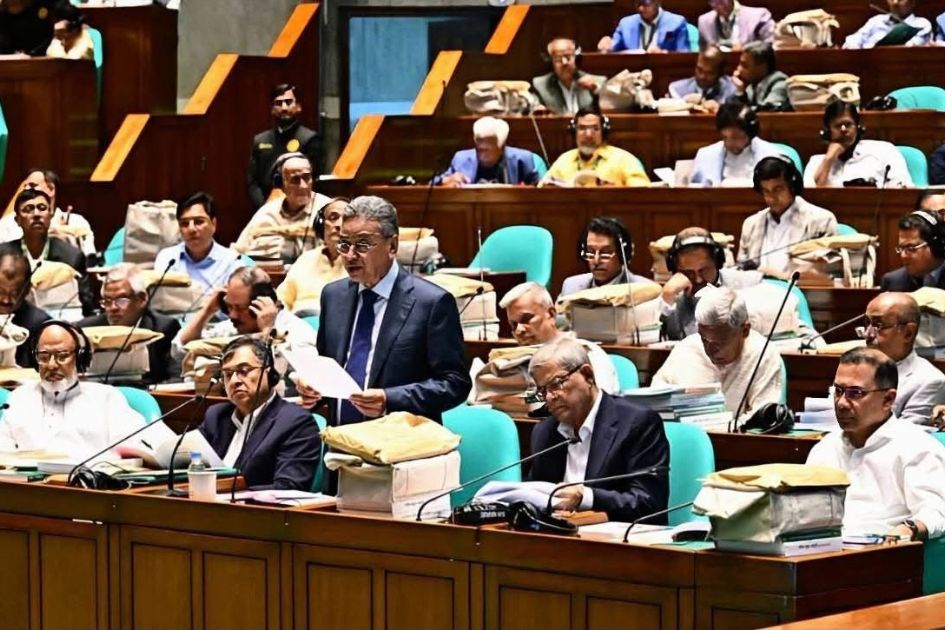
Presenting the budget in parliament on Thursday, the government reiterated its commitment to advancing climate resilience, environmental sustainability and green development through a series of targeted programmes and policy measures.
Analysts say the proposed budget reflects a stronger policy emphasis on environmental sustainability and climate action than in previous years. However, they stress that achieving Bangladesh’s climate ambitions will require significantly higher investments, stronger institutional capacity and a clearer long-term financing strategy to translate policy commitments into meaningful results on the ground.
Environmental and climate expert Haseeb Md. Irfanullah said the most significant concern remains the allocation of only Tk 100 crore to the Bangladesh Climate Change Trust Fund, describing the amount as inadequate in light of the country’s escalating climate challenges.
Bangladesh is widely regarded as one of the countries most vulnerable to climate change, facing increasing threats from floods, cyclones, sea-level rise, salinity intrusion, river erosion and extreme weather events. Experts say addressing these challenges will require substantial and sustained investments in adaptation, resilience-building and climate mitigation measures.
Dr Irfanullah said the environment and climate change section of the proposed budget signals a positive policy direction and reflects an effort to align government spending priorities with commitments outlined in the BNP’s election manifesto.
Many of the environmental measures announced in the budget mirror those commitments, including plans to plant 250 million trees, create 350,000 jobs, implement the “One Child One Tree” programme, promote a “Circular Future Model,” strengthen pollution control measures and expand digital monitoring of afforestation activities.
The budget also proposes initiatives to tackle plastic pollution and air pollution through the promotion of the “3Rs”: Reduce, Reuse and Repurpose, as part of broader efforts to encourage sustainable consumption and waste management.
Despite welcoming these initiatives, Irfanullah questioned the absence of a clear financing strategy for many of the ambitious targets announced in the budget.
“There is no clear indication of where the funding will come from to implement these large-scale initiatives,” he said.
He noted that while the national budget has increased more than eightfold over the past 15 to 17 years, the allocation for the climate trust fund has remained largely unchanged. According to him, the government has itself estimated that implementing Bangladesh’s broader climate action plans would require around US$30 billion annually, making the proposed allocation appear insufficient when compared with the scale of investment required.
Researchers and environmental advocates have also highlighted the lack of a comprehensive strategy for tackling air pollution, which continues to affect Dhaka and other major urban centres and remains one of the country’s most pressing environmental challenges.
While the budget includes commitments to reducing air pollution and plastic waste, experts say it provides limited attention to the practical measures, institutional arrangements and financing mechanisms needed to achieve those objectives.
Irfanullah further observed that reducing plastic consumption will be difficult unless affordable and accessible alternatives are made available. Although the budget emphasises reducing plastic use and promoting reuse, it does not sufficiently address the question of replacement products and sustainable alternatives.
The climate expert also expressed caution regarding the government’s plans for carbon trading. While describing the proposal as encouraging, he noted that Bangladesh’s experience in carbon markets remains limited and that significant institutional capacity, technical expertise and regulatory preparedness will be necessary before such initiatives can deliver tangible results.
He further argued that the budget outlines ambitious goals but fails to provide a comprehensive financing and implementation roadmap for achieving them, particularly in relation to Bangladesh’s National Adaptation Plan (NAP) and Nationally Determined Contributions (NDCs), which are central to the country’s climate commitments under the Paris Agreement.
“The targets are there, the commitment is there, but the overall financial framework required to achieve them is missing,” he said.
Adding to the discussion on climate financing, young climate advocate Sohanur Rahman, Executive Coordinator of YouthNet Global, emphasised that increasing budgetary allocations alone would not be enough without strengthening climate finance governance.
“Bangladesh needs not only more climate finance but also better climate finance governance. Effective climate action requires transparent, accountable and participatory mechanisms to ensure that resources reach the most climate-vulnerable communities. Local communities, youth, women and frontline populations must have meaningful opportunities to participate in decision-making processes related to climate finance planning, allocation and monitoring,” he said.
Sohanur further noted that as Bangladesh advances the implementation of its National Adaptation Plan (NAP) and Nationally Determined Contributions (NDCs), strengthening transparency, accountability and public participation in climate finance governance will be critical to ensuring that climate investments deliver equitable, effective and sustainable outcomes.




