




As access to canals, wetlands and common resources narrows, Bagdi families in Jhenaidah are losing traditional occupations while seeking recognition, assistance and restoration of their cultural heritage.
Environmental degradation and shrinking water bodies push a centuries-old fishing community in Jhenaidah towards hunger and insecurity.
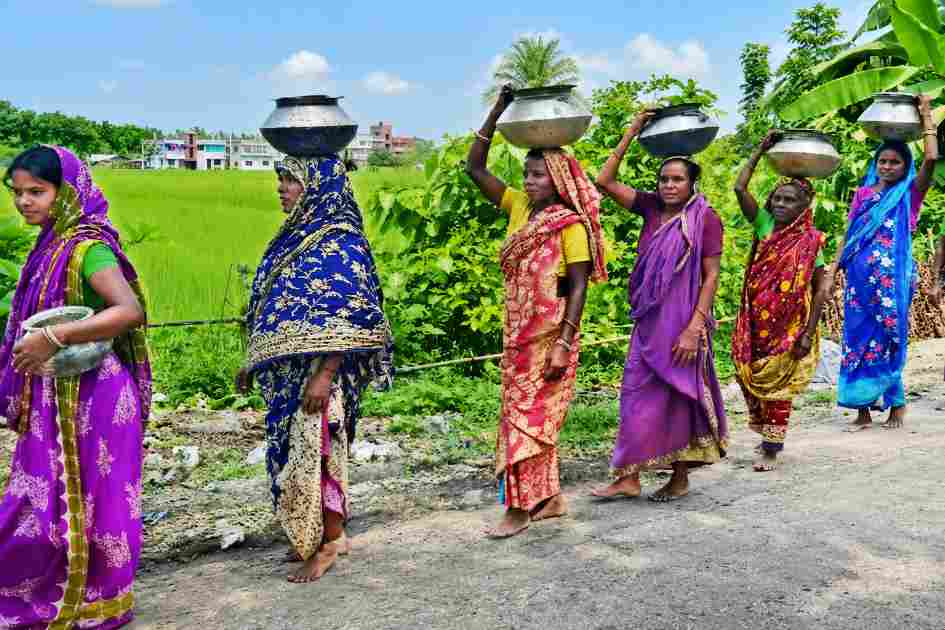
Before sunrise, groups of Bagdi women walk out of their homes carrying baskets, fishing nets, knives and small tools. They head towards shrinking canals, wetlands and farmlands in search of fish, crabs, snails and other natural resources that have sustained their community for generations.
By evening, they return with whatever they manage to collect. Many then sit at roadside markets in Harinakundu town, arranging their small catches and negotiating with buyers. Their daily earnings often range between Tk 200 and Tk 250 (around $2), barely enough to feed their families.
For centuries, the Bagdi community of Jhenaidah has lived in close connection with rivers, canals, forests and wetlands. But as these ecosystems disappear due to environmental degradation, changing climate patterns, land-use changes and shrinking common water resources, a traditional way of life is rapidly fading.
The Bagdi people, a government-recognised ethnic minority community in Bangladesh, are now facing severe economic hardship, food insecurity and social exclusion as their traditional occupations of fishing and hunting become increasingly difficult to sustain.
A centuries-old community left behind
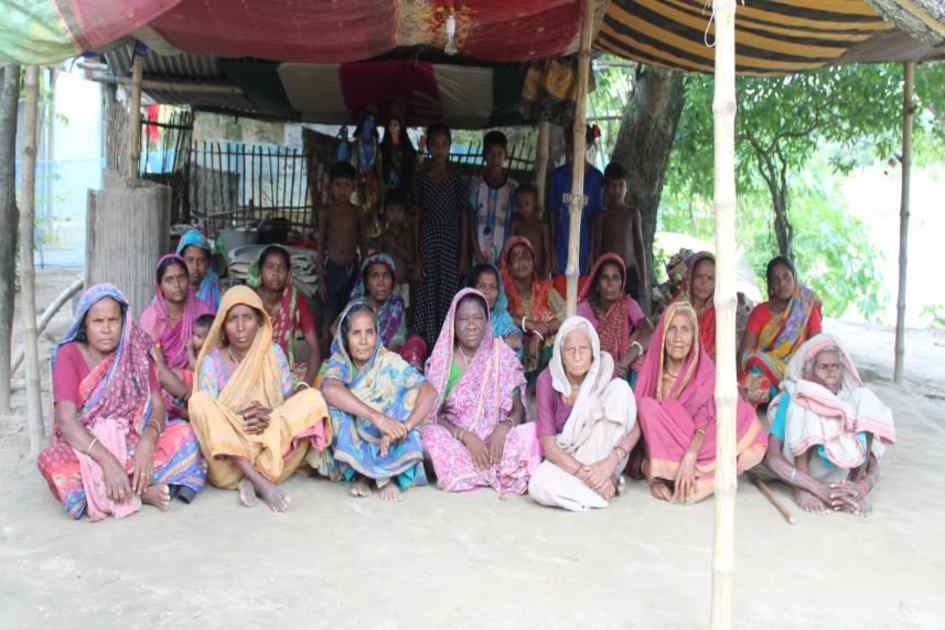
More than 150 people from 34 Bagdi families live in a settlement between Chanderpol and Madhabpur villages in Ganna union of Jhenaidah Sadar upazila. For over a century, they have lived in fragile houses along broken roads, largely untouched by the country’s wider socio-economic progress.
Fifty-year-old widow Chapala Rani has supported her family alone since her husband died 23 years ago. She works as an agricultural labourer and joins other women in catching fish from nearby canals.
Her son earns Tk 150 to Tk 200 a day working with local fishermen.
“Such a small income is no longer enough to support a family of five. Sometimes we spend entire days without food, and even during festivals we cannot afford new clothes,” Chapala said.
Ninety-year-old Jashoda Rani remembers a time when the community’s survival was directly connected to nature.
“Our entire life depended on what we collected from forests and water bodies,” she said.
Community elders say forests, bushes, canals and wetlands have gradually disappeared, forcing many Bagdi families to abandon traditional livelihoods and take up low-paid work as agricultural labourers, rickshaw pullers, salon workers and construction helpers.
Women carrying the burden of survival
For women like Nimbola, survival depends on daily struggle. Supporting a nine-member family, she spends her days collecting fish and sells them in the evening market, earning around Tk 200 to Tk 250.
Her family requires nearly five kilograms of rice every day. With food prices rising, most of her income goes towards buying rice, leaving little money for lentils, oil or vegetables.
“Sometimes we survive on puffed rice or only rice and lentils. Buying fish or meat is almost impossible,” she said.
Women in the community also collect leftover paddy from rat holes after harvest seasons, gather firewood and sell straw to supplement their income.
Widow Jamuna Rani said rising food prices have made life increasingly difficult.
“Earlier, flour was cheaper, so we could survive many days eating bread. Now we cannot afford it. We have to depend on rice and lentils twice a day,” she said.
Loss of natural resources and social protection
Despite their official recognition as an ethnic minority community, residents say they have received limited targeted support.
“We do not get any special assistance as an ethnic minority. Every family here is trapped in debt,” said 65-year-old Jira Moni.
Seventy-eight-year-old community leader Nepal Biswas said the loss of access to traditional resources has deeply affected their identity and survival.
“There is no fallow land left in canals and wetlands. If we go there, we are not allowed in. We are neglected on religious grounds too,” he said.
He added that social exclusion has further isolated the community.
“We follow the Sanatan faith, yet we are sidelined during the rituals of other Sanatan devotees, and they rarely attend ours. We hold our own rituals with whatever little we can manage. We do not even have a permanent place of worship,” Nepal said.
A community facing demographic challenges
The community is also facing a demographic challenge. Apart from a few elderly men such as Nepal Biswas, 80, Nakul and Adhir Biswas, 70, there are very few men above the age of 60 remaining in the settlement.
According to the Jhenaidah District Statistics Office, around 1,800 Bagdi people live across the district, alongside members of other ethnic minority communities.
In Harinakundu town, another Bagdi settlement faces similar challenges. Several hundred people live there, with women playing a central role in household survival through fishing and small-scale trading.
Seventy-year-old Basudeb Biswas said the community has been overlooked for generations.
“Although we have lived here for generations, nobody thinks about us. Nobody comes to ask about our problems,” he said.
He said only a few elderly community members receive government allowances. He receives little support except occasional rice during religious festivals and a blanket during winter.
Protecting heritage through inclusion and restoration
The Bagdi community is officially listed in Bangladesh as a Hindu scheduled caste community. Their population across the country is estimated at around two lakh, with most living in southwestern districts including Bagerhat, Khulna, Satkhira, Jhenaidah, Magura, Rajbari, Faridpur, Chuadanga and Jashore, as well as parts of north-central Bangladesh.
Community leaders say that while some government initiatives provide educational scholarships and learning materials for children, support remains far below their needs.
“Every year some students receive scholarships and educational materials, but the support does not meet the actual needs of our children,” said Bagdi community leader Samir Biswas.
Jhenaidah Deputy Commissioner Md Noman Hossain told that the government is considering housing and livelihood support for the Bagdi community.
“The administration is working positively to preserve the professional, religious and cultural heritage of the Bagdi community. We are coordinating with relevant departments to include them in government assistance programmes, reduce discrimination and ensure their rights and dignity,” he said.
For the Bagdi people, restoring wetlands is not only about protecting nature. It is about preserving a centuries-old relationship with the environment, safeguarding their culture and ensuring that future generations can survive with dignity.
Climate justice and the need for inclusive adaptation
Climate and environmental advocates say the crisis facing the Bagdi community reflects a wider challenge faced by millions of frontline communities across Bangladesh, where ecosystem degradation is directly affecting livelihoods, food security and cultural identity.
Sohanur Rahman, Executive Coordinator of YouthNet Global, said vulnerable communities who have protected and depended on nature for generations must be placed at the centre of climate adaptation efforts.
“Climate justice means protecting not only ecosystems but also the people whose lives, cultures and livelihoods are deeply connected with those ecosystems. Communities like the Bagdi are not victims waiting for support; they are holders of traditional knowledge and partners in restoring nature. Any adaptation initiative must recognise their rights, dignity and leadership,” he said.
He added that restoring wetlands and protecting traditional livelihoods should be part of a broader approach to building climate resilience.
“Wetlands are life-support systems for communities and biodiversity. Protecting and restoring them can create pathways for both ecological recovery and social justice,” Sohanur concluded.




