

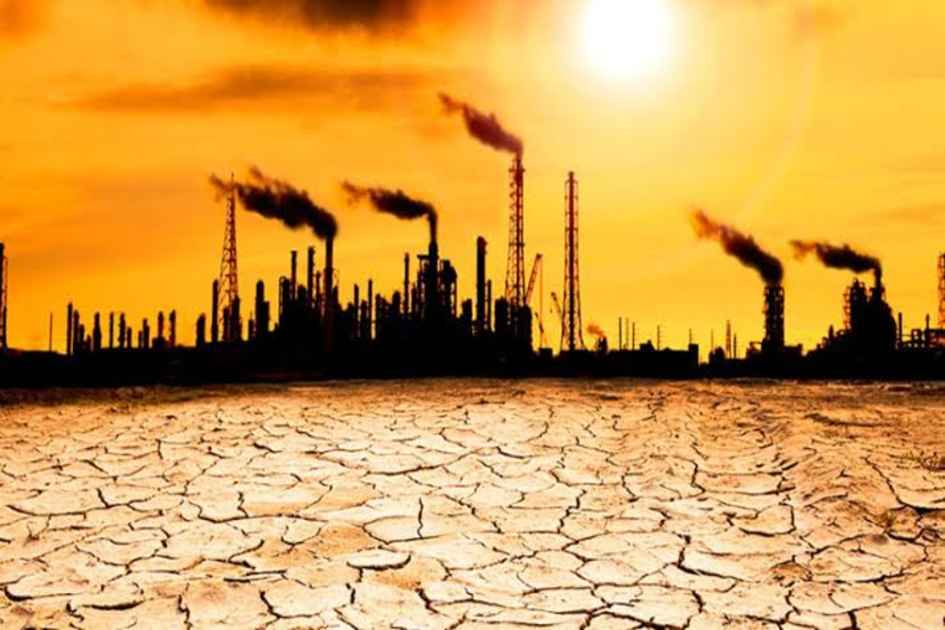



As climate impacts intensify, journalists worldwide face shrinking newsrooms, declining resources and growing misinformation, raising concerns that weakened reporting could undermine public understanding, accountability and informed climate action, particularly across the Global South.
As climate impacts intensify worldwide, the journalism needed to explain the crisis is facing its own emergency. From Bangladesh to Africa and beyond, shrinking newsrooms, misinformation and technological disruption threaten the ability to document climate realities, hold power accountable and amplify frontline voices.
As the planet records unprecedented temperatures and extreme weather events, the journalists responsible for explaining the climate emergency are facing a crisis of their own: shrinking newsrooms, declining funding and disappearing specialist expertise.
From sinking coastal villages in Bangladesh to drought-hit communities across Africa, millions of people are experiencing the consequences of a warming planet. Yet the journalism needed to document these realities, investigate their causes and explain possible solutions is itself under growing pressure.
The crisis facing climate journalism is unfolding at a time when the world needs reliable information more than ever, from communities adapting to rising seas and extreme weather to governments negotiating the future of climate action.
For climate-focused media platforms from the Global South, this challenge highlights the urgent need to strengthen storytelling systems that connect frontline experiences with scientific knowledge, policy decisions and global climate conversations.
Across continents, climate desks are shrinking, environmental reporters are losing jobs and specialised investigations are disappearing as news organisations struggle with falling revenues, reduced philanthropic support, changing audience behaviour and rapid technological disruption.
Media experts warn that this decline comes at a critical moment. Countries are facing increasingly complex decisions on climate adaptation, climate finance, loss and damage, renewable energy transitions and environmental protection, making accurate and independent reporting more important than ever.
The retreat of climate journalism is no longer only a challenge for the media industry. It is becoming a challenge for public awareness, democratic accountability and global climate action, particularly in countries where communities are already living through the impacts of climate change.
Bangladesh: A frontline of climate change and climate storytelling
The crisis of climate journalism has particular importance for Bangladesh, one of the countries most vulnerable to climate change.
From disappearing river islands along the Brahmaputra and Jamuna rivers to coastal communities facing rising seas and salinity intrusion, Bangladesh represents one of the world’s most visible frontlines of the climate crisis.
Millions of people are already experiencing the impacts of rising temperatures, floods, cyclones, river erosion, displacement and changing livelihoods.
For a farmer watching rainfall patterns change, a fisher losing access to traditional fishing grounds or a family forced to leave a river-eroded home, climate change is not a distant scientific projection. It is a daily reality.
Bangladeshi journalists are documenting how climate change is reshaping agriculture, migration, health, food security and local economies.
Local reporters often become the first witnesses of environmental change. They document riverbank collapse, disappearing livelihoods, water insecurity and community struggles long before these issues receive national or international attention.
In many climate-vulnerable regions, local journalists are not only reporters; they are community historians documenting environmental changes that might otherwise remain invisible.
AI transforms newsrooms but cannot replace journalism
Artificial intelligence is rapidly changing the media landscape, creating both opportunities and challenges for climate reporting.
AI tools are increasingly being used for data analysis, translation, research assistance, fact-checking support and routine content production. In climate journalism, these technologies can help analyse satellite data, monitor environmental changes, identify patterns in climate datasets and translate complex scientific information into accessible formats.
However, media experts warn that technology cannot replace the human elements at the centre of meaningful climate journalism: trust, empathy, accountability and direct engagement with communities.
AI can process information at unprecedented speed, but climate reporting depends on understanding how environmental changes affect real people. An algorithm cannot walk through a flood-affected village, cross rivers to reach isolated communities, listen to farmers facing changing weather patterns or understand the social consequences of displacement.
For journalists working on the climate frontline, technology cannot replace physical presence and community trust.
Bangladeshi investigative journalist Rafiqul Islam Montu argues that the future of journalism depends on returning to communities where climate impacts are unfolding rather than producing generic information from newsrooms.
“AI has already mastered writing press releases, government project summaries and general news updates. If you are still sitting in an office serving up generic content, you risk becoming obsolete in the media. That will be the work of AI,” Montu wrote.
He said meaningful climate reporting requires journalists to walk through villages, cross rivers, meet affected communities and uncover stories that automated systems cannot find.
Media experts say the future should not be framed as a competition between journalists and artificial intelligence. Instead, technology should support journalists while human reporting remains central to accountability, public trust and storytelling.
The Climate Watch and the rise of Global South climate storytelling
As traditional media organisations reduce specialised climate coverage, dedicated climate platforms are becoming increasingly important in ensuring that climate stories remain visible, accessible and connected to global audiences.
The Climate Watch is part of this emerging movement, connecting climate news, analysis, research updates and frontline stories from communities experiencing environmental change.
From climate finance and adaptation to loss and damage, renewable energy, pollution, biodiversity, just transition and environmental justice, specialised climate platforms help bridge the gap between scientific knowledge, policy discussions and public understanding.
For many countries across Asia, Africa and Latin America, climate reporting is not only about explaining environmental change. It is also about documenting inequality, protecting vulnerable communities and ensuring that frontline voices influence global decisions.
Founded in 2024 and officially registered as a recognised media outlet in 2025, The Climate Watch has rapidly evolved into a pioneering force in environmental journalism across South Asia. Driven by self-funded operations and a dedicated mission, the platform has trained around 60 journalists, awarded 20 reporting fellowships and built comprehensive professional toolkits. Its high-impact investigations have driven tangible public accountability, most notably exposing the destruction of 55 million trees in the Mirsarai Economic Zone, which triggered ongoing High Court proceedings, and contributing to the cross-border project Dark Side of the Boom, which won the 2026 SOPA Award for Excellence in Reporting on the Environment and a Special Citation in the 2026 Osborn Elliott Prize. Beyond breaking major stories, the platform is actively expanding its footprint into Nepal and Pakistan while curating an ambitious visual archive documenting the impacts of climate change on vulnerable bird species.
The experience of Climate Watch reflects a wider transformation across the Global South, where independent climate media platforms are creating new pathways for storytelling despite shrinking newsroom resources and growing information challenges.
By connecting local realities with global climate conversations, platforms such as Climate Watch aim to ensure that communities most affected by climate change are not only represented as victims of crisis but recognised as sources of knowledge, experience and solutions.
The rise of Global South climate media platforms is particularly important because many climate-affected communities have historically been underrepresented in international climate narratives. Their experiences often provide early warnings of environmental change and valuable lessons on adaptation and resilience.
Climate journalism as a watchdog for climate action
Climate reporting also plays a critical role in examining whether climate commitments translate into real-world action.
Journalists investigate how climate finance is allocated, whether billions of dollars pledged for adaptation and resilience actually reach communities facing the greatest risks and whether governments and corporations are meeting their climate responsibilities.
They examine the complex connections between fossil fuel dependence, industrial pollution, energy transitions, biodiversity loss, environmental justice and human rights.
During global climate negotiations, including the annual UN climate conferences, climate journalists play a critical role in examining climate finance commitments, adaptation funding, loss and damage mechanisms and whether international promises translate into meaningful support for vulnerable countries.
The role of climate journalism is especially important as countries debate how to finance adaptation, accelerate clean energy transitions and respond to growing climate-related losses.
Without sustained reporting, many climate decisions risk being shaped without sufficient public scrutiny, leaving affected communities with limited influence over policies that directly affect their lives.
Climate and environmental journalist, Shamsuddin Illius says”Climate journalism is no longer just an environmental beat; it has become a public service that connects science, policy and people’s lived experiences. As climate impacts intensify, especially in vulnerable countries like Bangladesh, the need for credible, field-based reporting has never been greater. While artificial intelligence can support journalists with research and data analysis, it cannot replace firsthand reporting, local knowledge or the trust built with affected communities. Strong climate journalism remains essential for accountability, informed public debate and climate justice.”
Science journalism faces a parallel crisis
The decline of climate reporting is part of a broader crisis facing science journalism worldwide.
Across many countries, specialist science reporters are disappearing as news organisations reduce costs and merge specialised beats into general reporting teams.
The impact extends beyond climate change, affecting coverage of biodiversity loss, pollution, public health, food systems, energy transitions and emerging technologies.
Researchers warn that when science journalism weakens, societies lose an important bridge between research institutions, policymakers and the public.
Scientific knowledge does not automatically become public understanding. Journalism plays a critical role in translating complex research into information that communities can use to make decisions.
Building stronger links between journalists, scientists and research institutions will be essential to ensure that scientific knowledge reaches communities in accessible and meaningful ways.
Without strong science reporting, misinformation and confusion can spread more easily, making it harder for people to distinguish evidence-based knowledge from political narratives, commercial interests and false claims.
Africa’s climate reporting challenge
The challenge is particularly visible across Africa, where droughts, floods, food insecurity and water shortages are reshaping communities.
Many African newsrooms continue to struggle to establish climate change as a permanent reporting priority. Environmental stories are often treated as disaster coverage rather than issues connected with politics, business, health, inequality and development.
“There is a real tension in African journalism,” said Sheree Bega, environment reporter and acting news editor at South Africa’s Mail & Guardian. “Climate change is still often treated like a niche beat or a disaster story, rather than something that cuts across politics, business, health, food, inequality and daily life.”
Editors and media leaders across Africa argue that climate reporting requires long-term investment, editorial independence and institutional commitment.
Investigating mining, fossil fuel projects, energy transitions, industrial pollution, land use and government climate policies often involves powerful political and corporate interests. Such reporting requires time, expertise and financial support.
African journalists are responding through community-based reporting, collaborative investigations and partnerships with scientists, universities and civil society organisations.
The future of African climate journalism will depend on sustained investment, regional collaboration and recognising climate reporting as a core part of development journalism.
The misinformation challenge
As artificial intelligence reshapes how information is produced and consumed, the need for trusted, independent climate journalism has become even more urgent.
The decline of professional climate reporting is creating a wider information challenge: the spread of climate misinformation, denial narratives and misleading claims.
Researchers warn that when reliable reporting decreases, false or incomplete information can quickly fill the gap.
The rise of generative AI has added another layer of complexity, enabling the rapid production of convincing but inaccurate climate narratives, manipulated images and misleading interpretations of scientific information.
Climate misinformation can emerge from political campaigns, commercial interests, online networks and inaccurate interpretations of scientific evidence. Without trusted reporting, audiences may struggle to distinguish verified scientific knowledge from speculation, propaganda or misleading claims.
Strong climate journalism plays a critical role in examining government policies, questioning corporate commitments, investigating greenwashing and ensuring that climate debates are based on evidence.
Investigative reporting remains essential in tracking climate finance, examining corporate emissions, analysing environmental impacts and questioning whether climate commitments translate into meaningful action.
For communities living on the frontlines of environmental change, access to accurate information is not simply a communication issue. It can influence decisions about disaster preparedness, migration, livelihoods, health and survival.
The information gap is especially dangerous in vulnerable countries where communities often experience climate impacts before national and international attention reaches them.
When journalists investigate local realities, they reveal connections between climate impacts, inequality, governance failures and development choices. Without such reporting, many affected communities risk becoming invisible in global climate conversations.
Building the future of climate journalism
The future of climate reporting will require stronger partnerships between media organisations, independent journalists, universities, research institutions, civil society organisations and communities.
Investment in climate journalism training, data reporting, regional collaborations and community-based storytelling will be essential to rebuilding the capacity needed to cover the climate emergency.
Media organisations need to recognise climate reporting not as a temporary trend or specialised luxury, but as a permanent pillar of public-interest journalism.
Universities and research institutions can play a stronger role by supporting science communication, journalist training and collaboration between researchers and reporters.
Civil society organisations and climate networks can help connect journalists with communities whose experiences are often missing from mainstream narratives.
Young journalists and climate communicators will be central to the next generation of climate storytelling. They bring new voices, digital innovation and stronger connections between science, policy and communities.
Technology can accelerate information production, but it cannot replace the human relationships that make journalism meaningful.
Climate communicators warn of a growing information gap
Climate advocates and communicators in Bangladesh warn that the decline of specialised environmental journalism could widen the gap between scientific knowledge, policy decisions and public understanding.
The challenge is particularly serious in climate-vulnerable countries, where communities often experience environmental changes long before they become part of national and international discussions. Without strong local reporting, the realities of those communities risk remaining invisible in global climate conversations.
The changing media landscape has encouraged the emergence of new climate communication models, particularly in regions where traditional newsrooms face resource constraints and communities need stronger platforms to share their experiences.
Climate journalism is essential for climate justice
The crisis facing environmental reporting is ultimately connected to a larger question of climate justice.
Those who have contributed the least to global emissions are often the first and most severely affected by rising temperatures, extreme weather events, sea-level rise and environmental degradation.
Their stories, experiences and demands require sustained attention.
Climate journalism provides more than information. It creates accountability, amplifies marginalised voices and helps societies understand the choices shaping their future.
From coastal villages in Bangladesh to drought-affected communities across Africa, journalists play a critical role in documenting how the planetary emergency is changing lives.
A shrinking climate newsroom means fewer investigations into polluting industries, weaker scrutiny of government commitments and fewer opportunities for vulnerable communities to influence decisions that affect them.
The emergence of platforms such as Climate Watch demonstrates how Global South climate media can create new pathways for storytelling by connecting scientific knowledge, frontline experiences and international climate debates, ensuring that communities most affected by climate change are not only heard but also recognised as contributors to climate solutions.
Across vulnerable regions, new generations of journalists, researchers and communicators are building systems to ensure that climate knowledge reaches communities, policymakers and global audiences.
The future of climate journalism will be measured not only by the number of stories published, but by whose voices are heard, whose experiences are recognised and whether communities most affected by climate change can shape the decisions that determine their future.
Climate journalism is not simply documenting the climate crisis. It is helping societies understand it, respond to it and decide what kind of future they want to build.
In a warming world, protecting climate journalism means protecting the ability of societies to understand risks, hold power accountable and create a fairer future.
A warming world cannot afford a shrinking climate newsroom.




