

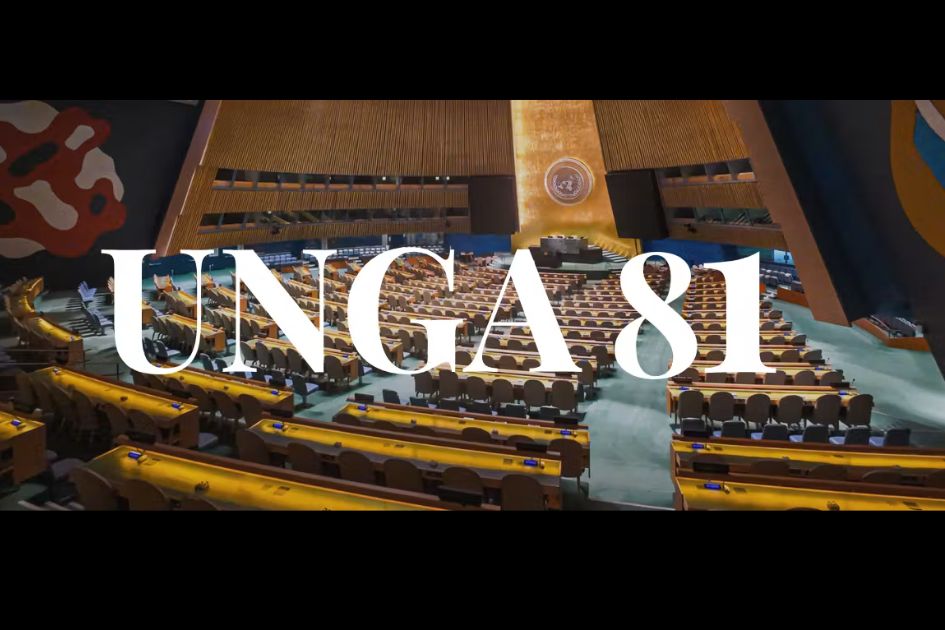



Ahead of COP31 in Türkiye, global leaders at UNGA81 face intensifying calls for climate finance, rapid electrification, and adaptation strategies as mounting natural disasters highlight the urgent operational gap.
Climate action, adaptation finance and preparations for COP31 have taken centre stage as world leaders gather in New York for the 81st session of the United Nations General Assembly (UNGA81), with governments under renewed pressure to turn climate pledges into concrete action.
The UN Secretary-General António Guterres will convene a high-level event on climate action and the just transition on September 23, focusing on accelerating the transition to renewable energy, scaling up affordable finance for developing countries and strengthening adaptation and resilience.
The climate discussions come less than two months before COP31 in Antalya, Türkiye, from November 9 to 20. Türkiye will host the summit, while Australia will serve as President of Negotiations, leading the formal talks on targets, rules and ambition.
A Climate Diplomacy Brief issued on September 21 identified three immediate priorities for governments: preparing for extreme climate impacts, accelerating the transition away from fossil fuels and strengthening preparedness for climate-related shocks, including the effects of El Niño. The brief argued that governments need practical implementation plans rather than broad commitments.
Nepal disaster underscores climate finance gap
The mounting cost of climate impacts is adding urgency to the debate over adaptation and international climate finance.
A catastrophic glacier collapse in Nepal in late August triggered flooding that killed more than 1,400 people and left thousands missing, according to recent Reuters reporting. Nepal has sought $5 billion in international support for recovery from the disaster, which destroyed homes, roads and hydropower infrastructure.
Nepal Prime Minister Balendra Shah is scheduled to address the General Assembly on September 24. The disaster has renewed attention to safer infrastructure, stronger monitoring and early-warning systems, as well as the need for greater international support for climate-vulnerable countries.
Scientists have also linked climate change to conditions that made the glacier collapse more likely, citing rising temperatures, glacier thinning and permafrost loss in the Himalayas.
The issue extends beyond emergency response. Rising costs of adaptation, disaster recovery and climate-related loss and damage are increasing pressure on international financial institutions and developed countries to expand access to climate finance.
For vulnerable developing countries, the availability, accessibility and predictability of such finance remain central concerns as climate impacts intensify.
Australia-Türkiye partnership faces scrutiny
The unusual division of COP31 responsibilities is expected to draw close attention in New York.
Australia has identified clean energy, investment, climate finance and the priorities of Pacific island countries among its key areas for COP31. It is also expanding renewable energy while remaining a major fossil fuel exporter.
Türkiye is likewise expanding renewable energy while continuing to rely on fossil fuels for part of its energy system. The combination of clean-energy ambitions and continued fossil fuel use will be an important part of the debate over how quickly the global energy transition can proceed.
Climate Action Tracker, an independent climate-policy analysis group, recently rated Türkiye’s current climate policies and actions as “highly insufficient” and Australia’s as “insufficient”. The ratings are the organisation’s assessments rather than official positions of the two governments.
Electrification emerges as key COP31 theme
Electrification has emerged as a major theme in preparations for COP31.
Türkiye has proposed raising electricity’s share of final energy consumption from around 20 percent today, with the goal of increasing electrification across transport, buildings and industry. The COP31 presidency has argued that decarbonising electricity generation must accompany wider electrification to achieve significant emissions reductions.
The climate benefits of electrification therefore depend partly on how electricity is generated. Shifting end-use energy from fossil fuels to electricity can deliver larger emissions reductions when power systems increasingly rely on renewable and other low-emission sources.
The COP31 presidency has also proposed the Climate Implementation Bridge, or BRIDGE, as a mechanism for linking national climate plans with project development and international finance. The presidency says the initiative is intended to help turn climate commitments into practical projects and improve access to investment.
New technologies enter climate debate
Discussions at Climate Week New York are also increasingly focusing on artificial intelligence, geothermal energy, advanced nuclear technologies and nuclear fusion.
Geoengineering is receiving greater attention at some public events as well, reflecting a wider debate over emerging technologies and their possible role in meeting rising energy demand and addressing climate change.
The discussions also raise questions about costs, risks, governance and the appropriate role of emerging technologies alongside established measures such as renewable energy, energy efficiency and adaptation.
US-China talks add clean-tech dimension
A planned meeting between US President Donald Trump and Chinese President Xi Jinping is also significant for climate diplomacy because of the two countries’ major roles in electric vehicles, batteries and clean-technology manufacturing.
The United States maintains high tariffs on Chinese electric vehicles, while China remains a major producer of batteries and other clean-energy components.
Competition between the two countries over these industries is increasingly linked to energy security and trade, adding another dimension to the global transition away from fossil fuels.
Guterres to press for action
The September 23 climate summit will provide Guterres with one of his final major climate diplomacy engagements before the end of his tenure.
The UN says the event will bring together leaders from major economies, developed and developing countries, vulnerable nations and major energy producers and consumers. Discussions will focus on accelerating the energy transition, strengthening energy security, advancing climate justice and protecting people from an accelerating climate crisis.
The wider UNGA week will also feature a high-level meeting on the threats posed by sea-level rise on September 24, with the UN calling for practical, coordinated and adequately financed action to address the risks facing small island states and low-lying coastal areas.
The meetings in New York will provide important diplomatic groundwork for COP31, whose official agenda places implementation, electrification, climate finance and resilience of vulnerable regions among its priorities.
For countries already facing rising seas, extreme heat, floods and climate-related displacement, the measure of this diplomacy will ultimately be whether promises on finance, adaptation and clean energy translate into tangible support and greater protection on the ground.




