

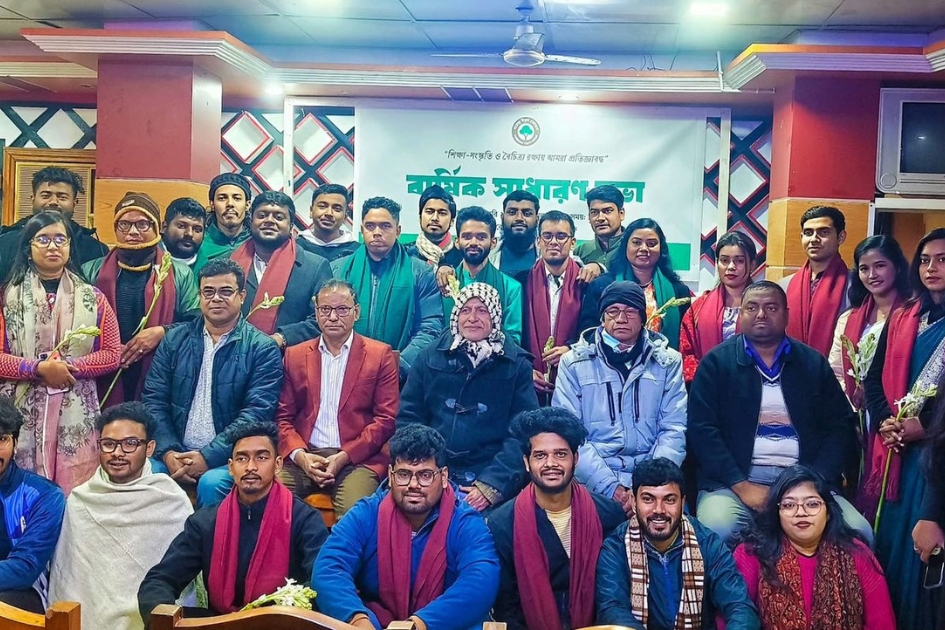



At a Rajshahi meeting, youth groups warned that unplanned development threatens Barind agriculture and biodiversity, urging coordinated government, NGO and volunteer action to protect livelihoods, food security and nature region sustainably.
Youth groups at a meeting in Rajshahi have called for an integrated effort involving government bodies, non-government organisations and volunteer youth groups to protect life, nature and biodiversity, warning that unplanned development is posing serious risks to agriculture and food security.
The call was made at the annual general meeting of the Barendra Youth Forum on Sunday afternoon at SK Food World Restaurant in Rajshahi city. The forum brings together around 46 youth organisations working on environmental protection and sustainable development in the Barind region of northwestern Bangladesh.
Speakers said unplanned industrialisation, infrastructure expansion and the grabbing of arable land are increasingly threatening agriculture, biodiversity and livelihoods, particularly in the drought-prone Barind tract. They stressed that without coordinated action, the long-term food security of the region could be undermined.
The event was supported by the Bangladesh Resource Centre for Indigenous Knowledge, which has been actively involved in organising meetings and initiatives focused on protecting life, nature and indigenous knowledge.
A new 13-member executive committee of the Barendra Youth Forum was formed at the meeting, with Atikur Rahman elected as president and Poly Rani Pramanik as general secretary.
Prof Bidhan Chandra Das, a retired faculty member of the Department of Zoology at Rajshahi University, addressed the meeting as the focal speaker. He highlighted the growing threat of climate change to livelihoods and emphasised the need to expand renewable energy use and ensure sustainable water management.
He also drew attention to the dangers of plastic pollution, noting its harmful impacts on rivers, soil, biodiversity and human health. Prof Das stressed that strong support should be given to farmers to adopt organic farming practices and promote safe vegetable cultivation, which can benefit both public health and farmers’ incomes.
Speakers underlined the importance of community participation, saying initiatives such as dialogues, rallies and tree plantation programmes are urgently needed to build a stronger sense of responsibility towards nature.
In his remarks, Shahidul Islam, regional coordinator of BARCIK, said school, college and university students must be provided with proper knowledge about biodiversity conservation, natural resource protection and climate change so they can actively contribute to environmental protection efforts.
Cultural activist Waliur Rahman Babu and Barendra Youth Forum leaders Sohel Hossain, Salman Farsy, Poly Rani Pramanik and Mukhlesur Rahman also spoke at the meeting, reiterating the need for youth-led, coordinated action to address environmental and climate challenges.




