




Youth volunteers, Indigenous leaders and women responders bridged critical gaps in emergency assistance across flood-hit districts, underscoring the value of locally led humanitarian action and community leadership in an escalating climate crisis.
As floods and landslides killed 51 people and affected more than one million, young volunteers, Indigenous leaders and women responders revealed why locally led humanitarian action matters in a climate crisis.
As devastating floods and landslides swept across southeastern and northeastern Bangladesh, young local responders became among the first to reach communities cut off from emergency assistance.
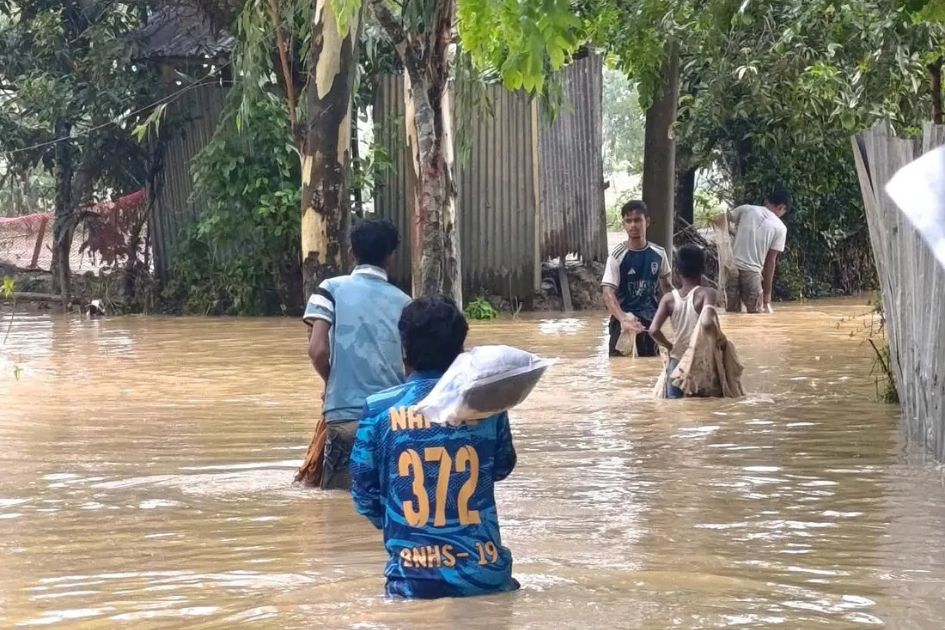
Thousands of families were forced from their homes as floodwaters submerged villages, damaged infrastructure and disrupted access to food, safe drinking water, healthcare and essential services.
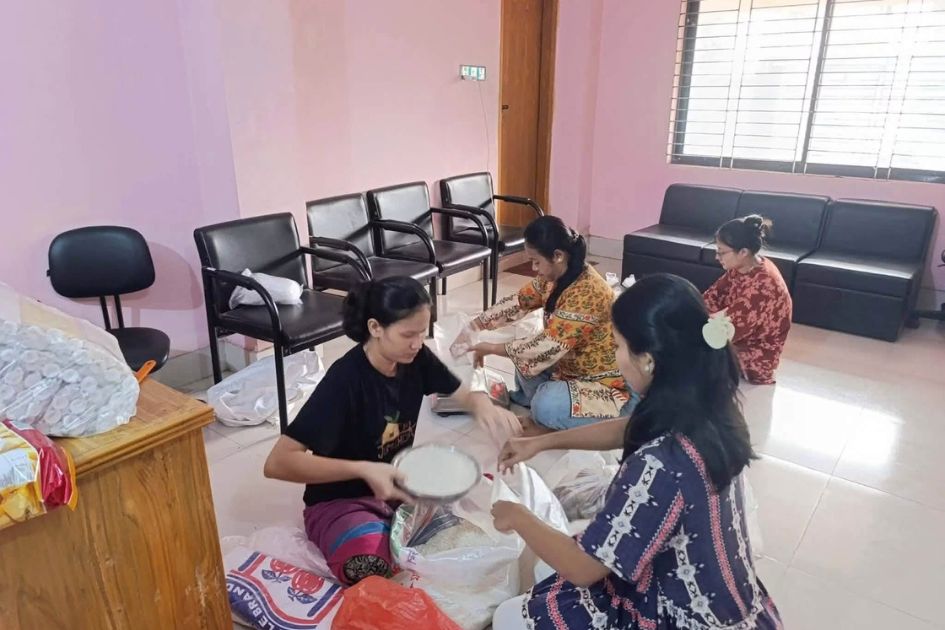
Crossing flooded roads, unstable mountain trails and landslide-prone areas, youth volunteers delivered emergency food, hygiene supplies, medicines and other essential support to families stranded by one of the country’s most severe recent climate disasters.
Their response has highlighted a growing global lesson in humanitarian action: communities living on the frontlines of climate change are not only affected by disasters. They are also among the most capable responders.
Bangladesh, one of the world’s most climate-vulnerable countries despite contributing only a small share of global greenhouse gas emissions, has become a frontline example of how communities adapt to escalating climate risks.
While government agencies, humanitarian organisations and local institutions mobilised across affected areas, youth networks provided critical community-level support, particularly in remote locations where geography, damaged infrastructure and communication challenges created additional barriers.
“Local youth are not an emergency substitute when systems fail. They are an essential part of the humanitarian ecosystem,” said Sohanur Rahman, Executive Coordinator of YouthNet Global. “Their presence, trust and knowledge make disaster response faster, more accountable and more inclusive.”
The latest floods and landslides have affected more than one million people across seven districts, including Khagrachhari, Rangamati, Bandarban, Cox’s Bazar, Chattogram, Moulvibazar and Habiganj.
According to Bangladesh’s Ministry of Disaster Management and Relief, 51 people have died and another 39 have been injured in flood-related incidents. More than 267,000 families remain stranded by floodwaters, while thousands of people have taken refuge in emergency shelters.
For many affected communities, especially those living in remote hill areas, assistance from local responders arrived before wider humanitarian operations could fully reach them.
Four days under plastic sheets: Youth reach a forgotten village
In Lemujhiri, a remote Indigenous Marma village in Bandarban, families spent four days under temporary plastic shelters after floodwaters submerged their homes.
They lost food stocks, household belongings, livestock and access to essential services. Children went days without proper meals, while families struggled to find safe drinking water.
When local youth volunteers reached the village after crossing damaged roads, flooded areas and difficult mountain paths, an elderly Marma resident shared a simple request:
“We do not need much. Just a little rice or cooked food. We adults can remain hungry, but our children need something to eat.”
For the volunteers, the journey was not only about delivering relief packages. It was about reaching families who risked being forgotten because they lived beyond conventional humanitarian access routes.
Across affected districts, similar stories unfolded. Youth volunteers supported evacuations, conducted rapid needs assessments, distributed emergency supplies, supported shelters and connected isolated communities with humanitarian assistance.
Their experience demonstrated an important reality: in climate emergencies, local presence saves lives.
Reaching communities beyond the last mile
Some of the most difficult journeys were also among the most important.
In Dighinala, Khagrachhari, youth volunteers carried emergency supplies through rugged hill tracks after floods and landslides disrupted normal access to communities in Merung Union.
In Banshkhali, Chattogram, local youth responders worked with community partners to provide emergency food packages and safe drinking water to 200 flood-affected families whose access to essential services had been severely disrupted.
“Every district faced different challenges, but one lesson remained the same. Local volunteers reached people because they already knew the communities, understood the terrain and had the trust of local residents,” said Sajjad Hossain, Regional Coordinator of YouthNet Global.
“Disaster response begins with trust, and trust is built long before disasters happen.”
The experience shows why localisation is not only about moving resources closer to affected communities. It is about recognising that communities themselves are leaders in humanitarian action.
The debate reflects a wider global humanitarian movement calling for decision-making power and resources to move closer to affected communities.
Women take the lead in emergency response
Across the flood response, women were not waiting to be asked to lead.
Women volunteers coordinated household assessments, identified vulnerable families, supported women and children in emergency shelters and helped ensure assistance reached communities safely and with dignity.
Among them was Hla Khing Marma Choity, District Coordinator of YouthNet Global in Bandarban and a young Indigenous Marma climate activist.
She coordinated procurement, logistics and last-mile delivery while ensuring emergency support included menstrual hygiene supplies for women and girls.
“Women understand the needs of women because we experience the same challenges during disasters,” she said. “Including menstrual hygiene supplies was not an additional item. It was essential for protecting dignity, health and well-being.”
Her leadership reflects a broader lesson from the disaster: women are not only recipients of humanitarian assistance. They are organisers, decision-makers and community leaders whose participation makes emergency response more inclusive.
Building resilience requires investing in women’s leadership before disasters occur, ensuring women have equal opportunities to shape preparedness, response and recovery.
Indigenous knowledge helps save lives
The floods also exposed the challenges faced by Indigenous communities in the Chittagong Hill Tracts, where landslides damaged roads, disrupted communication networks and isolated villages.
However, Indigenous communities are not only among those most affected by climate disasters. They are also holders of knowledge, traditions and practices that strengthen resilience.
For Indigenous youth volunteers, responding to these communities required more than transporting relief. It required cultural understanding, local knowledge and relationships built over years.
“Our communities know these hills, rivers and forests better than anyone,” said Sing May U Marma, a young Indigenous climate activist from Bandarban. “During disasters, that knowledge helps save lives. But Indigenous communities also need to be included in disaster planning and humanitarian decision-making.”
Joba Tripura, Joint Coordinator of the Chattogram Divisional Caucus of YouthNet Global, said meaningful localisation requires more than delivering resources.
“It is about trusting local people to lead decisions, respecting Indigenous knowledge and ensuring communities shape humanitarian action from the beginning,” she said.
Their leadership challenges a common perception of Indigenous communities as only disaster victims, showing instead their role as knowledge holders, organisers and climate leaders.
More than food: Community kitchens bring hope after floods
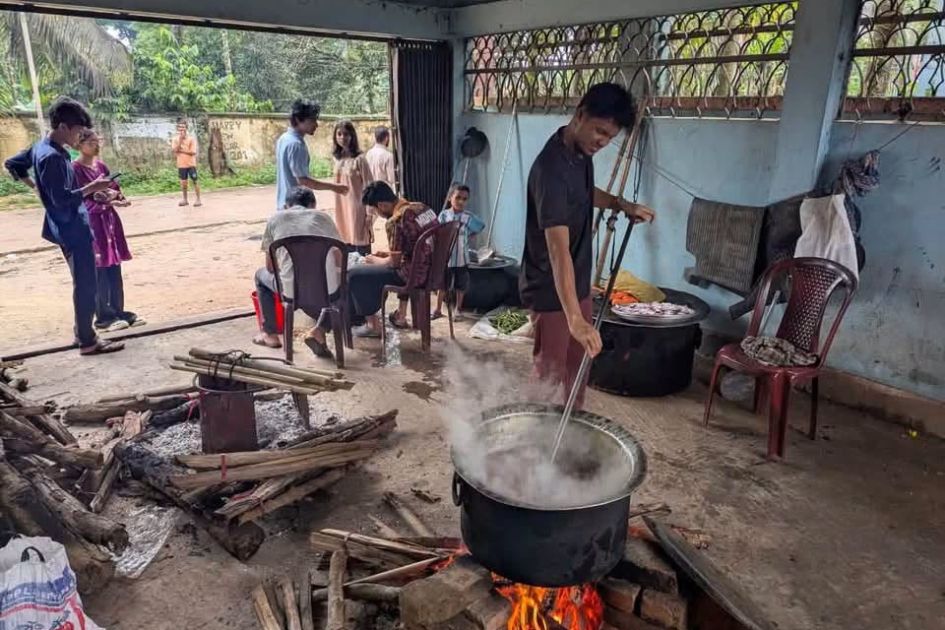
In Rangamati, youth volunteers established a community kitchen inside an emergency shelter where more than 300 displaced people received freshly cooked khichuri, a traditional South Asian meal made with rice, lentils and vegetables.
For many families, it was the first proper meal they had eaten after days of displacement.
The community kitchen became more than a food distribution point. It became a place where families gathered, exchanged information and supported one another during uncertainty.
“A warm meal is more than food. During a crisis, it reminds displaced families that they are seen, valued and not alone,” said Ayman Ur Rahman Tanvir, Divisional Coordinator of YouthNet Global in Chattogram.
“Humanitarian response should nourish both people and hope.”
The initiative demonstrated that effective humanitarian action is strongest when communities are not only recipients of assistance but active partners in designing solutions.
Information becomes a lifeline during crisis
Food, water, shelter and medicine are essential during emergencies.
So is information.
Across flood-affected districts, youth volunteers documented urgent needs, verified information from communities and supported coordination between local responders and humanitarian actors.
In Cox’s Bazar, where heavy rainfall affected both host communities and Rohingya refugee camps, youth responders supported community-level assessments and documented priority needs.
“Disasters create an information emergency as well as a humanitarian emergency,” said Asif Ahmad Udoy, Coordinator of the Communication, Media and Creative Wing of YouthNet Global.
“Our role was to document community needs, verify information from the ground and ensure affected people’s voices informed humanitarian decisions.”
Reliable information helps reduce misinformation, prevent duplication of assistance and ensure vulnerable households are not overlooked.
Climate change is a justice crisis
The floods and landslides are part of a wider pattern of increasingly intense climate-related disasters affecting Bangladesh and other climate-vulnerable countries.
Although Bangladesh contributes little to global emissions, communities across the country continue to experience some of the harshest consequences of climate change.
Indigenous Peoples, women, children, farmers, fishing communities and low-income households often experience the greatest impacts despite contributing least to the crisis.
For these communities, climate change is not a future concern. It is already affecting homes, livelihoods, food security and access to essential services.
The disaster reinforces a central debate in global climate discussions: communities experiencing the worst impacts of climate change must have greater control over decisions, resources and solutions designed to protect them.
The missing piece in disaster response: Local youth leadership
The floods revealed a major gap in humanitarian systems.
Young people repeatedly serve as first responders, yet they often remain excluded from disaster planning, decision-making structures and direct humanitarian financing.
Government agencies remain central to Bangladesh’s disaster management system, providing national coordination, public services and emergency leadership.
Humanitarian organisations provide technical expertise, logistics and operational capacity.
Local youth organisations contribute something equally valuable: trusted relationships, speed, cultural understanding, local knowledge and long-term community presence.
“Because volunteers were already in affected communities, support could begin immediately while larger humanitarian operations were still mobilising,” said Mohiminul Islam Zipat, who coordinated emergency response across youth teams.
“Local coordination saves time, strengthens accountability and helps ensure assistance reaches those who need it most.”
Supporting local responders is not only an issue of inclusion. It is also a smart investment.
Local organisations can reduce response time, improve targeting, strengthen accountability and help humanitarian resources reach communities more effectively.
A stronger localisation approach requires:
- meaningful inclusion of youth representatives in disaster management structures;
- direct and flexible funding for youth-led humanitarian organisations;
- investment in youth capacity, safeguarding and operational readiness;
- recognition of community volunteers as humanitarian actors;
- stronger partnerships between governments, humanitarian agencies and local organisations.
The future of humanitarian action is local
The floodwaters will eventually recede. Roads will reopen. Schools will resume.
But for thousands of families rebuilding homes, restoring livelihoods and recovering from trauma, the hardest work will continue.
The recent disaster response demonstrated that locally led humanitarian action is not an aspiration for the future. It is already happening.
From reaching Indigenous communities in Bandarban to preparing meals in Rangamati and supporting affected families across multiple districts, young responders have shown their ability to lead during crises.
“Bangladesh’s next disaster is not a question of if, but when. The time has come to recognise, trust and invest in youth-led, women-led, Indigenous-led and community-led organisations as equal partners in building a climate-resilient and just future,” concluded Sohanur Rahman.




