




Locals allege natural canals and drainage routes were altered or blocked; company says unusually heavy rainfall caused the flooding
Residents accuse the steel plant of altering natural drainage and worsening monsoon flooding, while the company blames exceptionally heavy rainfall and denies responsibility for the waterlogging.
More than 200 homes have been flooded by rainwater and runoff from nearby hills in the Sonaichhari area of Sitakunda upazila in Chattogram in Bangladesh with local residents blaming the operations of Abul Khair Steel’s factory in Sitakunda for worsening the disaster.
Residents allege that the company altered the courses of natural canals and streams and blocked drainage channels around its industrial complex, causing water from the hills to flow directly into nearby communities.
Abul Khair Steel, one of Bangladesh’s largest steel manufacturers and the producer of AKS-branded products, rejected the allegations, saying the flooding was caused by excessive rainfall that inundated several parts of Chattogram, including sections of its own factory premises.
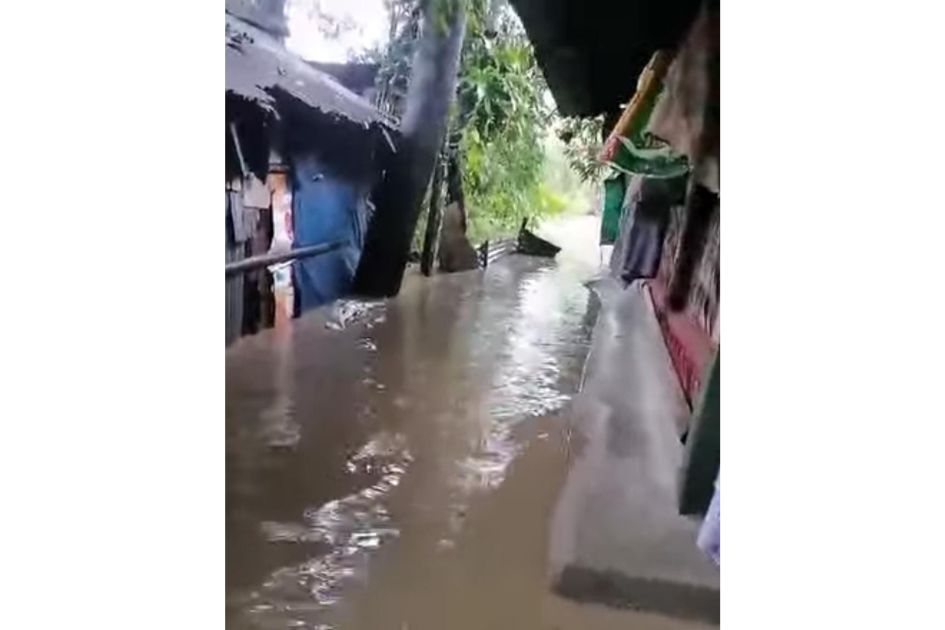
Several hundred residents staged a demonstration at the main entrance to the steel plant at around 7:00am on Sunday, July 12, demanding the immediate drainage of floodwater and repairs to a severely damaged local road.
The protesters erected a barricade, temporarily halting the movement of vehicles to and from the factory. They later withdrew the blockade after senior company officials promised to address the waterlogging and repair the road.
Waist-deep water inside homes
Local residents said overnight rainfall and runoff from the surrounding hills swept into the Sonaichhari and Khamarbari villages on Saturday night.
From Bagula Bazar to the Khamarbari area, more than 200 houses belonging to around 150 families were submerged, according to residents.
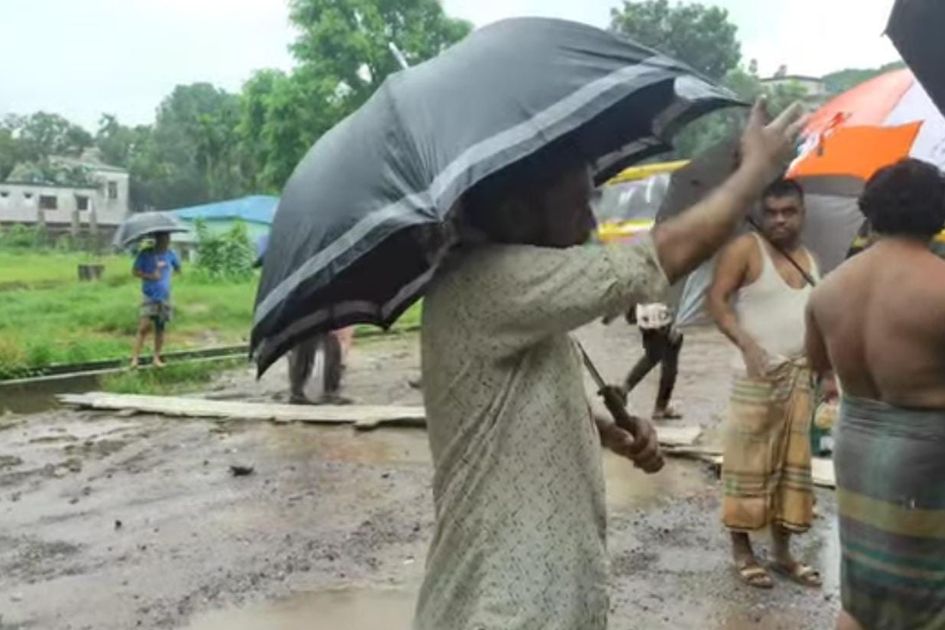
Along with local more 50 families in a nearby Tripura Indigenous settlement were also affected, alleged the residents.
Water reportedly rose to waist level inside many homes, damaging furniture, food supplies and household belongings. Kitchens and cooking stoves were submerged, leaving many families unable to prepare meals.

Some residents said they had remained trapped inside their homes without cooked food since Saturday night. Movement in and out of the neighbourhoods was severely restricted by floodwater and thick mud.
Residents allege canal diversion
Local resident Md Titu alleged that a government-owned canal once flowed along the eastern and southern sides of the railway line but was diverted during the expansion of the Abul Khair industrial complex.
“There was a government canal to the east and south of the railway line. But when Abul Khair Steel Plant expanded its factory, the course of the canal was changed. Even the villagers do not know where it was diverted,” he said.
“The Bagula Bazar canal has virtually been occupied. This area did not experience flooding like this in previous years but this time the entire village has gone under water.”
Expressing frustration, he added: “In the name of industry, Abul Khair has become a curse for us. We now feel like tenants in our own village while the company behaves like the landlord.”
Residents also claimed that drainage channels previously used to remove rainwater had been filled with earth or blocked to facilitate factory operations.
Several residents alleged that water accumulated inside a large open area of the factory was released towards the communities on Saturday night, further worsening the situation.
The Climate Watch could not independently verify the claim. A technical investigation by the relevant government agencies would be required to determine the precise source and direction of the floodwater.
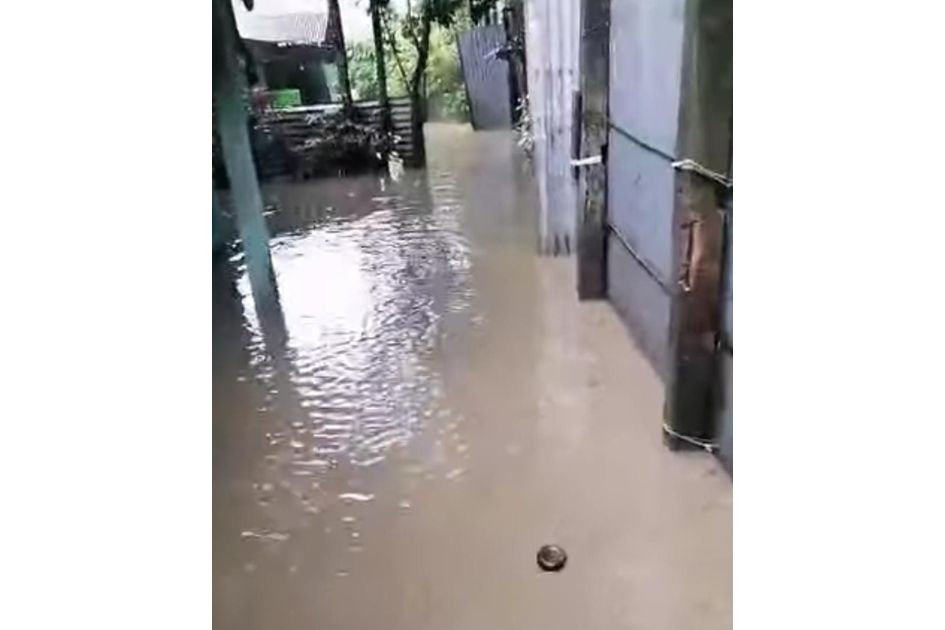
Locals call it a ‘man-made flood’
Residents described the situation as a “man-made flood”, arguing that the water could have drained away more quickly had the natural canals, streams and drainage routes remained open.
Another resident, Md Rubel, said the company’s decisions had made life increasingly difficult for nearby communities.
“We suffer from pollution during the dry season and flooding during the monsoon,” he said. “The factory, which was established after taking over land, has now become a major curse for local people.”
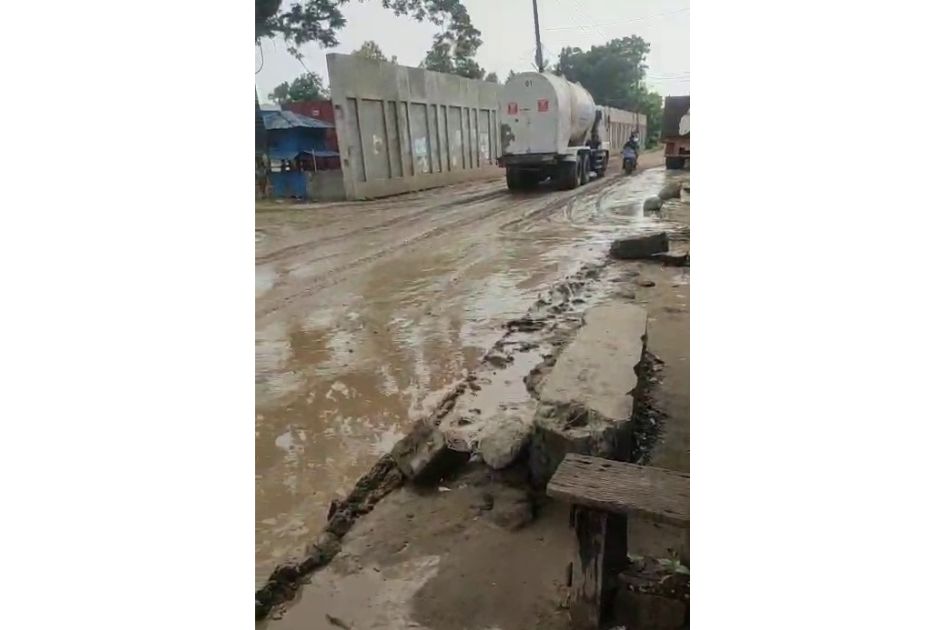
Residents said the main access road in front of the factory had also become almost impassable.
The continuous movement of heavy trucks and lorries had created deep layers of mud, reaching nearly two feet in some places, they claimed. The rain made the road even more dangerous for pedestrians, schoolchildren and local commuters.
Residents block factory entrance
After days of frustration over the road conditions and the latest flooding, residents placed barricades on the factory access road early on Sunday.
The protest temporarily brought the movement of factory vehicles to a standstill.
Demonstrators alleged that they had repeatedly informed company officials about the drainage and road problems but had received no effective response.
Senior officials of Abul Khair Steel plant later arrived at the scene and held discussions with the protesters.
Residents removed the barricade after the officials promised to drain the floodwater and repair the damaged road as quickly as possible.
The protesters warned that they would announce tougher programmes unless a permanent solution was implemented.
Long-running disputes over land and environment
Several residents, speaking on condition of anonymity, alleged that environmental and land-related disputes had continued since the factory was established in the Sonaichhari area around three decades ago.
They claimed that hills had been cut, natural streams diverted and ponds and other water bodies filled during the expansion of the industrial complex.
Residents also raised allegations involving private land, access roads, environmental pollution and the rights of Indigenous Tripura communities living within and around the factory area.
They alleged that people in one Tripura settlement located inside the industrial area faced restrictions on movement and pressure to provide unpaid labour.
The Climate Watch could not independently verify these allegations through land records, court documents, environmental clearance papers or official investigation reports.
Abul Khair Steel Plant broadly denied the accusations.
Residents present 15-point list of demands
People living in wards 5, 6 and 7 of Sonaichhari union said they had repeatedly submitted a 15-point list of demands to Abul Khair Steel Plant.
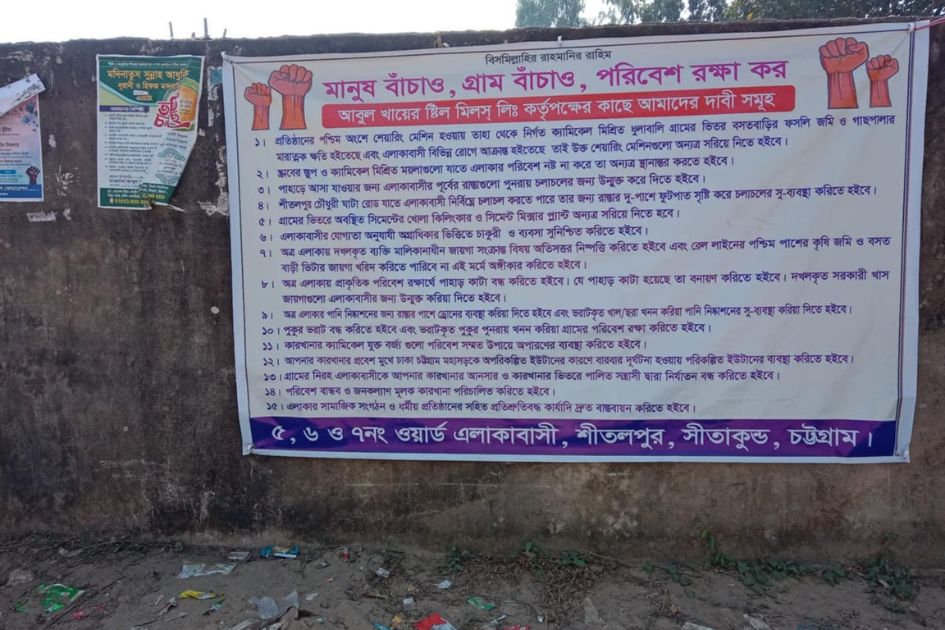
They have also printed the demands on banners and displayed them on walls in the area.
Their demands include relocating machinery that allegedly releases chemical-laden dust into homes and farmland, removing scrap and chemical waste from residential areas and reopening traditional roads used by villagers to reach the hills.
They have also demanded the construction of footpaths along the Shitalpur-Chowdhury Ghata road, the relocation of open clinker and cement-mixing facilities and priority for local residents in employment and business opportunities.
Other demands include the settlement of disputes involving privately owned land, a commitment not to purchase additional farmland or homesteads west of the railway line and an end to hill cutting.
Residents also want trees planted on previously cut hills and government-owned land allegedly occupied by the company reopened for public use.
A major demand is the restoration of the area’s natural drainage system through the construction of roadside drains and the excavation of filled canals and streams.
The residents have also called for an end to pond filling, the restoration of previously filled ponds, environmentally safe disposal of chemical waste and the construction of a properly planned U-turn at the factory entrance on the Dhaka-Chattogram highway.
They have further demanded an end to the alleged harassment of villagers and the implementation of commitments previously made to local social and religious organisations.
Written complaint submitted to local administration
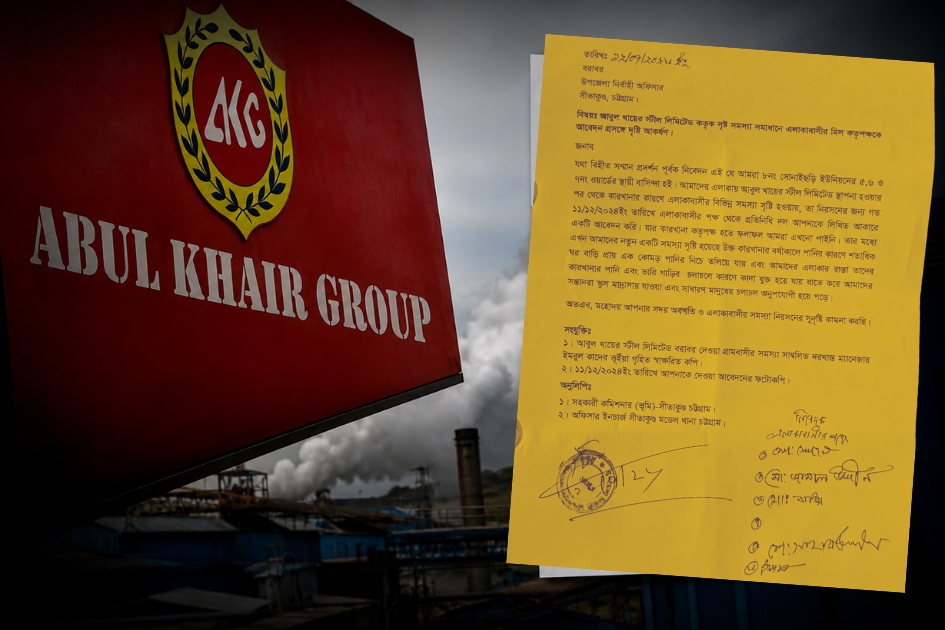
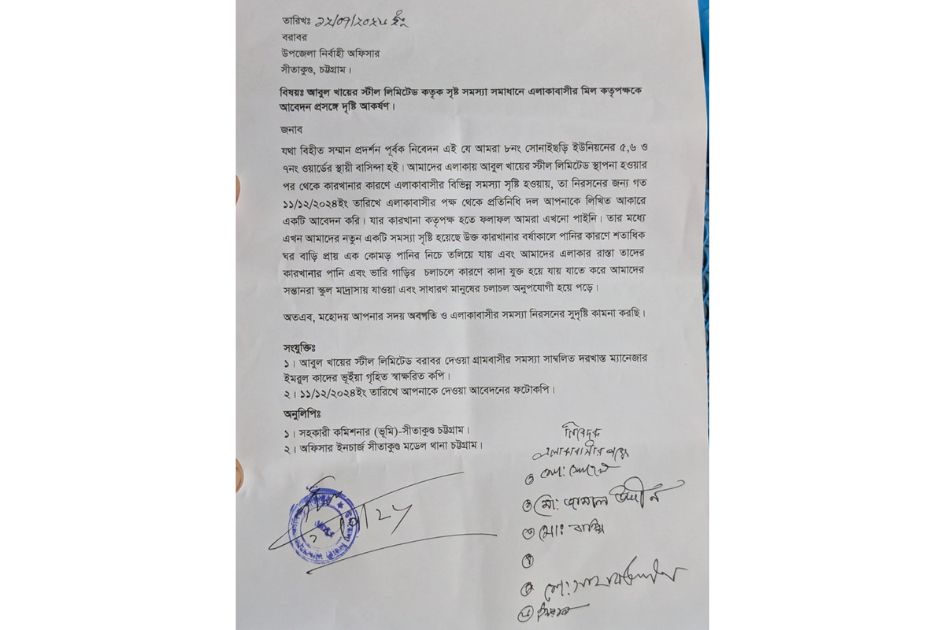
Residents said they submitted a formal written complaint to the Sitakunda Upazila Nirbahi Officer, the chief administrative officer of the subdistrict, with copies sent to the assistant commissioner (land) and the officer-in-charge of Sitakunda Model Police Station.
The complaint states that residents of wards 5, 6 and 7 have faced various problems since the establishment of the factory.
According to the letter, a community delegation submitted an earlier application on December 11, 2024, seeking solutions to environmental, drainage and access problems but received no effective response.
The latest complaint says more than 100 homes are submerged to waist level during the monsoon and that water from the factory and the movement of heavy vehicles turn local roads into muddy and unusable routes.
It adds that children face difficulties travelling to schools and madrasas while ordinary residents struggle to move through the area.
Residents said they attached two documents to the complaint: a copy of an application submitted to Abul Khair Steel Plant and received by company manager Imrul Kayes Bhuiyan and a photocopy of the application submitted to the upazila administration on December 11, 2024.
They claimed the office of the Sitakunda Upazila Nirbahi Officer officially received and stamped the latest complaint on Sunday.
Sitakunda Upazila Nirbahi Officer Fakhrul Islam, the chief administrative officer of the subdistrict, however, said he was unaware of the complaint.
“We have not yet received any complaint about this problem,” he said. “We have no knowledge of any letter submitted by the residents.”
‘This is not a man-made flood’: company
Asked about the allegations, Abul Khair Steel Plant Deputy General Manager Imrul Kayes Bhuiyan denied that the factory was responsible for the flooding.
“Different areas of Chattogram have been flooded because of excessive rainfall. In the same way, some places in front of our factory in Sonaichhari have also been flooded,” he said.
“This is not a man-made flood caused by Abul Khair Steel Plant.”
He said parts of the factory had also gone under water.
“Many areas inside our factory were flooded as well. We saw the situation after waking up in the morning,” he added.
The company official did not provide separate explanations regarding the specific allegations of canal diversion, blocked drains, pond filling or the alleged release of water from inside the factory towards nearby communities.
However, Sitakunda Upazila Nirbahi Officer Fakhrul Islam later told The Climate Watch, “We are sending a team to the spot. If it is found to have been caused by Abul Khair’s factory, necessary action will be taken.”




