




Illegal deer traps remain a major conservation challenge in the Sundarbans, where shrinking prey and poaching continue to put Bengal tigers at risk.
An 11-year-old Bengal tigress returned to the Sundarbans on Sunday after six months in captivity, marking what officials and conservationists described as a successful first operation in tiger conservation by Bangladesh’s Forest Department while highlighting the continuing threat posed by illegal deer traps in the world’s largest mangrove forest.
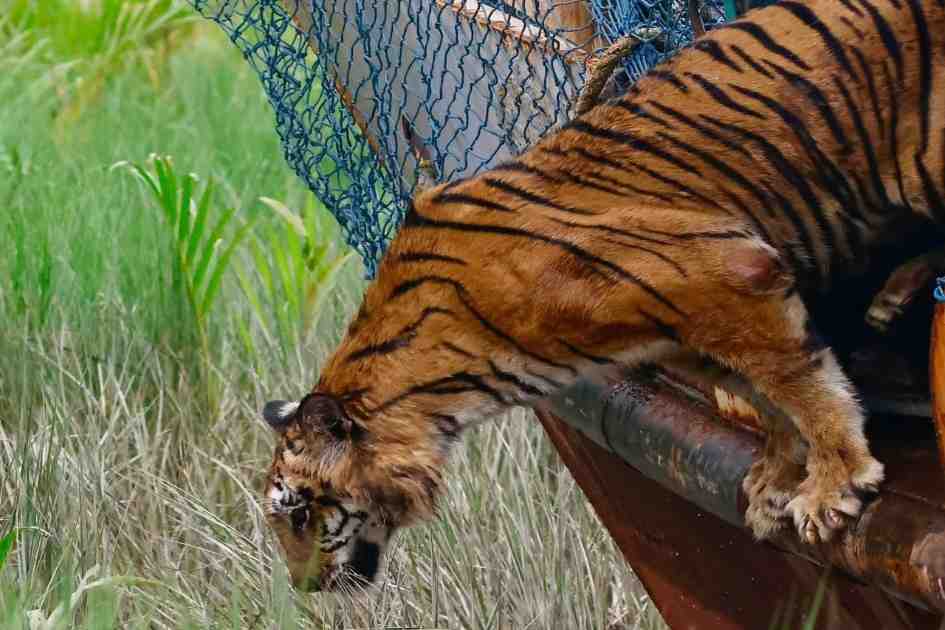
The tigress was released at noon on 12 July on the bank of the Shela River in Andharmanik. As the sliding door of a 10 feet by 6 feet green steel box was lifted, a crowd waited in silence with mobile phones raised to record the moment.
For several moments, nothing happened. Then the tigress’s head appeared. Its ears were cocked backwards in stress and it looked straight at the crowd with a tired expression, after being immobilised the previous night and regaining consciousness only a few hours earlier.
The animal then turned around, its tail hanging from the box as it refused to step out. After an hour’s effort, including repeated banging on the box, it finally rose and looked out at the green mangrove forest where it had lived for 11 years.
In slow motion, it jumped to freedom and walked back into the forest.
The tigress had been found six months earlier near Sharkir Khal, a village by a narrow canal once connected with the Baleswar River.
As the tigress disappeared into the Sundarbans today, those present silently prayed for its survival.




