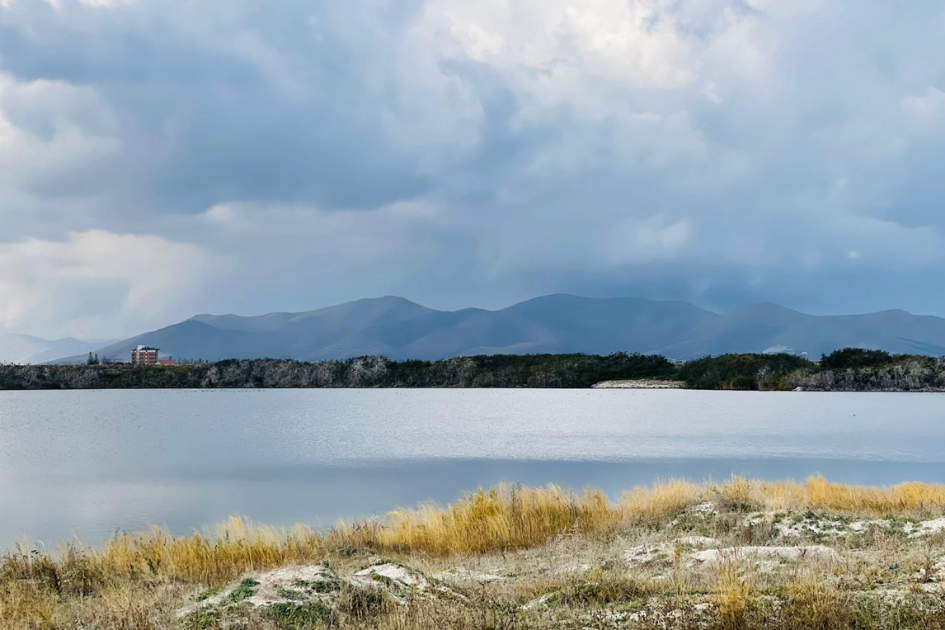



Armenia’s Lake Sevan restoration highlights the challenges of balancing biodiversity protection with traditional livelihoods, as new funding and community-led initiatives seek to secure the lake’s future.
New biodiversity funding and wastewater investment offer hope for Armenia’s largest lake. But lasting recovery will depend on whether local communities can protect nature while securing their livelihoods.
Armenian gulls have gradually returned to breeding sites along the shores of Lake Sevan after an absence of nearly five decades. Their return offers a hopeful sign for one of Armenia’s most important natural ecosystems. But for the fishing families who have depended on the lake for generations, its recovery raises a more immediate question: how can nature be protected without taking away people’s livelihoods?
The birds began returning around 2010–2011 following efforts to restore their habitat, according to ornithologist Luba Balyan. But their return does not necessarily mean the lake itself is recovering. Pollution, unsustainable fishing and growing tourism pressures continue to threaten its ecological health.
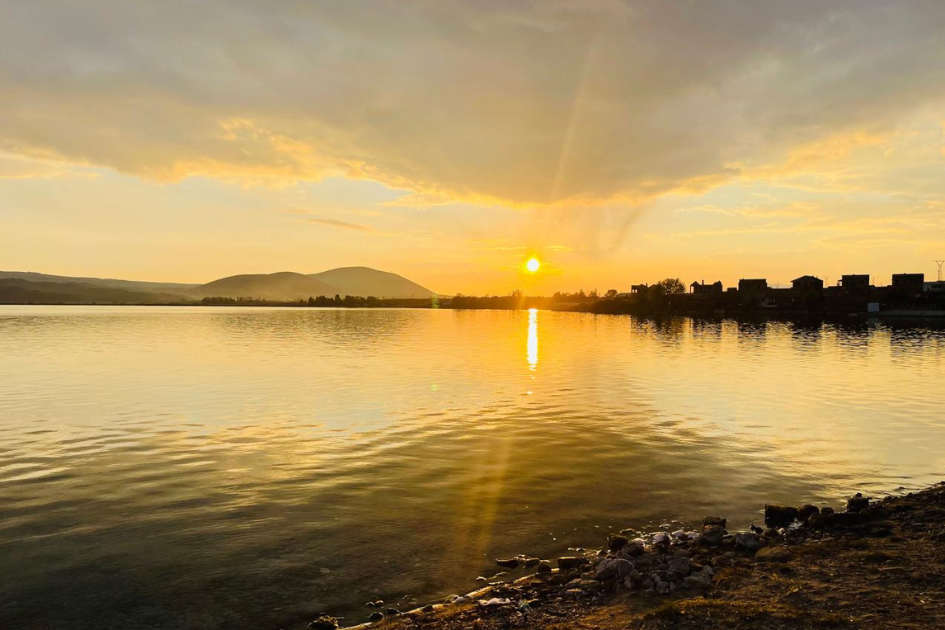
At Norashen Reserve, part of Sevan National Park, Balyan watches the birds that have become a source of national pride. She works with Armenia’s Scientific Center of Zoology and Hydro Ecology and has followed the recovery of the Armenian gull population. She says their numbers have increased since their return.
The reserve offers a glimpse of what habitat protection can achieve. Yet the wider challenge is more complex. Lake Sevan is not only an important ecosystem. It is also a source of food, income and cultural identity for communities that have depended on its resources for generations.
For fishing families, the lake’s ecological recovery is inseparable from their economic survival. Protecting fish populations and restoring habitats are essential, but conservation measures can also affect households whose livelihoods depend on fishing.
That relationship was visible during a field visit to the lake on 25 October, organised as part of the Nature and Culture Summit alongside the 17th Conference of the Parties to the Convention on Biological Diversity (COP17) in Yerevan.
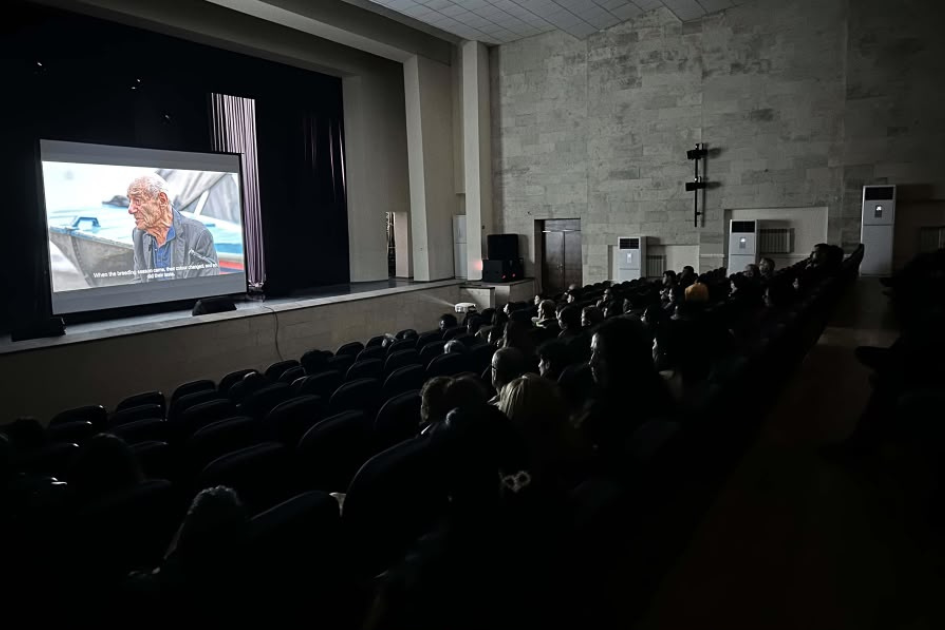
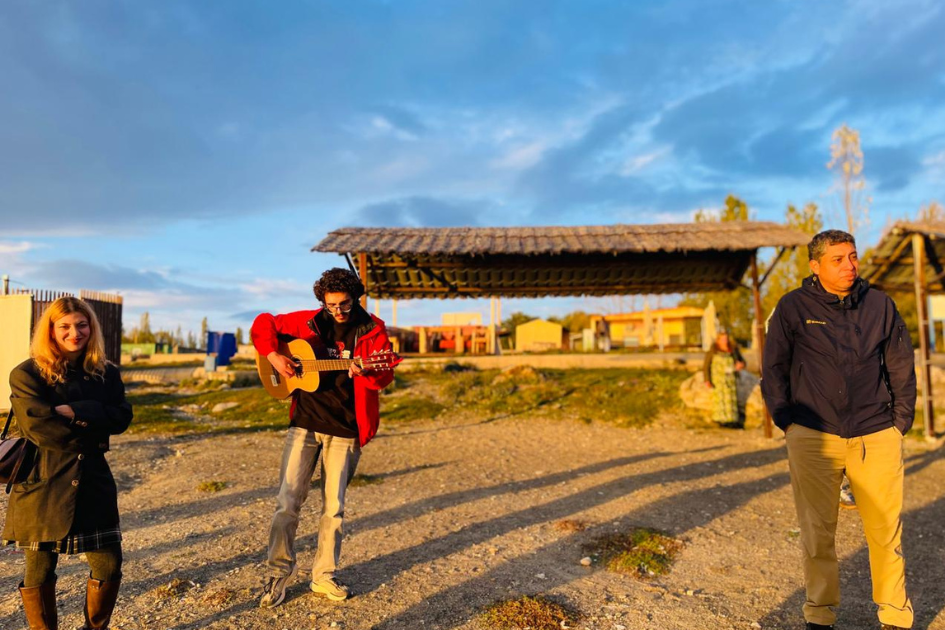
Delegates visited Norashen Reserve and Sevan Botanical Garden, met local fishermen and watched Memory of Sevan: Fishing Culture, a documentory exploring the connection between the lake and the people who live beside it.
At the exhibition area in the city of Sevan, participants explored the work and products of local artists and creators. The Development and Preservation of Armenian Culinary Traditions NGO presented Armenia’s culinary heritage through a live demonstration of a traditional dish.
The programme continued at the Sevan Cultural Centre with a screening of the documentary *People of the Lake: Sevan’s Fishermen*.
Produced by the Sevan Youth Club NGO with support from the Ministry of Education, Science, Culture and Sport of the Republic of Armenia, the film explores Sevan’s fishing culture, fishermen’s memories and their connection with the lake. The screening was followed by a discussion with the film’s protagonists and concluded with a concert by the GAMMA Band.
The day’s cultural programme continued at the Bohem art studio and tea house, where participants tasted Sevan Tea, made from local plant species, and took part in a creative workshop.
Beyond the cultural activities, the visit raised a question central to the future of conservation: can biodiversity be protected without undermining the livelihoods of those who depend on it?
A fresh investment in Armenia’s crown jewel
Situated at around 1,900 metres above sea level, Lake Sevan is the largest freshwater lake in the South Caucasus and a vital natural resource for Armenia.
Its ecological health faces pressure from overfishing, illegal fishing, waste disposal, uncontrolled tourism, pollution and changes in water levels. Armenia’s environmental monitoring data recorded the lake’s surface area at 1,279.27 square kilometres on 19 October 2026. The area changes with fluctuations in water levels.
A new grant is expected to support restoration efforts. The Global Environment Facility (GEF), through the Global Biodiversity Framework Fund (GBFF), has approved approximately US$1.4 million for a project supporting the recovery of Lake Sevan.
Developed by Armenia’s Ministry of Environment with support from the Asian Development Bank (ADB), the project includes around US$300,000 earmarked for local initiatives combining biodiversity conservation with sustainable income opportunities.
“Lake Sevan is special to us. It’s a crown jewel for Armenia, the biggest freshwater reservoir in the region,” Armenian Environment Minister and COP17 President Hambardzum Matevosyan said while discussing the investment.
“When we had an opportunity, we decided to ask for funds for restoring Lake Sevan,” he added.
The project is expected to support communities in Gegharkunik and Vayots Dzor provinces, including Martuni, Vardenis, Chambarak, Yeghegis, Vayk and Jermuk. Project information indicates that around 66,000 people are expected to benefit directly by 2028.
Planned activities include improved management of grasslands, farmland and forests, stronger ecological connections between habitats, community initiatives, and training and equipment for conservation personnel. These efforts are intended to help protect species such as the endemic Sevan trout and the Armenian gull.
Local monitoring and enforcement are also part of the response. Eco Patrol teams work to identify illegal fishing and hunting, which remain concerns for the lake’s ecosystem.
But funding for community initiatives raises a crucial question: who will be able to access the money, and how much influence will local people have over the decisions?
The project’s success will depend partly on transparent selection processes, accessible funding arrangements and meaningful participation by local organisations and residents. Women, young people, small-scale fishers and economically vulnerable households should have opportunities not only to benefit from the initiatives but also to help design, implement and monitor them.
Community participation should extend beyond consultations after decisions have already been made. People who understand the lake through generations of experience need a meaningful role in determining conservation priorities, managing resources and deciding how benefits are distributed.
Local communities should not be treated simply as beneficiaries of biodiversity projects. Their knowledge, rights and leadership should be recognised as essential to conservation itself.
The approval of the grant is an important step, but it should not be confused with money already disbursed or benefits already delivered. Its real value will depend on whether resources reach communities and support lasting changes on the ground.
One lake, three investments
The GEF grant is part of a wider set of initiatives aimed at improving Lake Sevan’s ecological condition. Three funding streams are particularly relevant, although their financial status and scope differ.
At COP17, the Armenian government presented an ADB-supported investment programme under development, with an estimated value exceeding US$250 million. The proposed programme aims to reduce pollution, improve water quality and strengthen the lake’s ecological resilience.
This is an investment programme under development, not a confirmed package of funding that has already been fully approved or disbursed.
Separately, GEF project documentation refers to a potential ADB follow-on investment of approximately US$100–120 million. That figure remains subject to further consultations with the Armenian government, due diligence, resource availability and applicable approvals.
It should not be treated as an additional confirmed commitment or added to the larger programme figure. The relationship between the two estimates and their respective scopes requires further clarification.
The proposed wastewater improvements are particularly important. ADB pre-feasibility work has identified treatment plant upgrades in Gavar, Martuni and Vardenis as priorities for an initial phase. The proposed improvements would move existing facilities towards biological treatment and strengthen sewer networks.
These upgrades have not yet been completed. Their importance lies in addressing a source of pressure on the lake before pollution causes further damage.
Inadequately treated wastewater can introduce pollutants into freshwater ecosystems, affecting water quality, aquatic habitats and the species that depend on them. Nutrient pollution can also contribute to ecological imbalances and damage the conditions needed to sustain aquatic life.
Better sanitation and wastewater treatment are therefore not simply municipal development priorities. They are essential components of freshwater biodiversity protection.
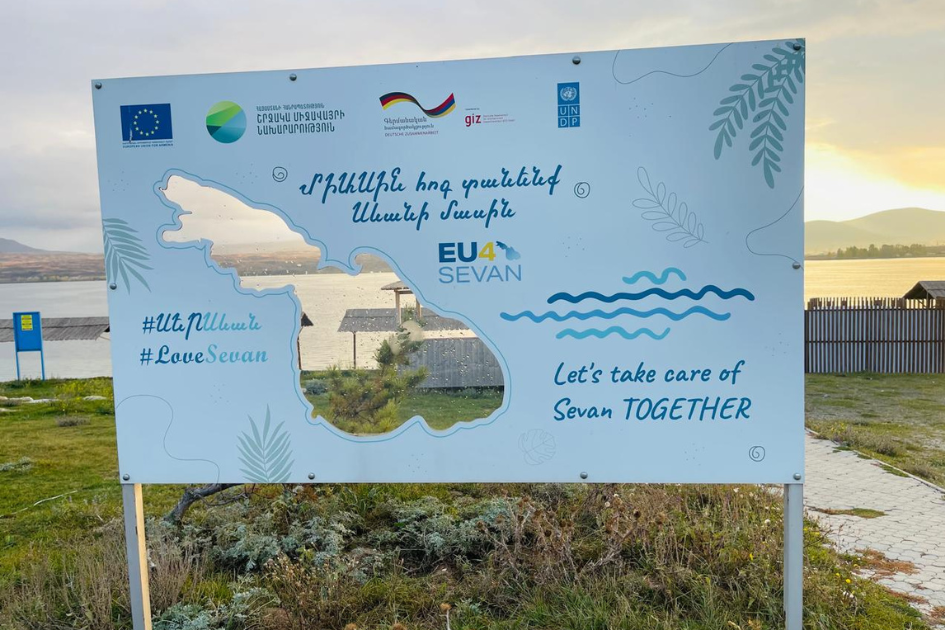
A separate European Union-supported initiative is also contributing to restoration efforts. The project, ‘EU4Biodiversity in Sevan: Enhancing Lake Sevan Ecosystem Restoration’, has a budget of €1.53 million and is being implemented by the United Nations Development Programme (UNDP) in partnership with Armenia’s Ministry of Environment.
The project period runs from 15 May 2026 to 14 May 2029. Its public launch took place in Yerevan on 22 October during COP17. The initiative focuses on strengthening institutional capacity, improving biodiversity monitoring and reporting, supporting ecosystem restoration and fisheries management, and developing sustainable financing approaches.
Together, these initiatives address different but connected challenges. The GEF-supported project focuses on restoration and community initiatives, the proposed ADB investment addresses major infrastructure and pollution concerns, and the EU-supported project aims to strengthen institutional capacity and biodiversity management.
The scale of funding announced during COP17 was also significant beyond Armenia. The conference saw announcements of nearly US$2 billion in new biodiversity funding, reflecting growing international attention to the financial gap facing nature conservation.
But the effectiveness of biodiversity finance cannot be measured by announcements alone. The quality of its delivery matters just as much. Funding must be accessible to local organisations and communities, with transparent procedures, adequate resources and accountability for results.
COP17 also adopted the operating arrangements for a new permanent subsidiary body under Article 8(j) of the Convention on Biological Diversity. The outcome, associated with the Sevan Guidelines, concerns the participation of Indigenous Peoples and local communities, including recognition of their traditional knowledge and contributions to biodiversity decisions. The guidelines are not technical instructions for managing Lake Sevan.
The decision adds a wider policy dimension to the conference’s outcomes. Biodiversity protection requires not only financial resources and stronger institutions, but also recognition of the knowledge, rights and leadership of the people who live closest to nature.
The challenge is to translate these international commitments into practical changes: accessible funding, stronger local representation and meaningful community influence over conservation decisions.
“You need to offer an alternative”
For communities around Lake Sevan, conservation rules can have immediate economic consequences.
Satik Badeyan, president of the Centre for Territorial Development and Research, an organisation involved in restoration work, says illegal fishing remains a concern, particularly during seasonal restrictions intended to protect fish during breeding periods.
But she argues that enforcement alone cannot solve the problem.
“If you tell someone, ‘Don’t catch fish,’ it doesn’t work because fishing has been their main occupation and only source of income for centuries. You need to offer an alternative if you want to protect nature,” she said.
Her argument goes beyond fishing regulations. For generations, families around the lake have depended on fishing as a source of food, income and cultural identity. Restrictions that do not consider these realities risk placing the burden of conservation on people with few other economic options.
Badeyan believes communities need opportunities to develop alternative livelihoods while remaining part of decisions about the lake’s future.
Around Norashen, ecotourism and biodiversity-friendly activities are among the options being explored. Deputy Environment Minister Aram Meymaryan has also highlighted the importance of connecting conservation with benefits for local communities.
In Tsovagyugh, a community-designed glamping initiative offers one example of how tourism can be linked to local culture and livelihoods.
Activities include cycling, food prepared by local women, opportunities to learn about the lake’s history and fishing culture, events at youth centres and locally made souvenirs.
The initiative aims to give visitors a deeper understanding of the community and its relationship with the lake, rather than presenting the area only as a scenic destination.
“Visitors can see us as a community and the value of the lake beyond its beauty or photogenic appeal,” Badeyan said.
The initiative illustrates how local culture and environmental protection can become part of a broader livelihood strategy. However, its long-term contribution will depend on whether residents retain ownership, receive a fair share of the income and have a say in how tourism develops.
For conservation to be equitable, alternative livelihoods must be developed with communities rather than simply offered as replacements for traditional occupations.
Fishing families need the opportunity to identify what works in their local context. They should be involved in designing livelihood programmes, deciding how support is delivered and evaluating whether the alternatives are economically viable.
A transition that protects biodiversity but leaves fishing households without secure incomes cannot be considered a just or sustainable solution.
Ecotourism is not a free pass
Tourism is not automatically sustainable. Without environmental safeguards, visitor activities can create additional pressure on fragile ecosystems through waste, construction, transport and increased demand for natural resources.
For ecotourism to contribute to conservation, it must respect the lake’s ecological limits. Local people must also have meaningful control over activities and a fair share of the income they generate.
Karina Bruchyan, from Chambarak and a member of a family connected to fishing, offers another example of how alternative livelihoods can take shape.
After receiving training and support, she started beekeeping. She now sells honey in local markets and through the ecotourism centre in Tsovagyugh.
Her experience illustrates one way families can diversify their income while remaining connected to their communities. Beekeeping will not be a suitable alternative for every fishing-dependent household, but it demonstrates the potential of locally adapted economic opportunities.
Other support initiatives include improving irrigation, providing water for livestock and developing forest nurseries. These activities connect environmental restoration with everyday rural needs.
The challenge is to ensure that such opportunities are economically viable, accessible to vulnerable households and supported beyond the short term.
Individual success stories should not be treated as evidence that all fishing-dependent households have benefited. The wider impact of these initiatives needs to be assessed through household incomes, access to opportunities, community participation, distribution of benefits and the long-term condition of the ecosystem.
The experiences of Badeyan and Bruchyan illustrate the potential of community-led approaches, but they also point to the importance of choice. Different households will have different skills, resources and priorities. Alternative livelihoods must reflect those differences rather than impose a single model of economic development.
Ultimately, conservation and livelihood security should reinforce each other rather than compete.
Young people imagine Lake Sevan in 2050
The future of Lake Sevan is also a concern for a younger generation.
The Youth Vision for Lake Sevan 2050 initiative brought together 142 schoolchildren aged 13 to 16 from Sevan, Gavar, Martuni, Vardenis and Chambarak. Through proposals and creative work, they explored how they would like to see the lake and its surrounding environment in the coming decades.
Fifty selected artworks were displayed in the Green Zone of COP17 on 19 October.
The initiative offered young people an opportunity to express their understanding of biodiversity and imagine the future of a natural resource that will shape their lives.
But environmental education should go beyond raising awareness. Young people should not only be encouraged to imagine what Lake Sevan might look like in 2050. They should also have opportunities to influence the decisions being made today.
Their participation needs to extend beyond exhibitions, competitions and awareness campaigns. Young people should have meaningful opportunities to contribute to local conservation planning, engage with public institutions, participate in monitoring and hold decision-makers accountable for commitments affecting their future.
Schools, youth organisations and local authorities can help create lasting opportunities for young people to contribute to biodiversity action and community-level environmental decision-making.
The question for policymakers is whether the generation imagining the lake’s future will also have a meaningful role in shaping the policies and investments that determine it.
A lesson beyond Armenia
For a visiting journalist from Bangladesh, Lake Sevan’s story carries lessons that extend beyond Armenia.
In Bangladesh, rivers, wetlands and coastal ecosystems are closely connected to food security, fishing, agriculture, transport and household incomes. The ecological conditions are different from those of a high-altitude freshwater lake, but the relationship between natural resources and local livelihoods is familiar.
Community-based wetland stewardship initiatives, including Re-WET in Dhaka, demonstrate the importance of local ownership, trust and shared responsibility in protecting ecosystems.
The comparison is not that Bangladesh and Armenia face identical ecological challenges. Rather, both experiences point to a common principle: conservation is more likely to endure when local people are recognised as partners, with the knowledge, authority and resources to help protect the ecosystems on which they depend.
This is particularly important in countries facing climate vulnerability, pressure on natural resources and economic insecurity. Conservation approaches that overlook livelihoods can deepen inequality and weaken community support.
The experience of Lake Sevan also raises a broader question about international biodiversity finance. Funding announcements and institutional commitments matter, but their value ultimately depends on whether resources become accessible to the communities and organisations working closest to nature.
International financial support should strengthen local institutions and community-led initiatives, with transparent funding arrangements, meaningful participation and accountability. Communities should not be left with little influence over decisions that directly affect their lives.
For both Armenia and Bangladesh, environmental investments should be measured by more than the amount of money announced or the number of projects launched. Their success should be reflected in cleaner water, healthier habitats, protected species and secure livelihoods for the people who depend on natural ecosystems.
The gulls returning to Norashen are a reason for hope. So is the honey that Karina Bruchyan now sells at Tsovagyugh. Both offer glimpses of what recovery can mean for nature and people.
But the future of the birds and the lake will depend on decisions made far beyond the shore: whether restoration funding reaches the ground, whether pollution is reduced and whether the people who have lived beside the lake for generations can protect it without giving up their livelihoods.
The real measure of COP17’s promise will not be the money announced in Yerevan, but whether nature and communities are both able to thrive.