


Developing countries are pressing for grants, technology and fair transition support as COP31 negotiators debate clean electricity, adaptation funding and the implementation of global climate commitments.
Governments weigh conditions for backing the proposed energy goal as developing countries demand accessible funding for adaptation and a fair transition.
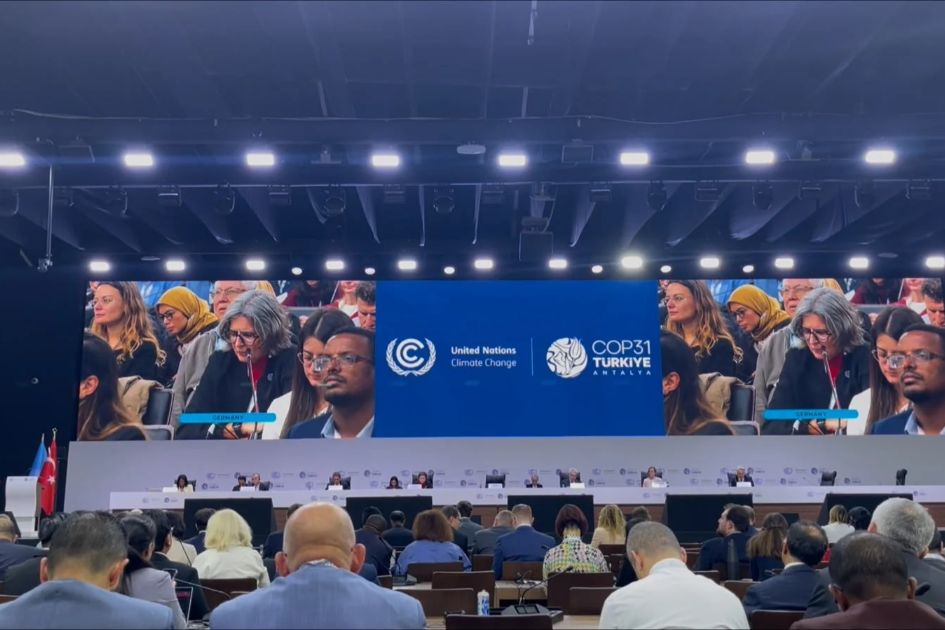
A proposed global electrification target is drawing qualified support at COP31, with governments questioning how it would reduce emissions, who would finance its implementation and whether another international energy pledge is necessary.
The debate comes as world leaders gather in Antalya, where Türkiye and Australia are seeking momentum for a target to raise electricity’s share of global final energy consumption to 35 percent by 2035.
Tuesday’s negotiations also exposed persistent divisions over adaptation finance, national climate plans and support for countries facing growing climate losses. Some common ground emerged, but major questions about resources and implementation remain unresolved.
Two separate decisions are at stake: whether governments endorse the voluntary electrification pledge, and whether they agree to incorporate it into COP31’s negotiated outcome. Support for one does not automatically mean support for the other.
Clean power condition shapes support
The proposed target concerns electricity’s share of energy consumed across transport, buildings, industry and other sectors. It is not a target for the renewable share of electricity generation.
That distinction has become central to the debate. The proposed wording allows different national pathways but does not require all additional electricity used to meet the target to come from clean sources.
Germany, Norway and Ethiopia publicly backed the ambition at Tuesday’s ministerial meeting. The European Union was moving towards endorsement, subject to internal procedures.
Other governments supported electrification while emphasising conditions.
“We support it, but only if the electrification is from renewable sources,” Vanuatu’s Climate Minister Ralph Regenvanu told Politico. “We don’t support electrification from fossil fuel sources.”
UK Climate Minister Katie White emphasised that electrification must advance alongside clean power growth. Pakistan’s Climate Minister Musadik Masood Malik welcomed the target’s voluntary character, stressing that implementation must respect different development needs and national capacities.
Brazil’s Climate Minister João Paulo Ribeiro Capobianco supported electrification while highlighting the complementary role of biofuels in his country’s energy transition.
The International Energy Agency, which jointly hosted the ministerial, urged countries to back the pledge. Executive Director Fatih Birol argued that widespread endorsement would provide a strong investment signal for the electricity sector.
For the poorest countries, however, ambition remains inseparable from financial support.
“On the electrification issue, the target is clear, but how can we move together?” Adão Soares Barbosa, Timor-Leste’s climate envoy and chair of the Least Developed Countries group, asked at Tuesday’s press conference.
Barbosa said LDCs need finance, technology and training to participate, emphasising grant support rather than additional debt.
Leaders face an implementation test
The leaders’ summit on 11 and 12 November brings political attention to those divisions. Wednesday’s programme includes national statements and discussions on clean electrification, green industrial investment and waste reduction.
Brazilian President Luiz Inácio Lula da Silva and Chinese Vice President Han Zheng are among those confirmed to attend. Han is representing President Xi Jinping.
Alongside the diplomacy, the Electrify Now Finance Coalition launched on Tuesday with an ambition to mobilise $1.2 billion for clean electricity projects in developing countries.
Mobilising investment is different from providing grants or concessional finance. The headline target alone does not establish how much support will reach LDCs, when it will become available or what repayment conditions may apply.
Bangladesh, Kenya, Nigeria, Palau and Vanuatu endorsed the Global Rooftop Solar Declaration, joining initial supporter Australia. The initiative aims to double the number of households with solar power to 300 million by 2030.
The Global Solar Council said 34 individual parliamentarians from 21 countries had also endorsed the declaration. Their support is distinct from formal endorsement by those governments.
The push for roadmaps to move away from fossil fuels also received support from the UK, Germany, Nigeria and the Netherlands. Brazil emphasised practical transition planning, while South Africa highlighted opportunities from cheaper renewable energy.
The African Group stressed that countries with limited responsibility for global emissions need assistance to transition fairly. The UK argued against creating additional negotiating processes or institutions.
Forest finance is another priority. The Tropical Forests Forever Facility, designed to reward countries for maintaining tropical forests, reported that a planned Dutch contribution would bring pledges to $7.8 billion, about $2.2 billion short of its initial $10 billion target. Those pledges are distinct from capital already received.
Adaptation finance remains divisive
Inside the negotiating rooms, the Group of 77 and China expressed disappointment that tripling adaptation finance had not secured a separate agenda item.
The developing country bloc sought discussions on delivery, including the baseline for measuring progress and arrangements for tracking funding.
The UK, EU and Norway reaffirmed their commitment to the objective but favoured addressing it through the climate finance work programme under the new collective finance goal.
A broader disagreement concerned the programme’s scope. The G77 and China emphasised Article 9.1 of the Paris Agreement, concerning developed countries’ obligation to provide financial resources to developing countries. The EU favoured a wider discussion under Article 9.
The Alliance of Small Island States, known as AOSIS, highlighted persistent funding uncertainty and prioritised grants for adaptation.
On the Global Goal on Adaptation, delegations broadly supported separating technical work to refine indicators from a policy process to test and adjust them. This did not amount to an agreed decision.
Differences remained over the proposed technical body’s composition, mandate and timetable. The G77 and China sought to reaffirm the principle of common but differentiated responsibilities and respective capabilities in the text, a proposal opposed by the EU.
Youth and gender constituencies called for indicators reflecting different impacts on children, young people, women and girls. Indigenous representatives sought recognition as distinct rights holders and knowledge holders.
Emissions plans and climate losses
Countries expressed broad support for continuing the Mitigation Work Programme but differed over its duration and review arrangements. Switzerland proposed a permanent mitigation committee, which the Arab Group opposed.
Japan, Bangladesh and the EU said further guidance could help countries prepare and implement national climate plans. The Environmental Integrity Group sought clearer measurement and transparency over the distinction between emissions reductions and carbon removals.
AOSIS called for the highest possible ambition informed by science. The Like Minded Developing Countries emphasised that plans must remain nationally determined. The Arab Group opposed new guidance, while the African Group prioritised implementation resources.
Discussions on the Fund for Responding to Loss and Damage considered lessons from its board’s first emergency meeting following Nepal’s request after a glacier collapse. Several parties said the experience demonstrated the need for rapid response arrangements.
AOSIS, the African Group and the Independent Association of Latin America and the Caribbean sought political guidance addressing access barriers and funding commitments. The EU, UK and Canada considered further guidance premature while the board develops its long term operating model.
On just transition, delegations expressed support for political oversight with a complementary technical arm. The African Group highlighted informal employment and fiscal constraints. Brazil sought access to finance, technology and capacity building without duplication.
The EU proposed work on policy dialogue, implementation and technical assistance. Japan cautioned against additional bodies, while the Arab Group opposed attaching conditions to support.
Panama emphasised Indigenous Peoples’ and local communities’ participation, including free, prior and informed consent. In gender discussions, least developed countries sought predictable funding for initiatives led by women.
Political text will test convergence
Australia’s Chris Bowen, serving as president of negotiations, is consulting governments on a possible overarching political decision. Türkiye’s Murat Kurum holds the COP presidency under the agreed division of responsibilities.
The consultations address recent progress, current challenges and ways to accelerate implementation through practical solutions, finance and international cooperation.
Some delegations have questioned the assumption that an overarching decision should be produced, leaving its purpose and scope open to negotiation.
The first draft will show whether governments can connect the electrification target to clean generation and accessible finance, and whether that language can command support alongside unresolved demands on adaptation.