


Disagreements over adaptation funding, climate finance accounting and mountain vulnerabilities expose deep divisions among developed and developing countries as COP31 negotiations begin.
Nepal and Bhutan’s bid for dedicated talks falls short, while delegates disagree on how to measure adaptation funding and account for the earlier $100 billion pledge.
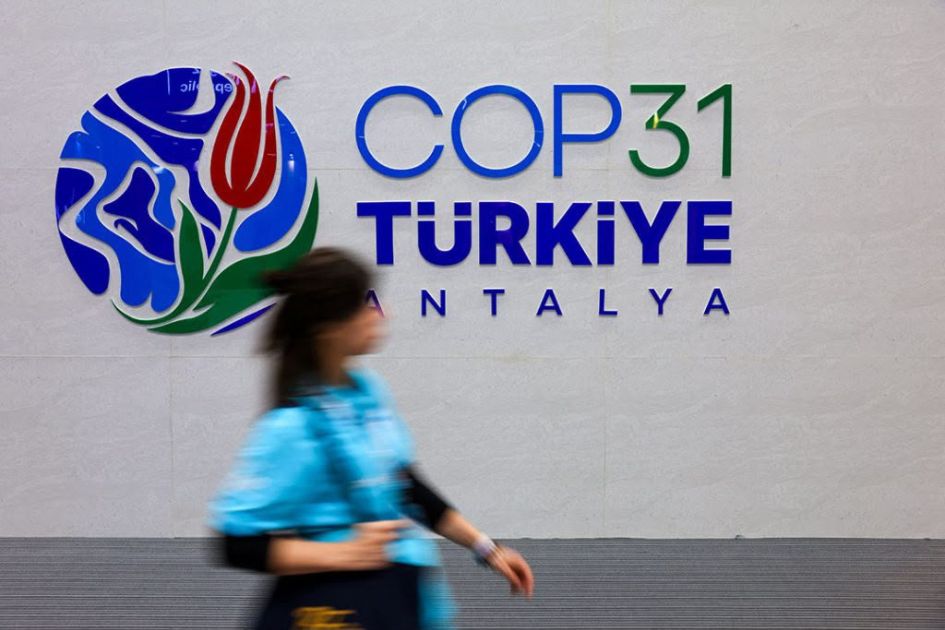
Countries at the UN climate summit in Antalya adopted the COP31 agenda on Monday without a dedicated item on mountain warming sought by Nepal and Bhutan. The two countries had proposed “1.5°C Warming in Mountains” to draw attention to the risks that shrinking glaciers and shifting river flows pose to mountain communities and people downstream.
A separate proposal for a dedicated item on tripling adaptation finance also failed to gain consensus. COP31 President Murat Kurum said delegates could raise the issue under other agenda items. Talks on long-term climate finance began the same day.
The agenda agreement allowed negotiations to begin, but opening statements exposed differences over how earlier commitments should be implemented, who should provide finance and how progress should be measured.
The COP31 climate summit has officially entered the “1.5°C Overshoot Era,” following a stark acknowledgment by the United Nations and climate scientists that breaching the critical 1.5°C global warming threshold is now inevitable.
As the two-week conference kicked off in Antalya, Türkiye, the central theme shifted decisively from preventing a breach to managing an era of temperature overshoot and building an “Implementation Era”.
“Himalayan tsunami”: Mountain risks remain in the discussions
In plenary, Nepal urged delegates to address the daily challenges facing mountain communities and recalled the principle that countries have different responsibilities and capacities to respond to climate change. Bhutan cited flooding from a glacial lake in its territory and a glacier collapse in Nepal. The Mountain Group said existing arrangements under the UN climate convention did not adequately address mountain regions’ particular vulnerabilities.
Landlocked developing countries highlighted tight public budgets, inadequate funding and barriers to accessing finance. They called for adaptation support for hazards such as glacial lake outburst floods. The Group of 77 and China also reported that the Santiago Network had received more than 40 requests for technical assistance, but only five had reached implementation.
Environmental NGOs raised Nepal’s experience of seeking Green Climate Fund support, saying the country had requested early-warning systems as long as seven years earlier. The fund has said its glacial-flood resilience project was approved in July 2025 and entered implementation in March 2026. Those dates establish when approval and implementation occurred, but do not resolve the question of how long the preceding process took.
Nepal’s Foreign Minister Shisir Khanal has described the devastating 26 August flood on the Bhote Koshi River near the Chinese border as a “Himalayan tsunami”. At a mountain-resilience event in Antalya, he called for greater access to adaptation finance and highlighted the disaster’s human, physical and economic losses.
Although the proposed mountain agenda items were not adopted, Kurum said presidency consultations would continue. Mountains and climate change will also feature at the leaders’ summit, in the upcoming research dialogue and in dialogues at subsidiary-body meetings in 2027 and 2028.
Bangladesh seeks grants and a common regional position
Across the Hindu Kush Himalaya, glacier retreat and changing rainfall can alter the timing of river flows. For downstream countries such as Bangladesh, those shifts matter for flood preparedness and dry-season water planning.
In an interview, Bangladesh’s Environment, Forest and Climate Change Minister Abdul Awal Mintoo said the country is seeking grant-based climate finance and simpler application and approval procedures. He called for quick, accessible support for adaptation, loss and damage fund and warned against adding to vulnerable countries’ debt burdens, fair compensation for workers impacted by climate change.
Bangladeshi civil society groups have also urged closer cooperation among Bangladesh, Bhutan and Nepal. At a 7 November press conference in Dhaka, the Center for Participatory Research and Development, Climate Justice Alliance–Bangladesh and partner organisations called for coordinated regional advocacy on adaptation finance.
Their argument was that economic graduation does not mean graduation from climate vulnerability. They urged continued adaptation support based on climate risks and needs, while noting that leaving the least-developed-country category does not automatically end access to all international climate finance. Certain preferential arrangements and eligibility conditions, however, may change.
Tripling adaptation finance raises a baseline question
At COP30 in Belém, countries called for efforts to at least triple adaptation finance by 2035. In Antalya, the African Group asked which baseline would be used to measure that increase. It also defended its proposals for separate discussions on Green Climate Fund funding and climate-related trade, saying implementation required follow-up on earlier decisions.
The Group of 77 and China said the quality and terms of finance mattered alongside the amount. It called for action on tripling adaptation finance, implementation of the just transition work programme, and stronger research and observation to support early warnings for multiple hazards.
The Least Developed Countries group backed tripling adaptation finance and sought easier access to funding. It also called for support to implement national adaptation plans, progress on the Global Goal on Adaptation and operationalisation of the just transition mechanism.
The European Union reiterated its support for tripling adaptation finance but objected to the treatment of the climate finance work programme established at COP30 as a separate agenda item. It argued that the Belém decision had not called for such an item. On climate-related trade, it favoured existing dialogues.
The Umbrella Group welcomed discussions on adaptation finance, particularly through the climate finance work programme.
The Like-Minded Developing Countries regretted the exclusion of a standalone item on tripling adaptation finance. They urged developed countries to make deep emissions cuts in line with their historical responsibility and provide finance enabling developing countries to pursue climate action alongside development and poverty reduction.
Brazil, South Africa, India and China, negotiating as BASIC, said the climate finance work programme should focus on developed countries’ funding obligations under Article 9.1 of the Paris Agreement. They supported a task force guided by countries to advance the Global Goal on Adaptation and called for the mitigation work programme to continue through 2030 under its current mandate.
The adaptation tripling call is distinct from the broader Baku to Belém Roadmap, which seeks to scale up climate finance for developing countries to at least $1.3 trillion annually by 2035 from public and private sources.
Dispute over the earlier $100 billion pledge
In the long-term finance talks, the EU, Canada, Japan, Norway, the United Kingdom and the Environmental Integrity Group sought recognition that the $100 billion-a-year climate finance target was met in 2022, 2023 and 2024, with improved delivery over those years.
The African Group, Like-Minded Developing Countries and Arab Group opposed treating those years as sufficient evidence that the pledge had been fulfilled. They argued that the shortfalls in 2020 and 2021 must also be taken into account.
Canada, Japan, Norway and the Environmental Integrity Group supported recommendations in the Standing Committee on Finance’s report, while the African Group opposed them. The EU described the recommendations as a basis for further discussion.
Delegates also called for better access to funds, including direct access, and common methods for tracking finance. Countries will submit written proposals for the decision text.
Wider concerns over finance and development
Beyond the accounting dispute, the Bolivarian Alliance for the Peoples of Our America pointed to unmet commitments and inadequate adaptation finance as the costs of inaction rise. It also questioned approaches to reversing a temperature overshoot that depend on land and resources in the Global South.
Grupo Sur, an alliance composed primarily of developing nations from the Southern Cone of Latin America, said biased risk assessments and credit ratings restrict developing countries’ access to international finance. It called for continued agriculture negotiations and an assessment of loss and damage in the livestock sector.
The Alliance of Small Island States urged faster implementation of national emissions pledges and the first Global Stocktake’s outcomes. It said inaction by powerful countries was creating injustice for the most vulnerable and cited global military expenditure in arguing that climate finance must be made available.
The Independent Alliance of Latin America and the Caribbean highlighted droughts, floods and pressure on Andean water systems amid a strong El Niño. It called for less time spent on procedural disputes, fair negotiations and respect for science.
Presidency presses for delivery
Outgoing COP30 President André Corrêa do Lago highlighted the Brazilian presidency’s roadmaps on transitioning away from fossil fuels and halting and reversing deforestation and forest degradation. Kurum called for connecting climate projects with finance and placing the most vulnerable countries at the centre of negotiations.
UN climate chief Simon Stiell urged faster progress on electrification and methane emissions.
The Arab Group opposed references to the COP30 presidency’s roadmaps or Action Agenda in COP31 decisions. It also called for the Adaptation Fund to serve exclusively under the Paris Agreement and sought an international commitment to end unilateral trade measures.
The Coalition for Rainforest Nations said science, transparent reporting and funding for the forest roadmap could help reverse deforestation.
The Environmental Integrity Group warned about the costs of fossil fuel dependence and urged governments to align financial flows with the Paris Agreement. It also cautioned that adding agenda items and reopening settled issues strains smaller delegations’ ability to follow negotiations.
Australia’s Climate Change and Energy Minister Chris Bowen, serving as COP31 President of Negotiations, outlined plans for a presidency-initiated decision shaped by parties. A summary of consultations with ministers and heads of delegation is due by Friday, 13 November, with written submissions invited until Saturday, 14 November.
Russia questioned how such a decision could be adopted without a corresponding agenda item. Kurum said the presidency would not impose a decision.
Science and early warnings
The World Meteorological Organization said the global average surface temperature from January through September 2026 was about 1.47°C above the 1850–1900 average. That figure covers nine months; the Paris Agreement’s 1.5°C goal concerns long-term warming.
Global mean sea level reached a satellite-era record, while preliminary data through July pointed to a tenth consecutive year of record ocean heat. A strengthening El Niño is expected to increase the risk of extreme heat, drought and heavy rainfall into 2027.
Jim Skea, chair of the Intergovernmental Panel on Climate Change, urged governments to support completion of its seventh assessment cycle. The panel highlighted operational difficulties caused by unresolved decisions on its timetable and budget.
The EU backed a COP31 decision addressing the risk of exceeding 1.5°C, supporting clean electrification and reducing methane emissions. It stressed that climate action must protect human rights, particularly those of Indigenous Peoples, women and girls.
The Umbrella Group called for approval of the IPCC budget, implementation of ambitious national climate pledges, timely transparency reports and stronger outcomes from the mitigation work programme.
Scientific organisations also outlined practical contributions. UNESCO’s Intergovernmental Oceanographic Commission highlighted ocean science, while the Committee on Earth Observation Satellites said satellite data could help monitor 18 of the 59 indicators under the Global Goal on Adaptation.
The World Climate Research Programme said it was developing climate and sea-level models to assess scenarios in which warming temporarily exceeds a temperature threshold, with the work expected to inform the second Global Stocktake.
The Collaborative Partnership on Forests called for consistent policies, stronger forest monitoring and predictable finance to connect action under the three Rio Conventions on climate change, biodiversity and desertification.
Observers press for rights and finance
Research and independent NGOs stressed the importance of evidence in implementation, including the second Global Stocktake, gender action plan and transparency reporting.
Indigenous Peoples’ organisations called for recognition of their rights. Trade union NGOs urged negotiators to put labour rights at the centre of the just transition mechanism.
The Women and Gender Constituency pointed to military spending as evidence that resources could be redirected towards climate justice. It also called for full implementation of the Belém Gender Action Plan.
Youth representatives demanded decisions grounded in science and greater attention to the physical and mental wellbeing of children and young people throughout the negotiations.
Business and industry NGOs supported clean electrification and stressed the importance of finance. Local governments and municipal authorities said they were ready to work with national governments to implement the Paris Agreement and deliver a just transition.
Other decisions and the next stage
Parties adopted the agendas of the convention, Kyoto Protocol and Paris Agreement governing bodies. Green Climate Fund funding needs will be considered under existing fund-related items, while the seventh review of the convention’s financial mechanism was deferred to COP32.
Ukraine objected to Russia including emissions data from unlawfully occupied Ukrainian territories in its reporting. Consideration of the relevant agenda item was deferred.
Comoros withdrew its proposal for a separate item on sustainable diets. Azerbaijan made its acceptance of two observer organisations conditional on letters affirming respect for parties’ sovereignty and territorial integrity.
Negotiating arrangements include a joint contact group on the just transition work programme and informal consultations on adaptation, mitigation, agriculture, and the joint report of the Warsaw International Mechanism’s Executive Committee and Santiago Network.
Alongside those talks, Türkiye is seeking support for increasing electricity’s share of global final energy consumption from roughly one-fifth to 35 percent by 2035. The proposal aims to accelerate electrification across transport, buildings and industry.
How much that shift cuts emissions will depend on how the additional electricity is generated. For developing countries, including Bangladesh, delivery will also depend on access to affordable finance and support for workers and communities through the transition.